Visit-olympia : Οργανώστε ένα μοναδικό ταξίδι στα μνημεία και αξιοθέατα της Ηλείας και δημιουργήστε τη δική σας επική εμπειρία. Kάντε κλικ εδώ
Visit-olympia : Οργανώστε ένα μοναδικό ταξίδι στα μνημεία και αξιοθέατα της Ηλείας και δημιουργήστε τη δική σας επική εμπειρία. Kάντε κλικ εδώ

Pyrgos Archaeological Museum · Our history
Follow the story of the building, its architecture and its transformation into a museum.
In 1890, the Mayor of Pyrgos, Petros Avgerinos, decided to build a new home for the town’s commercial activities. This marked an important turning point in its history. Funded with 200,000 drachmas from the municipal treasury, the project brought the scattered traditional market into a modern commercial centre, improving the town’s infrastructure and supporting the local economy. Designed according to the principles of neoclassical architecture, the building remains one of the most distinctive architectural landmarks of its period, with an impressive monumental character.
The listed Old Market building of Pyrgos, now home to the archaeological museum, is a jewel of the town. A few steps from the main square, it occupies an entire city block bounded by Karaiskaki, Krestainitou, Metaxa and Petralia streets.
The building consists of a central section and two side wings, arranged symmetrically along a pronounced north–south axis. Each section contains a courtyard, creating a distinctive internal layout. The enclosed rooms surround these courtyards, while the side wings form a U-shaped plan.
Shops in the northern section, along Krestainitou Street, and the southern section, along Petralia Street, faced their respective courtyards, as shown in the ground plan. The meat market occupied the southern courtyard, the fish market the northern one, and the vegetable market the central courtyard.
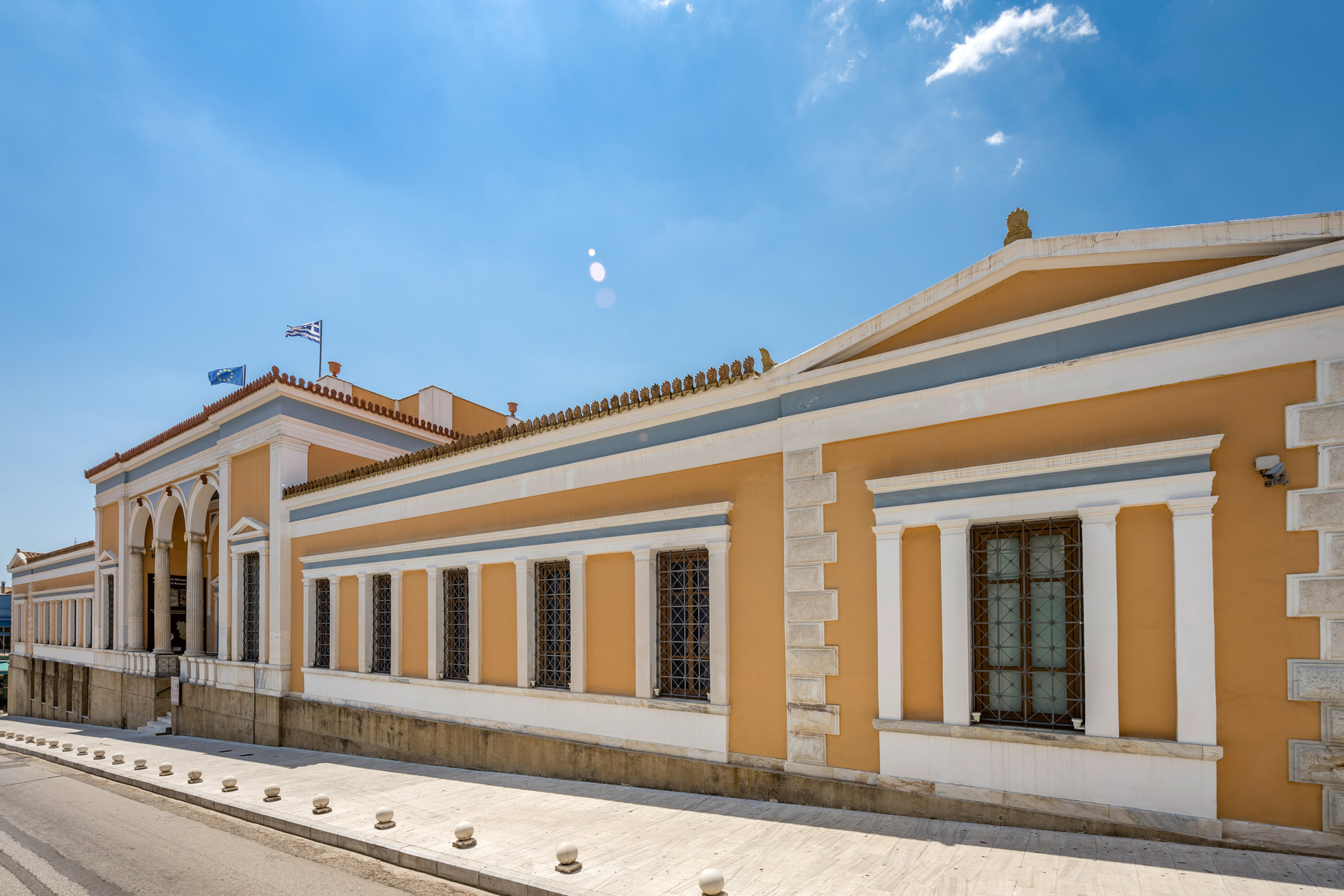
Museum building — photograph 1

Museum building — photograph 2
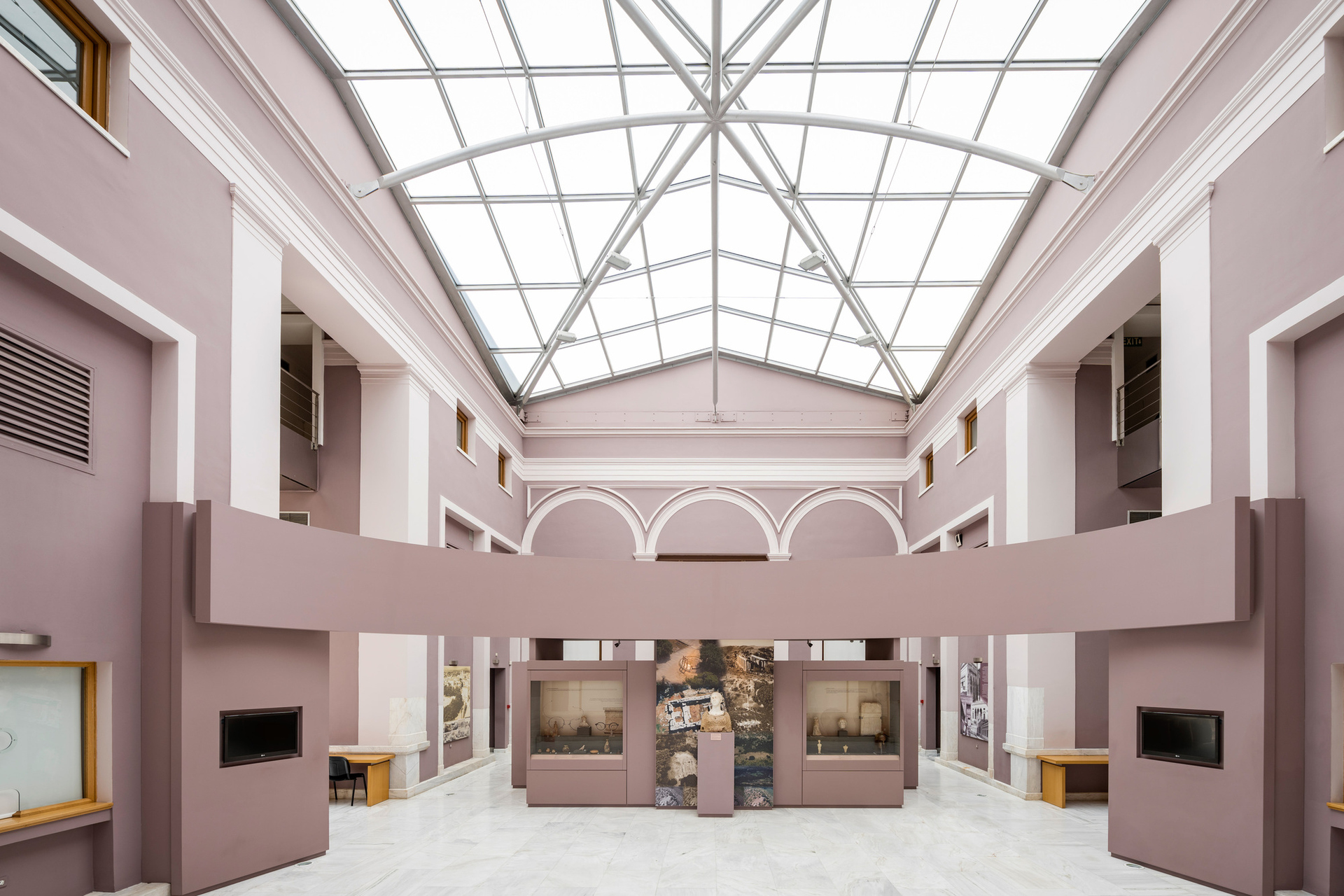
Museum building — photograph 3
The building’s form and architectural details strongly suggest the involvement of the distinguished German architect Ernst Ziller, or a team of his associates. A close study of its façades reveals an interesting relationship with neighbouring buildings, whose design appears to have been influenced by Ziller’s architectural choices.
Its Renaissance elements give the building a distinctive character and beauty. Its influence can also be traced in the architecture of the surrounding town.
The building continued to serve as a market until the 1960s. Its conversion into a museum, first proposed in 1962, was a lengthy process that finally came to fruition in the first half of the 2010s.
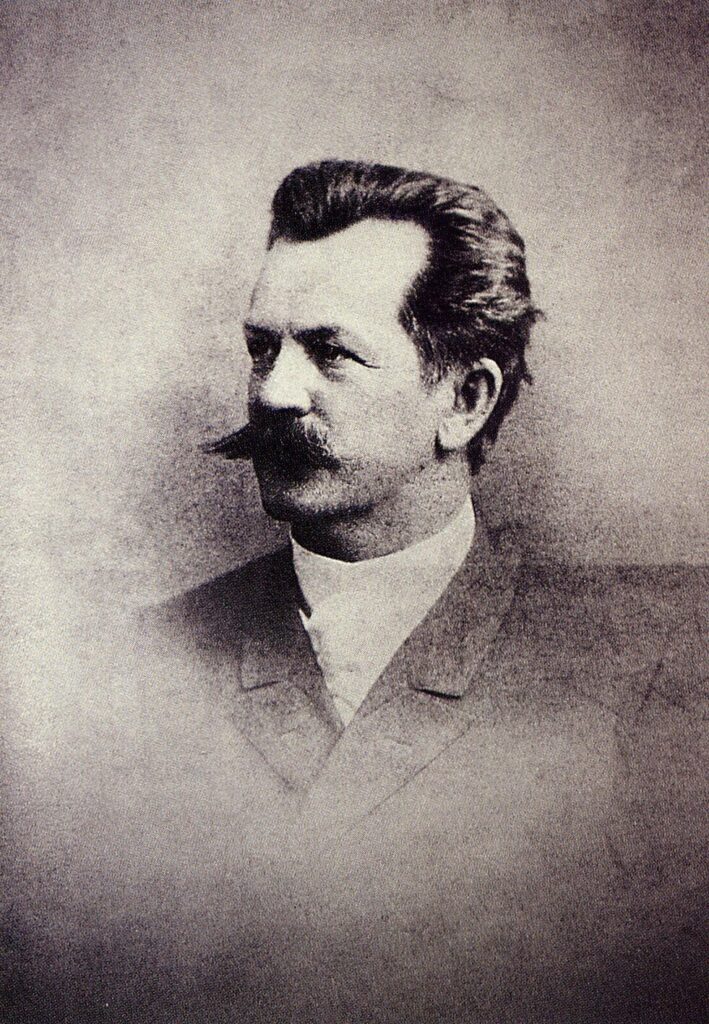
Ernst Ziller
Born in Saxony in 1837, Ernst Ziller studied architecture in Dresden and later worked with the leading architect Theophil Hansen in Vienna. In 1861 he came to Athens to supervise the construction of the Academy of Athens, beginning a long and productive career in Greece. Through his extensive and varied work, Ziller left a lasting mark on Greek architecture.
A place of memory that had hosted the commercial and civic life of the capital of Elis, the Municipal Market was handed over fully restored by the Ministry of Culture in November 2005, ready to become the region’s archaeological museum. In August 2006, the building opened to the public with a small introductory display of antiquities, anticipating the permanent exhibition of objects from prehistoric to post-Byzantine times. The museum opened in two stages: in July 2013, the prehistoric section and part of the exhibition covering historical times welcomed visitors. In April 2014, all wings and thematic sections were open. The museum soon became a cultural landmark for Pyrgos and Elis, with a distinctive identity.
Following its full restoration by the Ministry of Culture in November 2005, the Municipal Market was prepared for its new role as the region’s archaeological museum. In August 2006, an introductory display of antiquities offered a preview of the permanent exhibition, spanning prehistoric to post-Byzantine times. It was curated by archaeologists from the 7th Ephorate of Prehistoric and Classical Antiquities and the 6th Ephorate of Byzantine Antiquities, the jointly responsible services under the Ministry’s organisation at the time. In that year and those that followed, the building hosted several successful art exhibitions while work on the archaeological display continued. These included an exhibition of contemporary sculpture by the Association of Greek Sculptors, inspired by the ancient Greek world and Olympic ideals, and paintings by prominent artists from the collection donated by the J. Latsis Foundation to the Latsio Municipal Hall of Pyrgos. Other cultural events included PROVOLI, an exhibition of works by teachers serving in schools in Elis, organised with the Directorate of Secondary Education, and an exhibition of ancient technology featuring working models of Greek mechanisms and inventions by Kostas Kotsanas and his students at the Second Chance School. In 2011, the project “Completion of the exhibition of Pyrgos Archaeological Museum”, with a budget of €1,197,000, was included in the Operational Programme for Western Greece, the Peloponnese and the Ionian Islands. It provided display cases and other museum equipment, alongside additional work needed to organise the exhibition. Drawing on its museological and exhibition design approach, the permanent display centres on people and ideas, with thematic sections, concise texts, original interpretative material and technology. The museum opened in two stages. In July 2013, galleries 1–5 presented prehistoric objects and part of the material from historical times. By the end of that year, work on the remaining sections, covering Byzantine and post-Byzantine times, had been completed. The museum became fully operational in April 2014 and soon established itself as a cultural landmark for Pyrgos and Elis.
Construction of the Municipal Market of Pyrgos began at the initiative of Mayor Petros Avgerinos. Its design is attributed to the German architect Ernst Ziller or a team of his associates.
The use and operation of the Municipal Market gradually declined.
The Municipal Council of Pyrgos issued its first decision (307/65) to donate the abandoned Municipal Market for conversion into the region’s archaeological museum.
The Old Municipal Market was designated a listed building by Ministerial Decision 10977/16.05.1967, published in Government Gazette 352/B/31.05.1967.
The Municipal Council renewed its decision to donate the building to the Ministry of Culture.
The project “Conversion of the Municipal Market of Pyrgos into an Archaeological Museum – Design and Construction” was included in the CULTURE Operational Programme. The contract was signed on 14 November 2002. The construction budget amounted to €8,241,819.52, including VAT.
The contractor consortium handed over the restored Municipal Market building to the Ministry of Culture.
An introductory display of antiquities offered a preview of the future permanent exhibition.
The project “Completion of the exhibition of Pyrgos Archaeological Museum”, with a total budget of €1,197,000, was included in the Operational Programme for Western Greece, the Peloponnese and the Ionian Islands.
The wing presenting prehistoric exhibits and part of the material from historical times opened to visitors.
The museum became fully operational, with all wings and thematic sections completed.