Visit-olympia : Οργανώστε ένα μοναδικό ταξίδι στα μνημεία και αξιοθέατα της Ηλείας και δημιουργήστε τη δική σας επική εμπειρία. Kάντε κλικ εδώ
Visit-olympia : Οργανώστε ένα μοναδικό ταξίδι στα μνημεία και αξιοθέατα της Ηλείας και δημιουργήστε τη δική σας επική εμπειρία. Kάντε κλικ εδώ

Pyrgos Archaeological Museum
Discover the people and daily life of Elis through four periods and the objects they left behind.
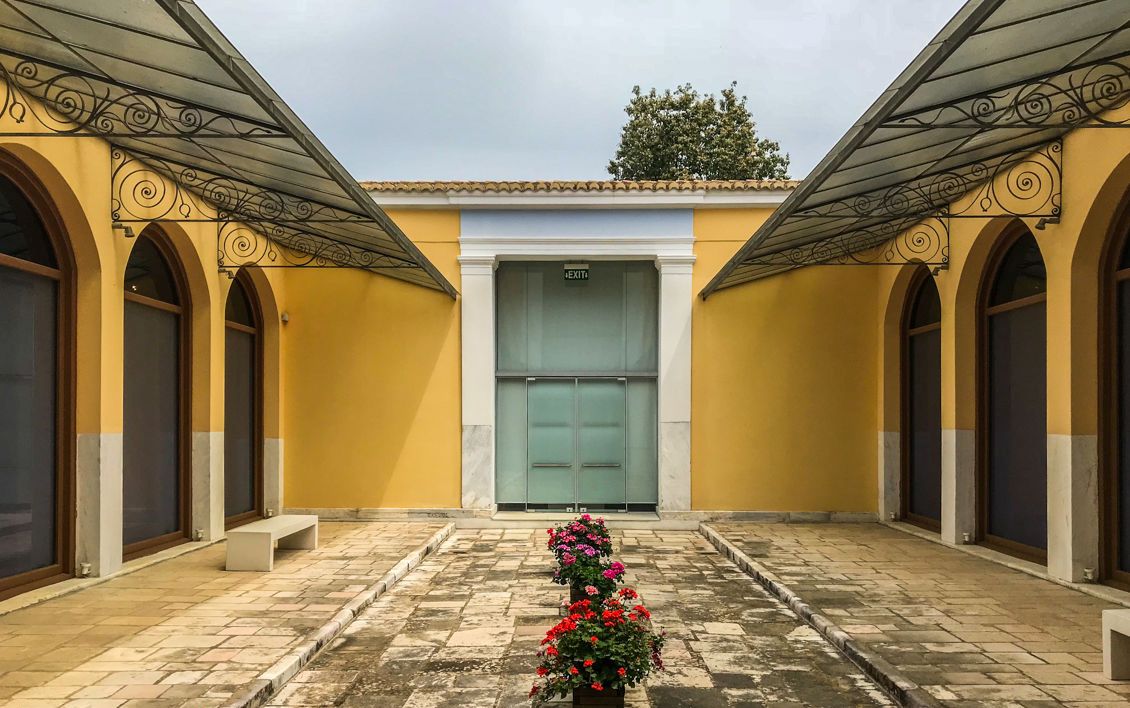
The permanent exhibition of the Archaeological Museum of Pyrgos draws on thorough museological research and exhibition design. Its themes centre on people and ideas, using concise, accessible texts and original interpretative material.
Objects from each period — prehistoric, historical, Byzantine and post-Byzantine — are presented through the themes of settlements, religion, and people / ideas / objects. Together, they offer a comprehensive picture of the inhabitants of Elis and their daily lives through time.

Complete krater with painted chariot scenes (Π13850), used as a grave marker. Each side depicts two chariots with their drivers, recalling the funeral games for Patroclus described by Homer. Made in an Elean workshop and found in the Mycenaean cemetery at Kioupia, Mageiras, near Ancient Olympia. 12th–11th centuries BC.
The prehistoric collections open a window onto the early world of Elis and the wider Peloponnese. Their exhibits reveal the history and culture of the region’s early inhabitants, from the Neolithic period to the end of the Mycenaean civilisation.

Clay plaque depicting a cockerel (Π09478Α), complete and rejoined from four fragments. From the Early Classical Temple of Athena at Prasidaki, Zacharo.
This section explores the formation and transformation of communities into city-states. Elis offers a particularly interesting case: the arrival of the Dorians is associated with a period of major change. The emergence of the Elean state, encompassing Hollow Elis, Akroreia, Pisatis and Triphylia, marked a pivotal stage in this process and opened a new chapter in the region’s history.

Bronze lamp (ΗΜ1376), with a handle ending in an animal’s head. Early Byzantine period, 5th–7th centuries AD.
The transformations of the empire after Justinian marked the transition from antiquity to the Middle Ages. The spread of Christianity connected Elis culturally with the wider Byzantine world.
Imperial administration, the Orthodox Church and Greek culture helped sustain Byzantine society over many centuries.
Despite the capture of Constantinople in 1204, Byzantine traditions endured and continued to influence Europe and the East, notably through the cultural flourishing known as the Palaiologan Renaissance.

Gold Venetian ducat (ΗΝ448), minted in 1570–1577 under Doge Alvise I Mocenigo. Venetian coinage circulated widely through the republic’s Mediterranean trade networks. The obverse depicts the doge kneeling before Saint Mark, patron of Venice; the reverse shows Christ within a mandorla.
The Ottoman conquest of Constantinople in 1453 marked the end of the Byzantine Empire and brought profound changes to the Greek world. Ottoman rule was interrupted in parts of Greece by periods of Venetian control. The coexistence of different religious and ethnic communities and the circulation of goods created a complex, dynamic society shaped by cultural interaction. Through its exhibits, this section examines how these developments affected everyday life in Elis, with particular attention to rural communities.
Prehistoric period
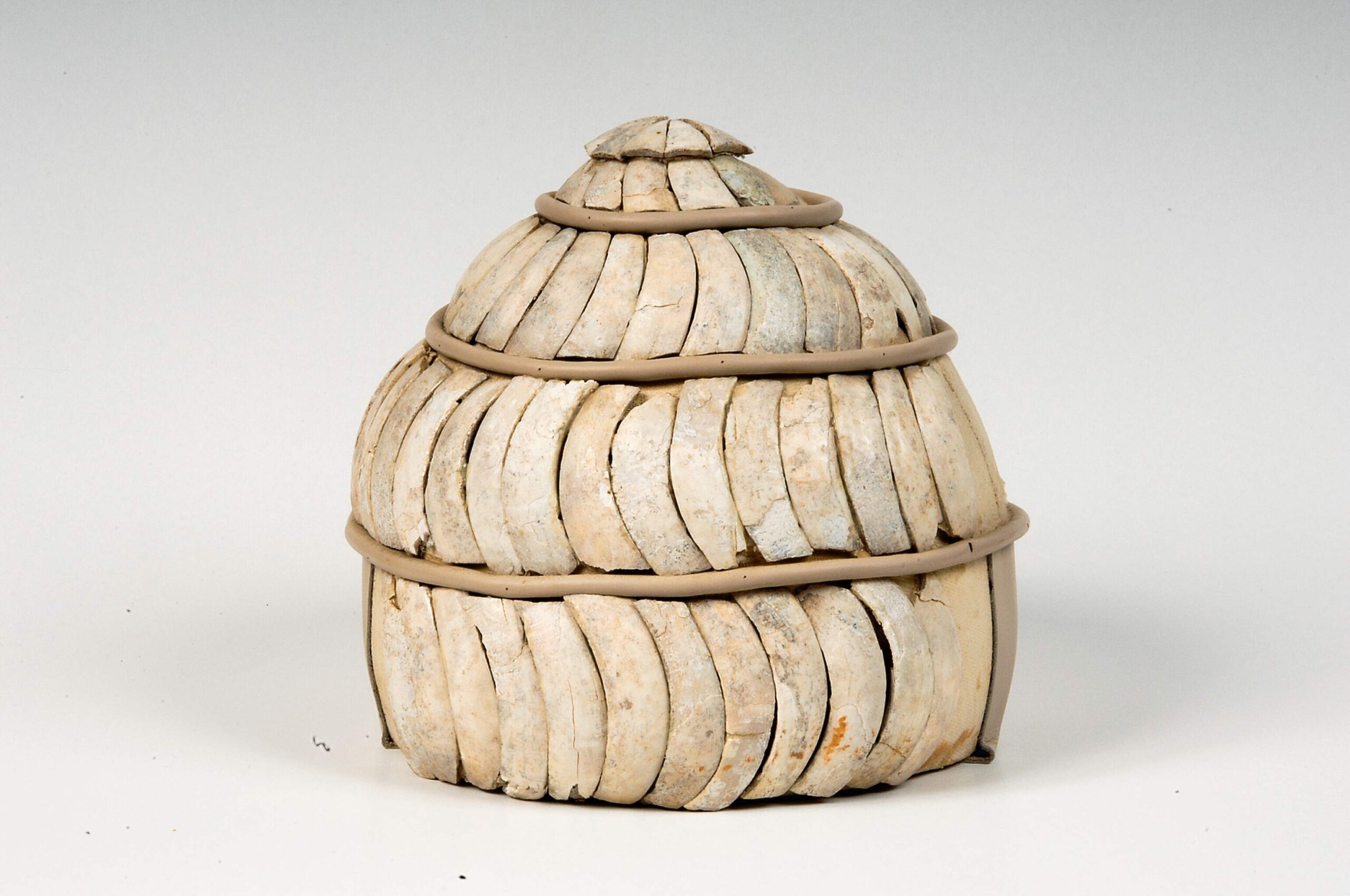
Boar’s tusks formed the outer covering of Mycenaean warriors’ helmets. The inner cap was made of leather or thick fabric, to which the tusks were attached in rows with alternating directions. It has been estimated that the tusks of 33 animals were needed to make a helmet.
Historical period
A composite female bust with a marble head inserted into a limestone upper torso. The right arm was also separately attached, while the folds of the garment are carved in relief on the torso. The sculpture comes from a monumental Hellenistic tomb excavated in 2009 on the southwest slope of the acropolis of Platiana, the location that gave this prominent museum exhibit its name. It dates to the 4th–3rd centuries BC.

Byzantine period
This manuscript codex is made of parchment — prepared animal skin — and dates to the 14th century AD. A Tetraevangelion contains the four Gospels of Matthew, Mark, Luke and John, recounting the life and teaching of Jesus Christ. Producing such a manuscript took many months and required skill in copying texts and creating elaborate illustrations. Alongside a paper codex preserved at the Monastery of Skafidia, this Gospel Book displayed in the museum is a rare surviving manuscript from Elis.

Full-page portrait of an Evangelist from the Gospel Book of the Monastery of Poretsos (ΗΔ700). Parchment manuscript, 14th century AD, containing the four Gospels.

Gospel Book of the Monastery of Poretsos (ΗΔ700). Parchment manuscript, 14th century AD, recounting the life and teaching of Jesus Christ.
Post-Byzantine period
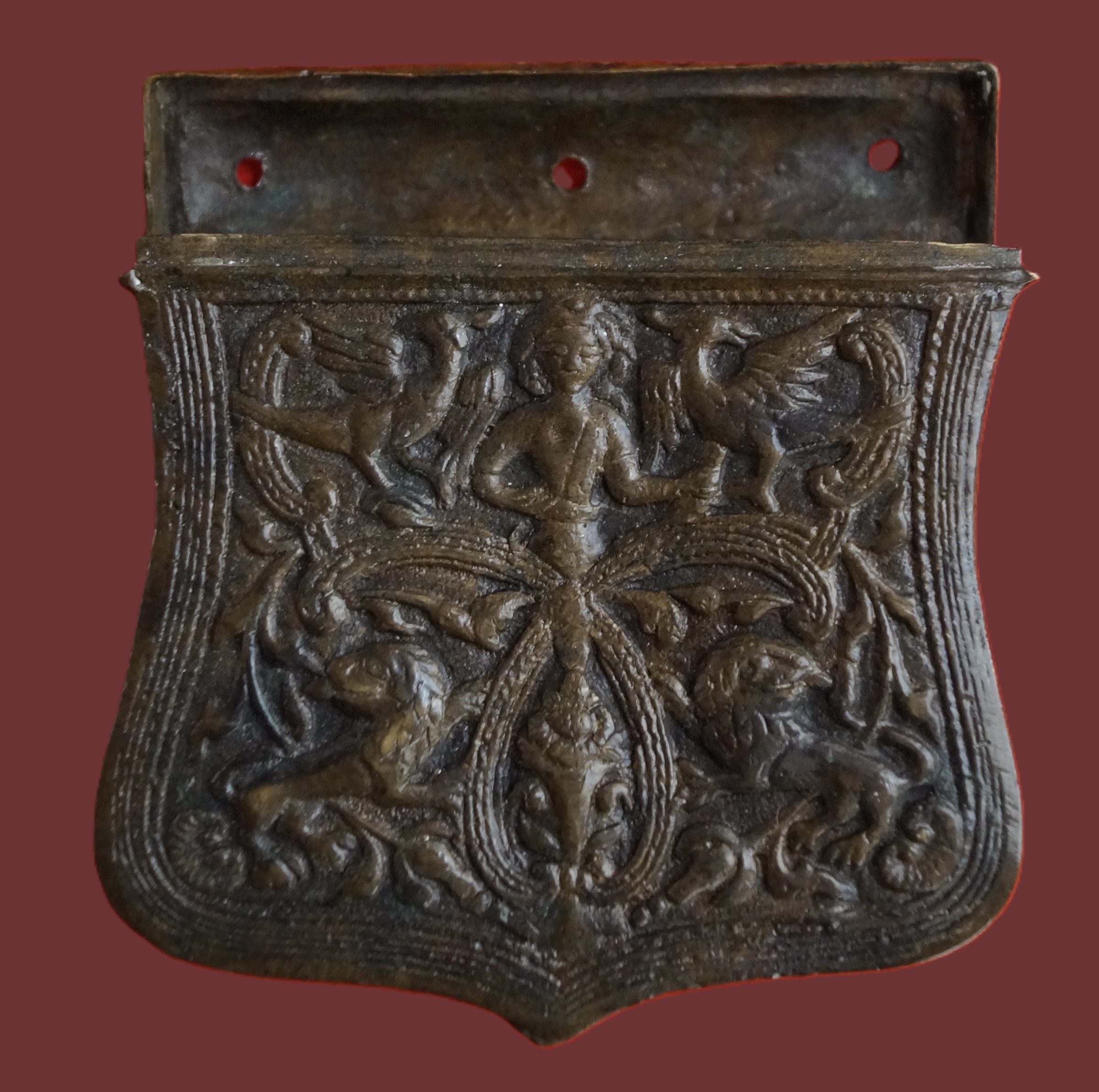
Fighters used this box to carry their bullets. It was an essential part of their equipment alongside muskets, pistols, knives, yataghans and sabres. It was worn on the warrior’s belt, known as a selachi. The Spiliotopoulos brothers’ powder mills at Dimitsana were a major source of ammunition during the Greek War of Independence.
Fighters regarded their arms as an inseparable part of their dress. They held them sacred as symbols of honour, adornment and pride.
Select the plan to open it at full size in a new tab.
