Visit-olympia : Οργανώστε ένα μοναδικό ταξίδι στα μνημεία και αξιοθέατα της Ηλείας και δημιουργήστε τη δική σας επική εμπειρία. Kάντε κλικ εδώ
Visit-olympia : Οργανώστε ένα μοναδικό ταξίδι στα μνημεία και αξιοθέατα της Ηλείας και δημιουργήστε τη δική σας επική εμπειρία. Kάντε κλικ εδώ

Pyrgos Archaeological Museum
Explore Byzantine Elis through 13 photographs and the stories of objects from the Archaeological Museum of Pyrgos.
Open each description to learn more. Select a photograph to view the image at full size in a new tab.

01 / 13
Bronze pectoral reliquary cross (Μ788), with slightly widening arms. A suspension ring survives at the top and a hinge at the bottom, where the second half of the cross was attached. The front bears Christ crucified, flanked by John and the Virgin, with inscriptions referring to “Behold your son” and “Behold your mother”. Christ wears a full-length tunic and has a cross-shaped halo. The sun and moon appear beside the cross. From Ladiko, near Makrisia, Krestena. Byzantine period.
02 / 13
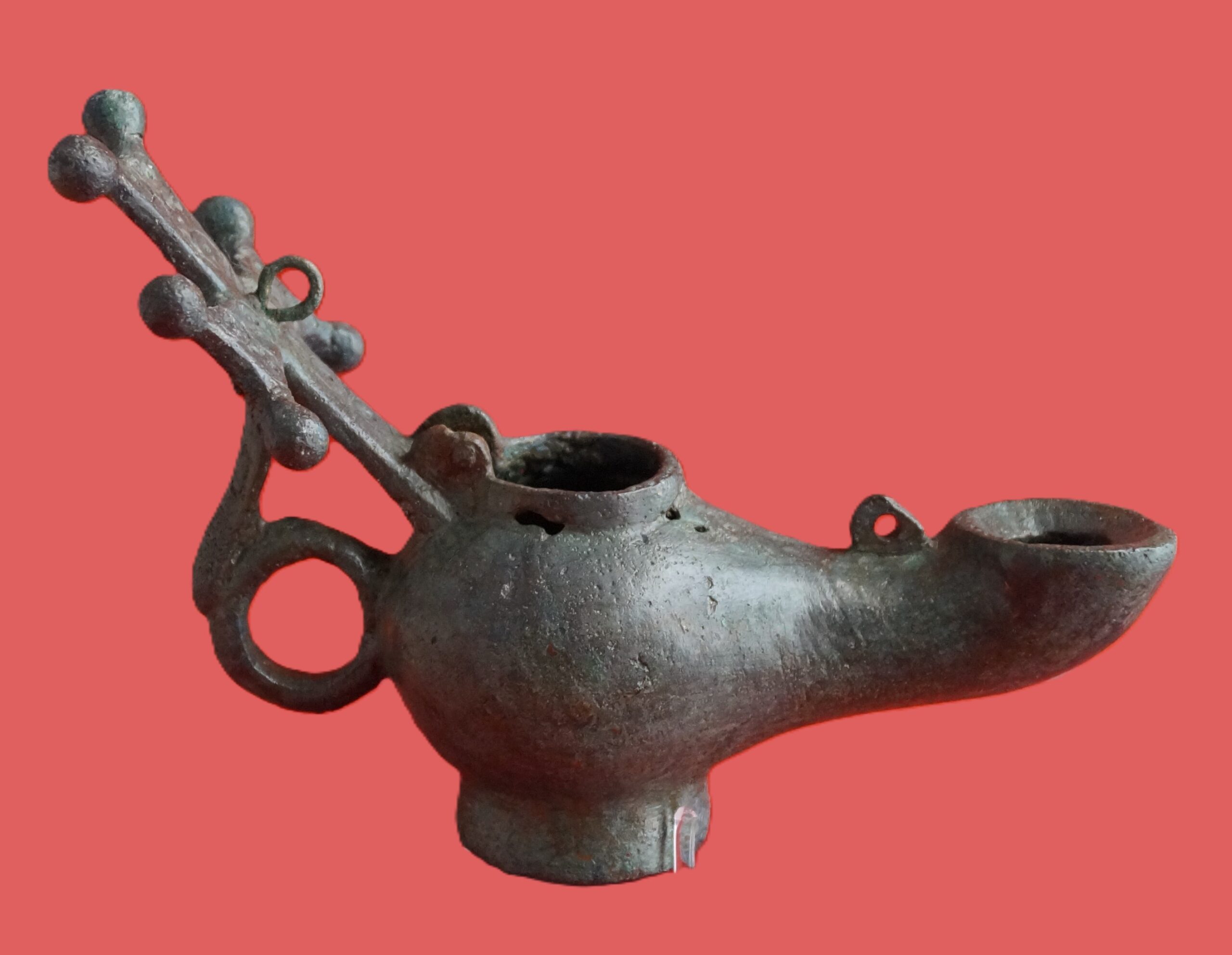
Bronze lamp (Br5849), with a handle ending in a cross. From Olympia. 5th–7th century AD.
03 / 13
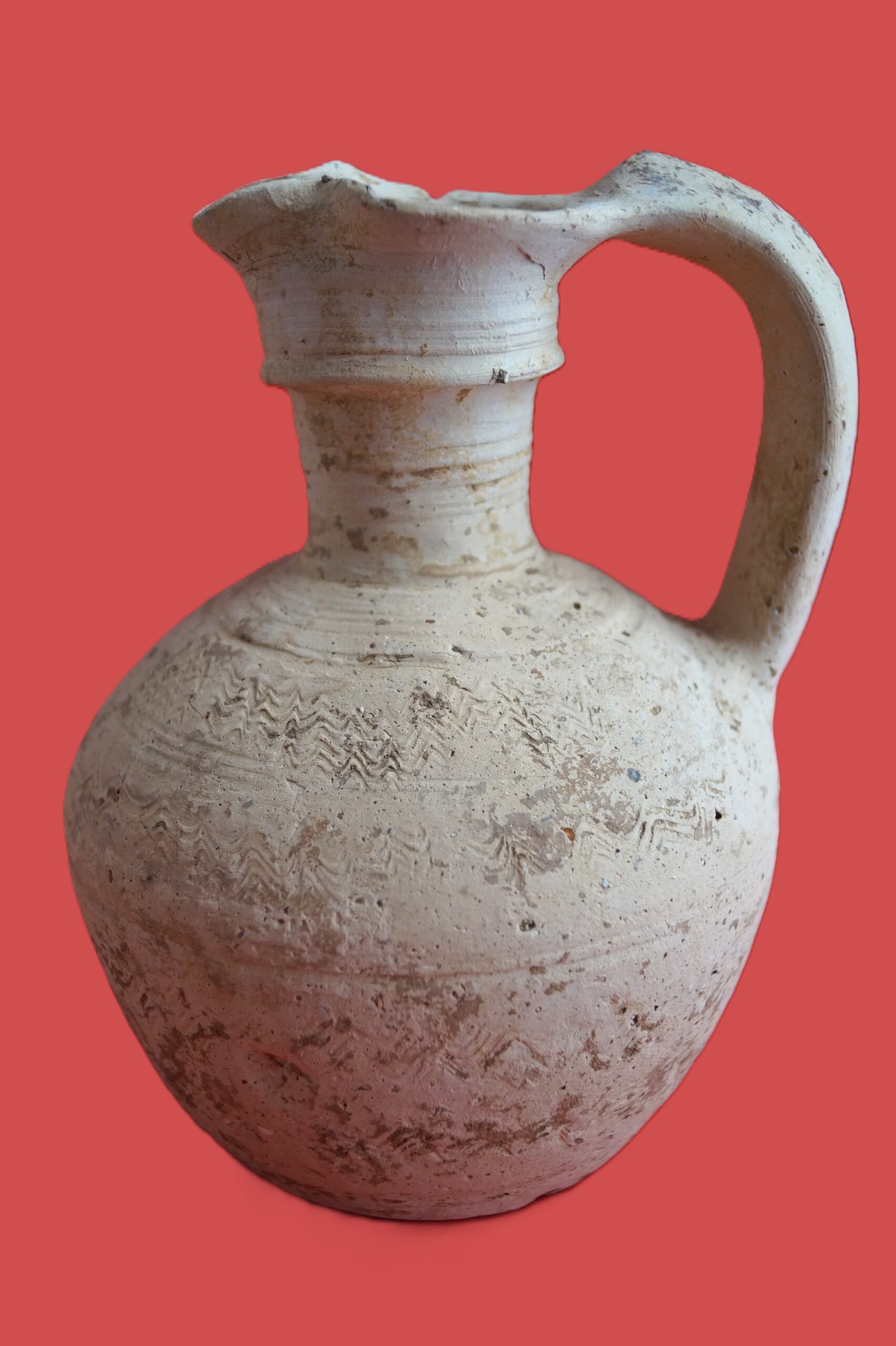
Complete clay oinochoe (ΗΠ2371), with minor chips. It has a flat base, a spherical body, a ribbed strap handle, a trefoil spout and a narrow cylindrical neck. Four bands of incised zigzags encircle the body. A grave offering from a Byzantine burial at Velmacheika, Miraka, near Olympia.

04 / 13
Fragment of a carved capital facing, retaining part of the upper border with a rosette. Stylised acanthus leaves, scrolls and a palmette are carved in low relief. Early Byzantine period.
05 / 13
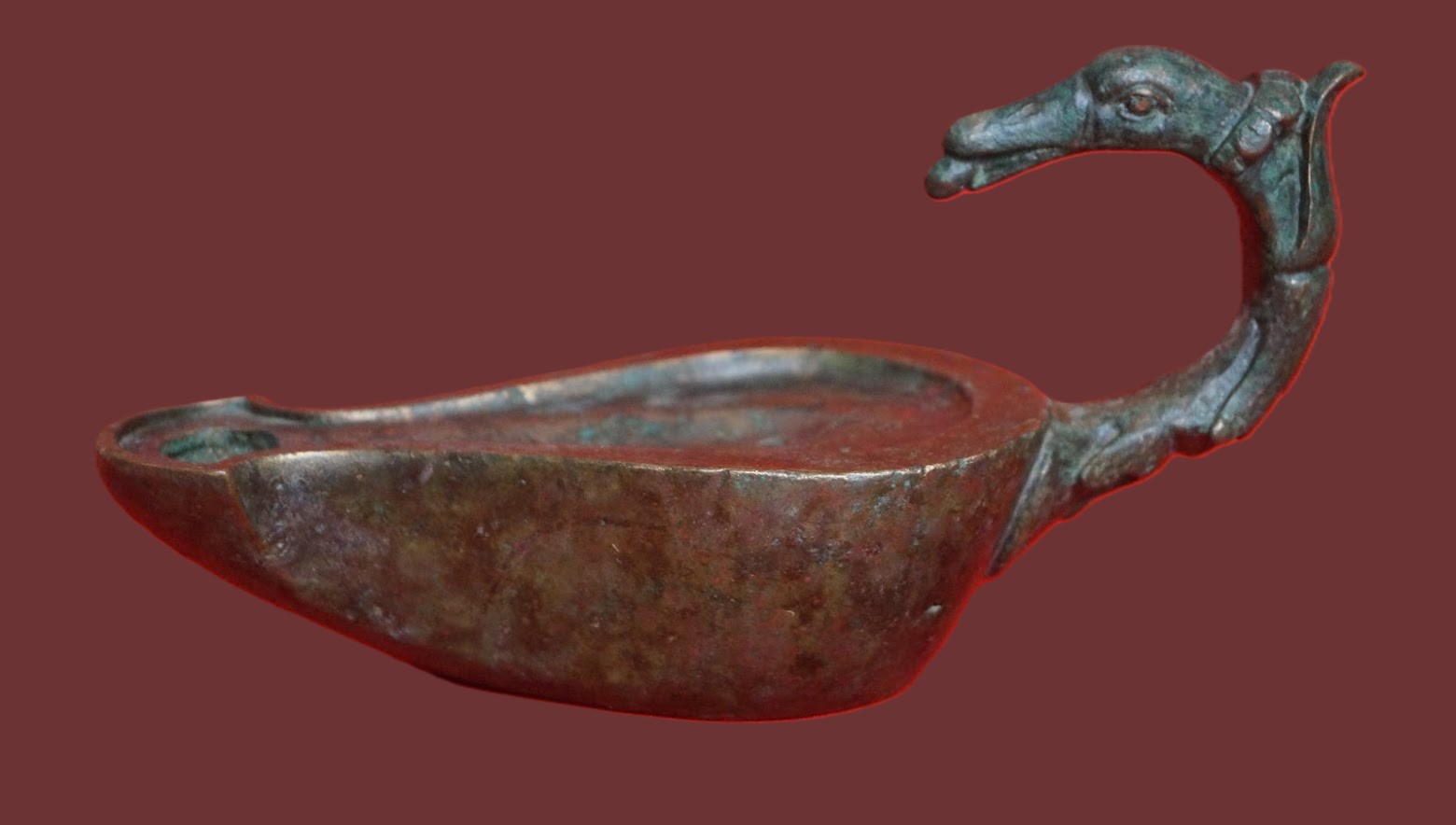
Bronze lamp (ΗΜ1376). Its handle ends in an animal’s head. Early Byzantine period, 5th–7th century AD.

06 / 13
Pair of bronze earrings (Μ2180). Each combines a large circle with a pointed element inside and three smaller adjoining circles outside, decorated with triangular clusters of dots resembling grapes and small globules. Early Byzantine period, 6th–7th century AD.
07 / 13
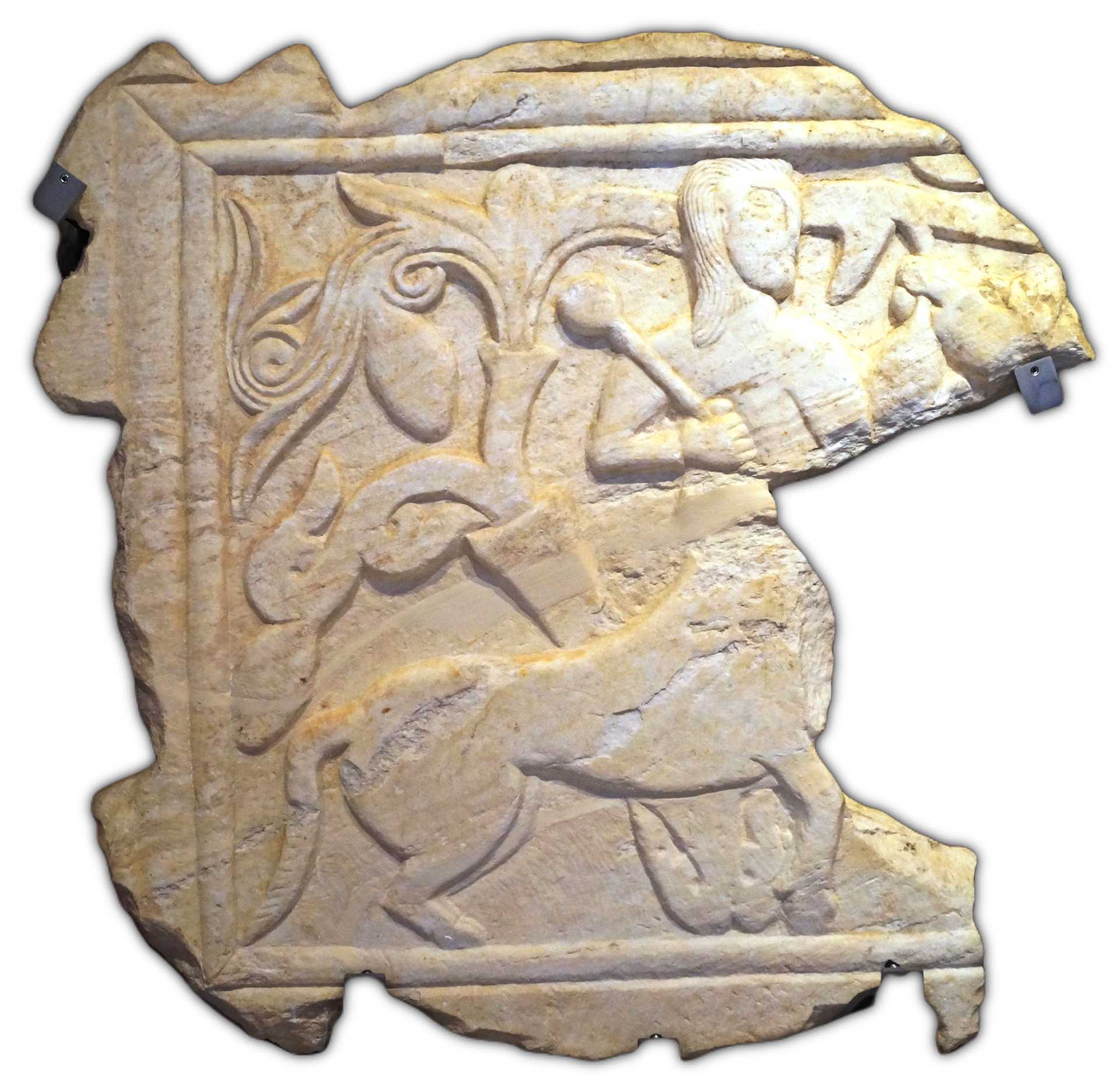
Marble screen slab depicting a centaur (ΗΛ889). The revival of ancient themes also appears in other Greek monuments of this period and reflects its artistic vitality. From the Monastery of Vlacherna near Kyllini. 10th–12th century.
08 / 13
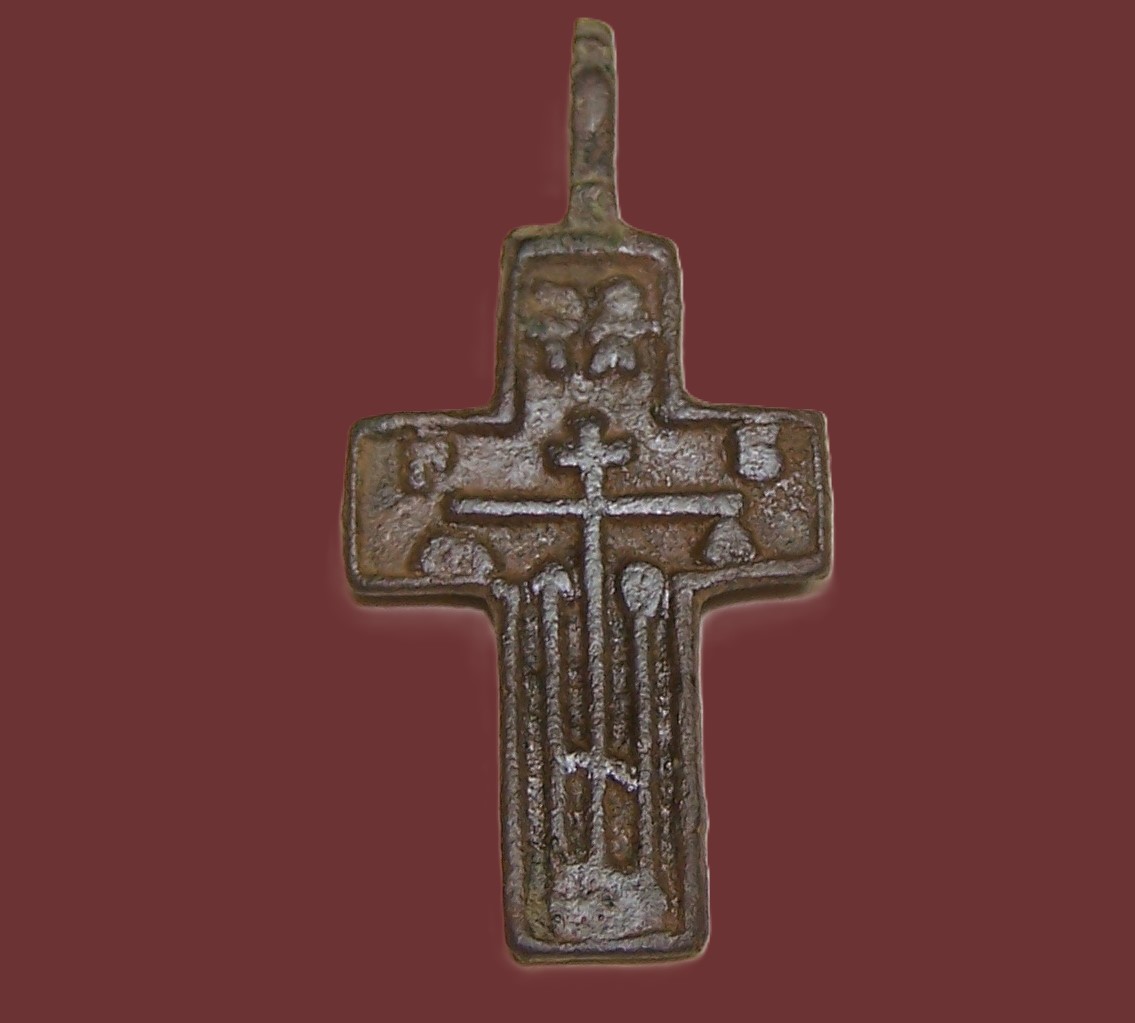
Small pectoral cross (ΗΜ496), with arms of equal width and rectangular ends. An integral suspension hole survives above the vertical arm. The front bears a smaller cross in relief with a titulus. Two elongated elements beside its lower arm may represent instruments of the Passion. Other raised motifs flank the cross. The reverse is covered by what may be an illegible inscription. From Dafniotissa.

09 / 13
Six gold solidi of Justin II (566–578 AD), struck at Constantinople. Found buried in a house in the area of ancient Elis, they were concealed after 578, presumably in response to danger. The concealment has been associated with unrest accompanying Slavic incursions and settlement during the transformation of the ancient city.
10 / 13
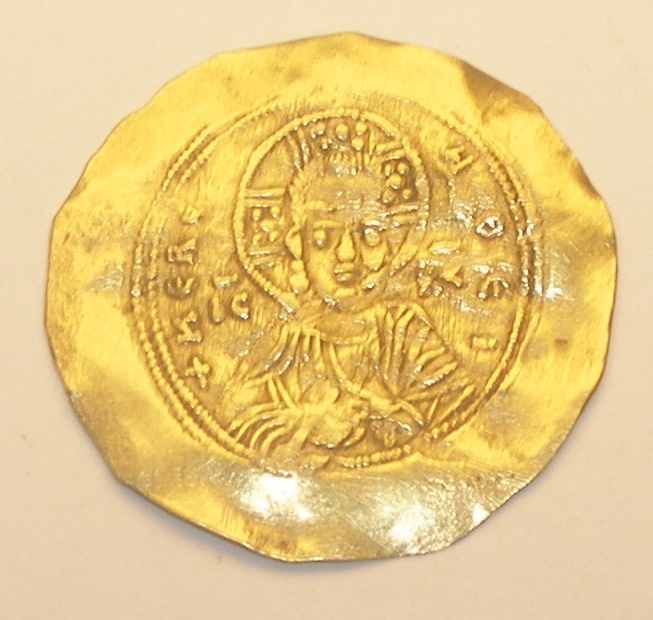
Hyperpyron of Emperor Manuel I Komnenos (1143–1180), HN3696.
11 / 13
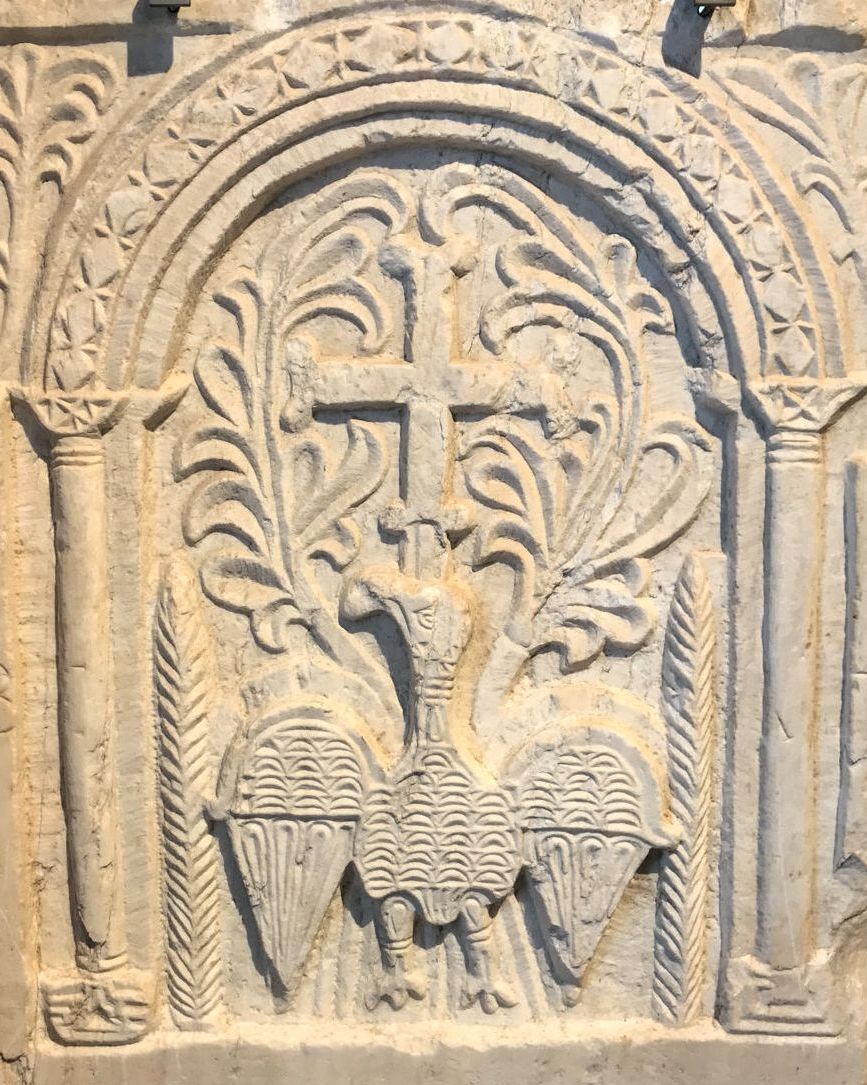
Marble pseudo-sarcophagus slab (ΗΛ58), richly carved on one face. Beneath an arch supported by columns, an eagle spreads its wings and turns its head to the viewer’s left, flanked by stylised palm branches or cypresses. A cross and floral ornament rise above the eagle. Reused in the wall of the Church of Panagia at old Marinaki, now Agios Dimitrios in Pineia. Middle Byzantine period, 11th–12th century.

12 / 13
Screen slab carved on both faces (ΗΛ891), possibly from an ambo. One face has a cross with widening arms within a rectangular panel. On the other, two concentric grooves surround a medallion containing a cross. From the Monastery of Frangavilla. Early Christian period.

13 / 13
Gospel book, or tetraevangelion, from the Monastery of Poretsou (ΗΔ700). This 14th-century parchment codex contains the Gospels of Mark, Luke, John and Matthew, recounting the life and teaching of Jesus Christ. Producing an illustrated manuscript required months of skilled copying and illumination. It is a rare surviving manuscript from Elis; a paper codex associated with the Monastery of Skafidia is also preserved.
