Visit-olympia : Οργανώστε ένα μοναδικό ταξίδι στα μνημεία και αξιοθέατα της Ηλείας και δημιουργήστε τη δική σας επική εμπειρία. Kάντε κλικ εδώ
Visit-olympia : Οργανώστε ένα μοναδικό ταξίδι στα μνημεία και αξιοθέατα της Ηλείας και δημιουργήστε τη δική σας επική εμπειρία. Kάντε κλικ εδώ

Pyrgos Archaeological Museum
Explore the historical collection of the Archaeological Museum of Pyrgos through 19 photographs and the stories of its objects.
Open each description to learn more. Select a photograph to view the image at full size in a new tab.
01 / 19
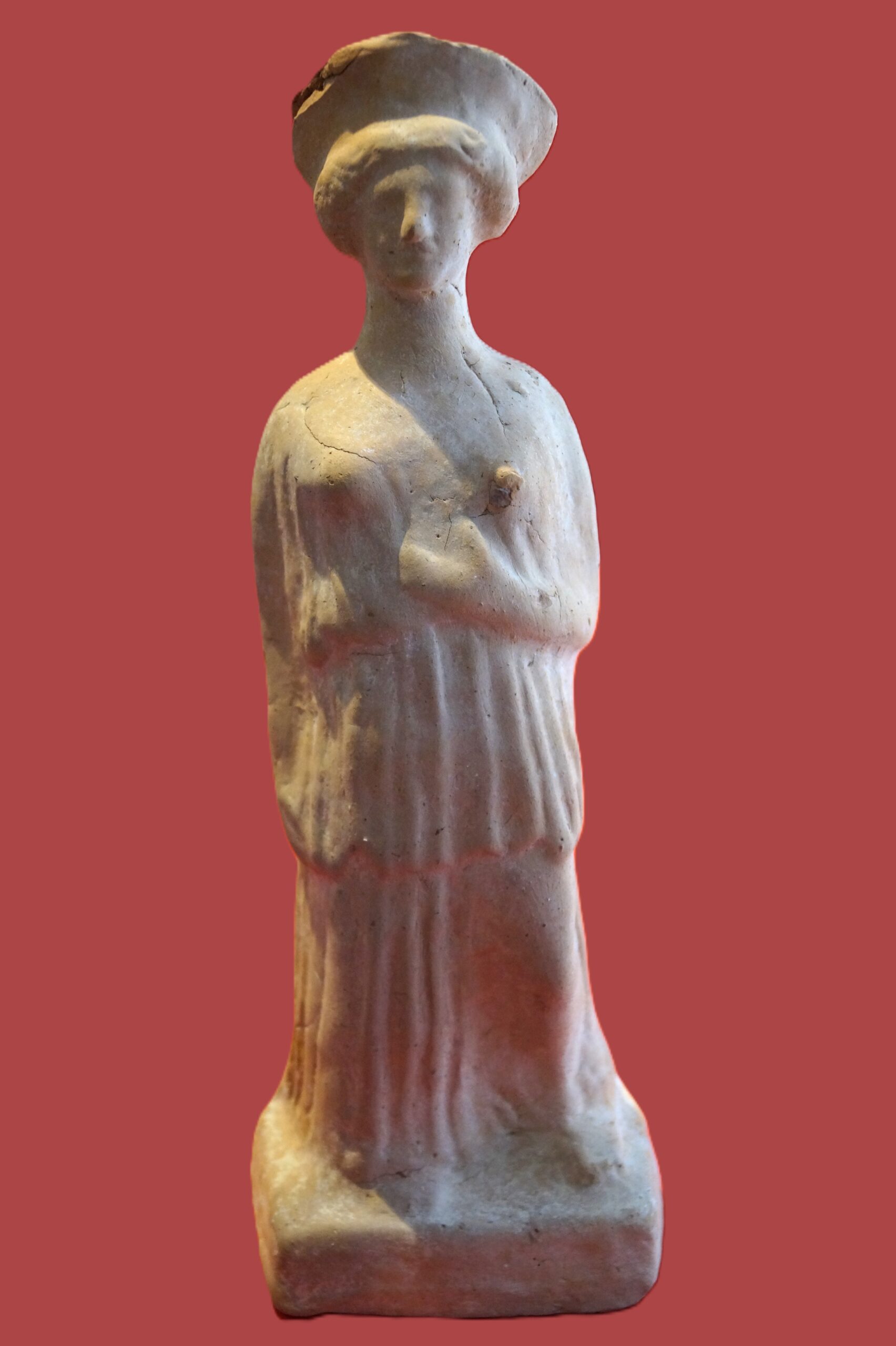
Complete mould-made clay female figurine (Π4039), possibly depicting a deity. Figurines were offered to the gods and often accompanied the dead in the afterlife. A grave offering from a burial pithos at Andravida. 4th century BC.

02 / 19
Clay hydria with ivy and laurel leaves decorating the neck (Π03824). Hydriai were used to carry water and were also common grave offerings. From Cheimadio, Spilies. 3rd century BC.
03 / 19
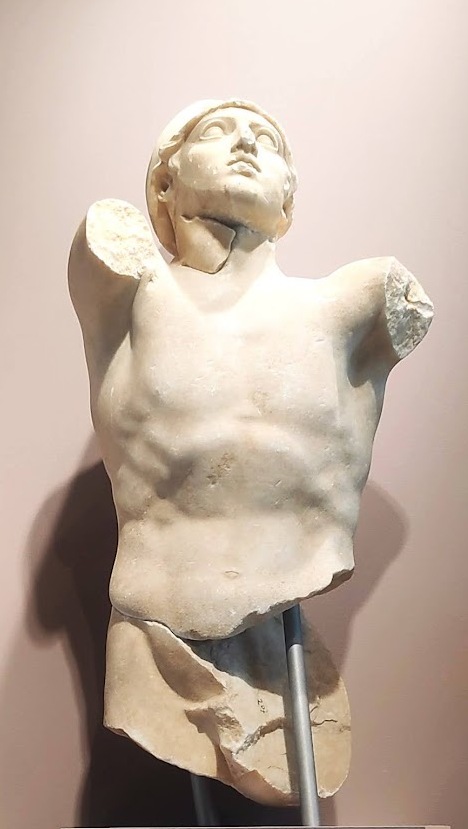
Marble nude warrior wearing a Corinthian helmet (Λ2090), rejoined from three pieces and preserved to the upper thighs. Only the beginnings of the upper arms survive; the left hip and part of the pubic area are missing. The helmet has a concave neck guard. One hole survives on the left shoulder blade, with traces of two more at the break of the left arm. The figure combines lightness with dynamic bodily movement. From the Amazonomachy composition in the west pediment of the Temple of Athena at Skillountia.

04 / 19
Bronze folding mirror (Μ02441). Its cover bears a high-relief scene of the abduction of Ganymede by Zeus in the form of an eagle. From Makistos, Petropigada. Hellenistic period (323–146 BC).

05 / 19
Elean clay lekythos (Π3627), decorated with raised tongue-shaped motifs ending in hooks curving to the left. Intended exclusively for funerary use. From Palouki, Paliomylos, in the municipality of Ilida. Late 5th–first half of the 4th century BC.

06 / 19
Composite female bust with a marble head inserted into an upper torso of limestone. The right arm was also inserted into the torso, which bears the folds of the garment in relief. Found in a monumental Hellenistic tomb excavated in 2009 on the southwest slope of the acropolis of Platiana. This location gave the museum’s prominent exhibit its name, the Lady of Platiana. 4th–3rd centuries BC.
07 / 19
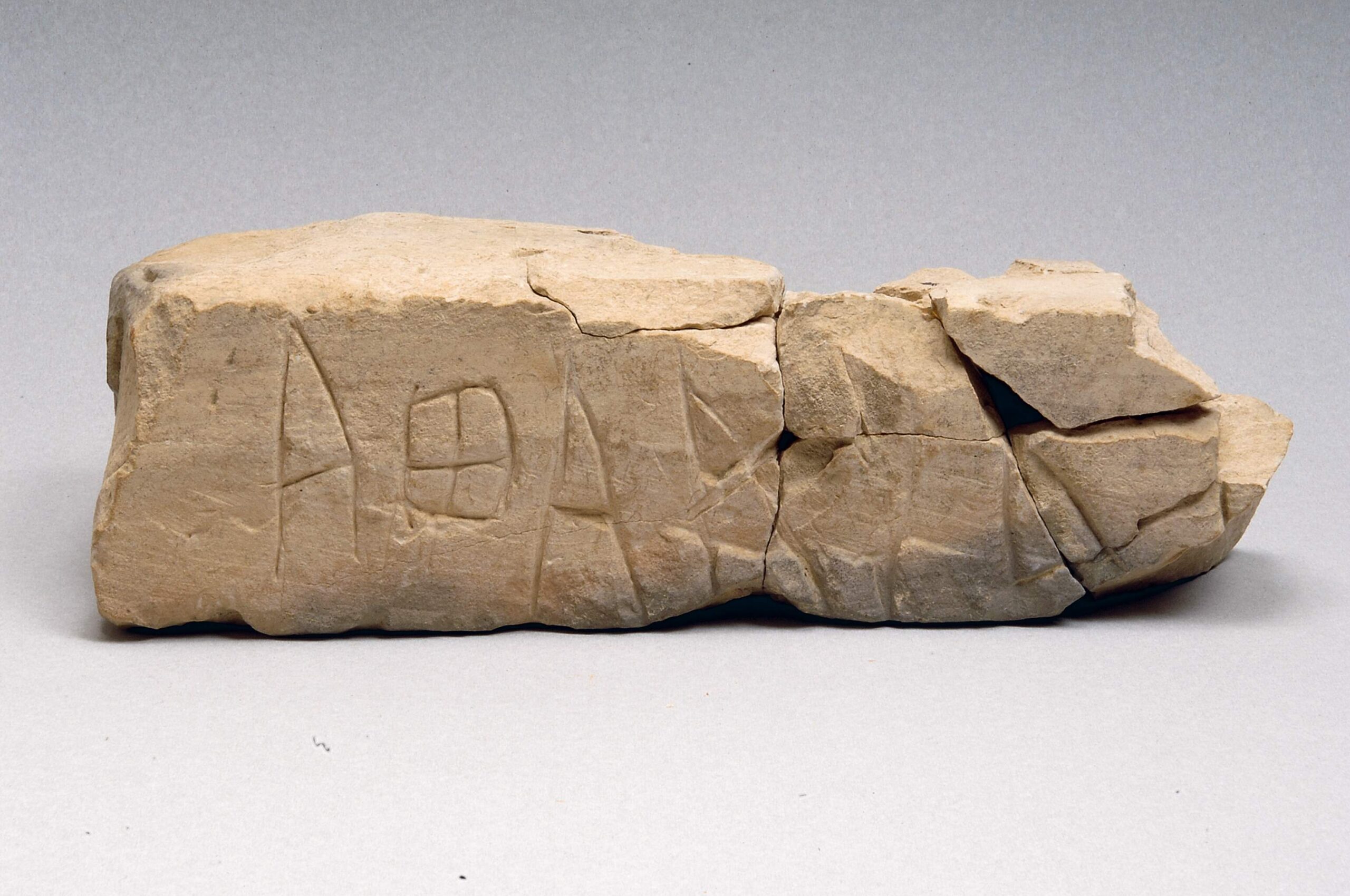
Inscribed stone bearing the word ΑΘΑΝΑ, Athena (Λ10361), rejoined from numerous fragments. Found during excavation of the Classical temple at Prasidaki, Zacharo, it provides evidence of the temple’s dedication to Athena. Early 5th century BC.
08 / 19
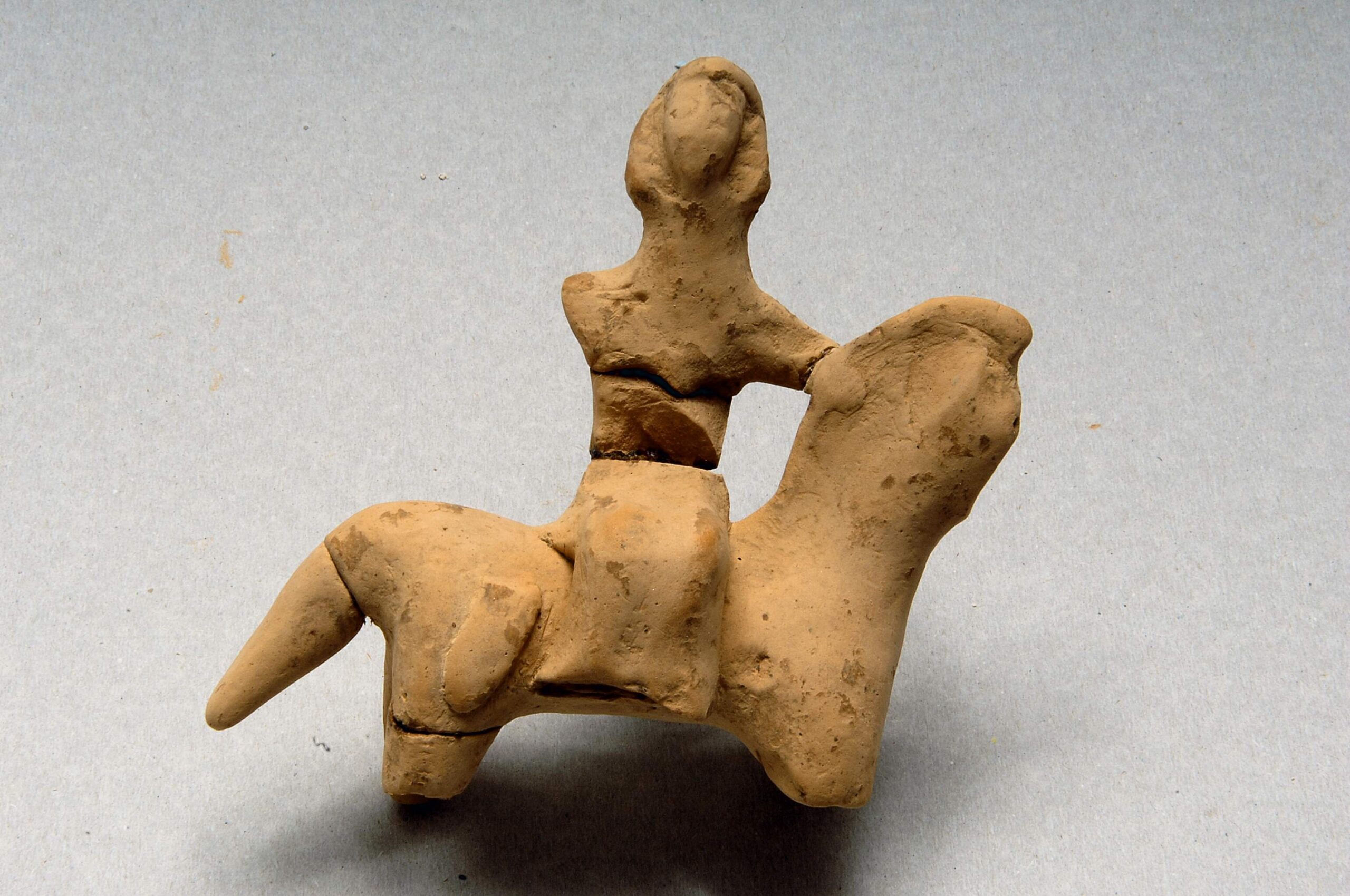
Clay group depicting a female rider (Π02480), incomplete and rejoined from five fragments. The woman’s right hand and part of her waist are missing. The horse has losses to its legs, except the left hind leg, and to its muzzle. The woman has an elongated face, large round eyes and hair arranged in a melon coiffure. She may represent Artemis, since the group comes from her temple at Koumouthekra, Zacharo. Archaic period (700–480 BC).

09 / 19
Clay roof cover tile with a palmette antefix (Π08744), complete, chipped and rejoined. The palmette ends in scrolls at the two lower corners. Traces of alternating black and red paint survive. From the Early Classical temple dedicated to Athena at Prasidaki, Zacharo.
10 / 19
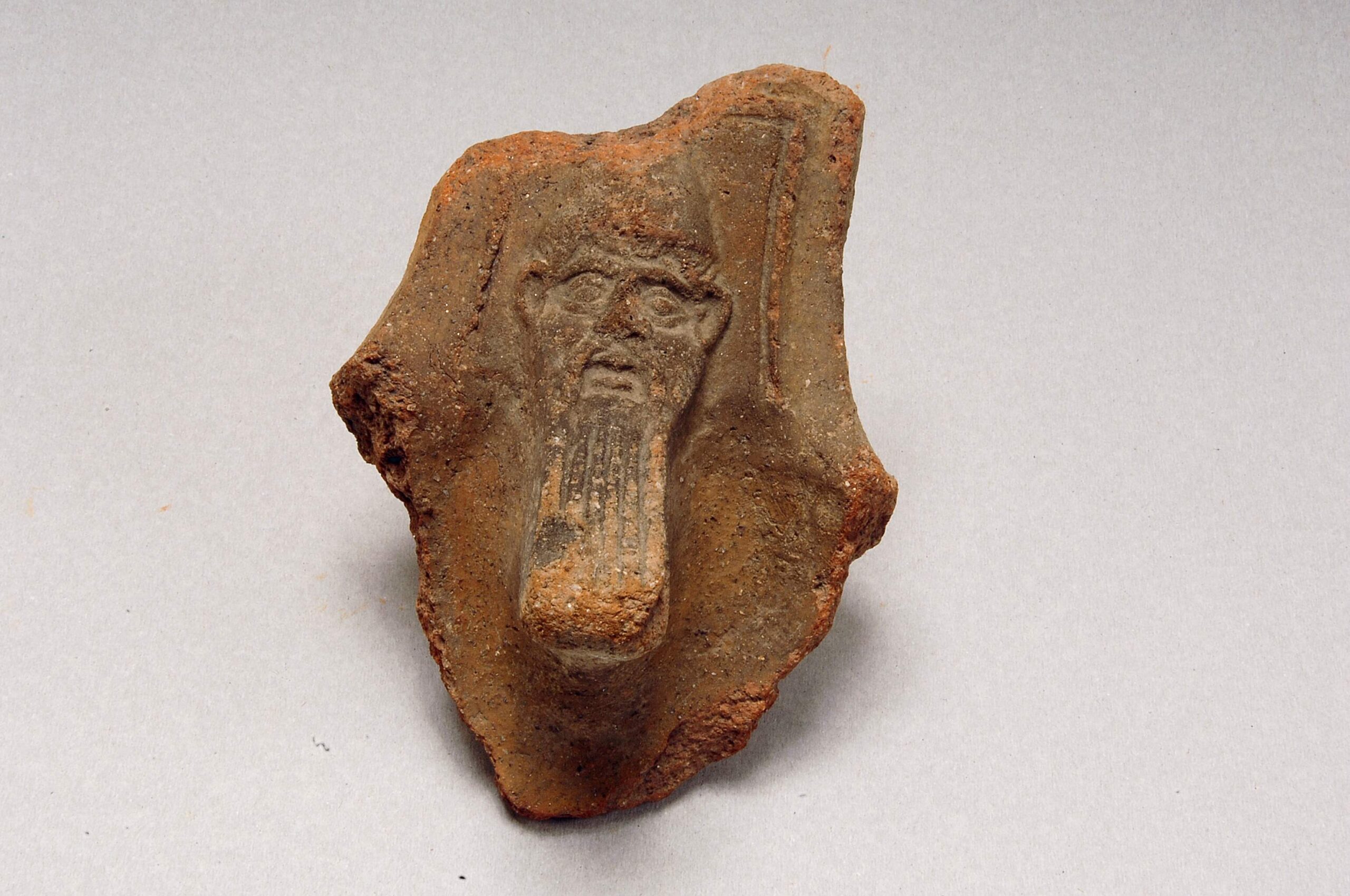
Fragment of a clay brazier (Π02476), decorated in high relief with a bearded figure resembling a satyr. The brazier was used to roast the entrails of sacrificial animals. The surviving fragment forms one of three supports for the roasting grille. From the Temple of Artemis at Koumouthekra, Zacharo. Geometric period.
11 / 19
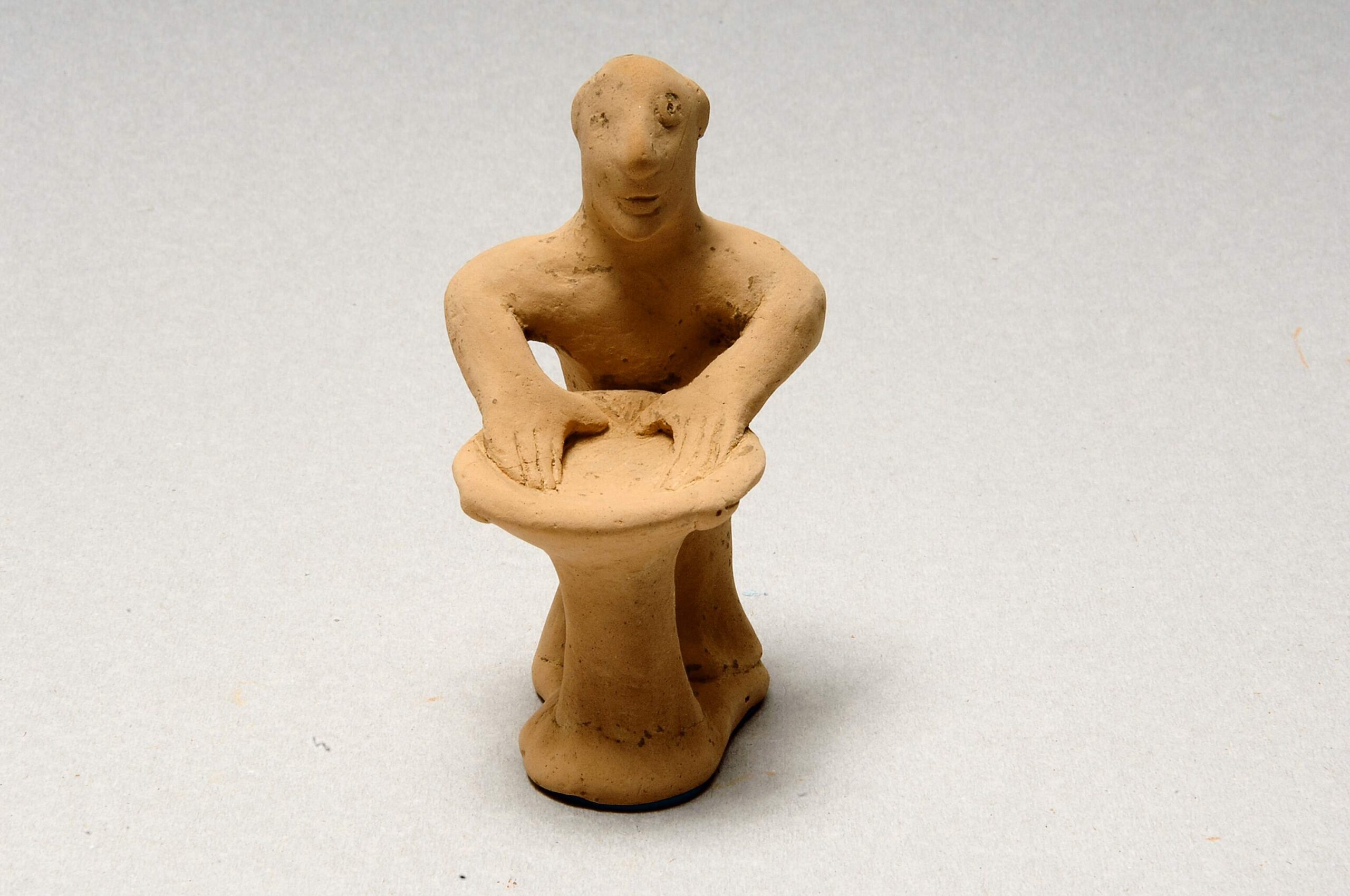
Clay figurine of a woman standing before a basin (Π02383). Her schematically rendered hands rest on a basin with a tall cylindrical base, possibly for preparing bread dough. From the Temple of Artemis at Koumouthekra. Geometric period.
12 / 19
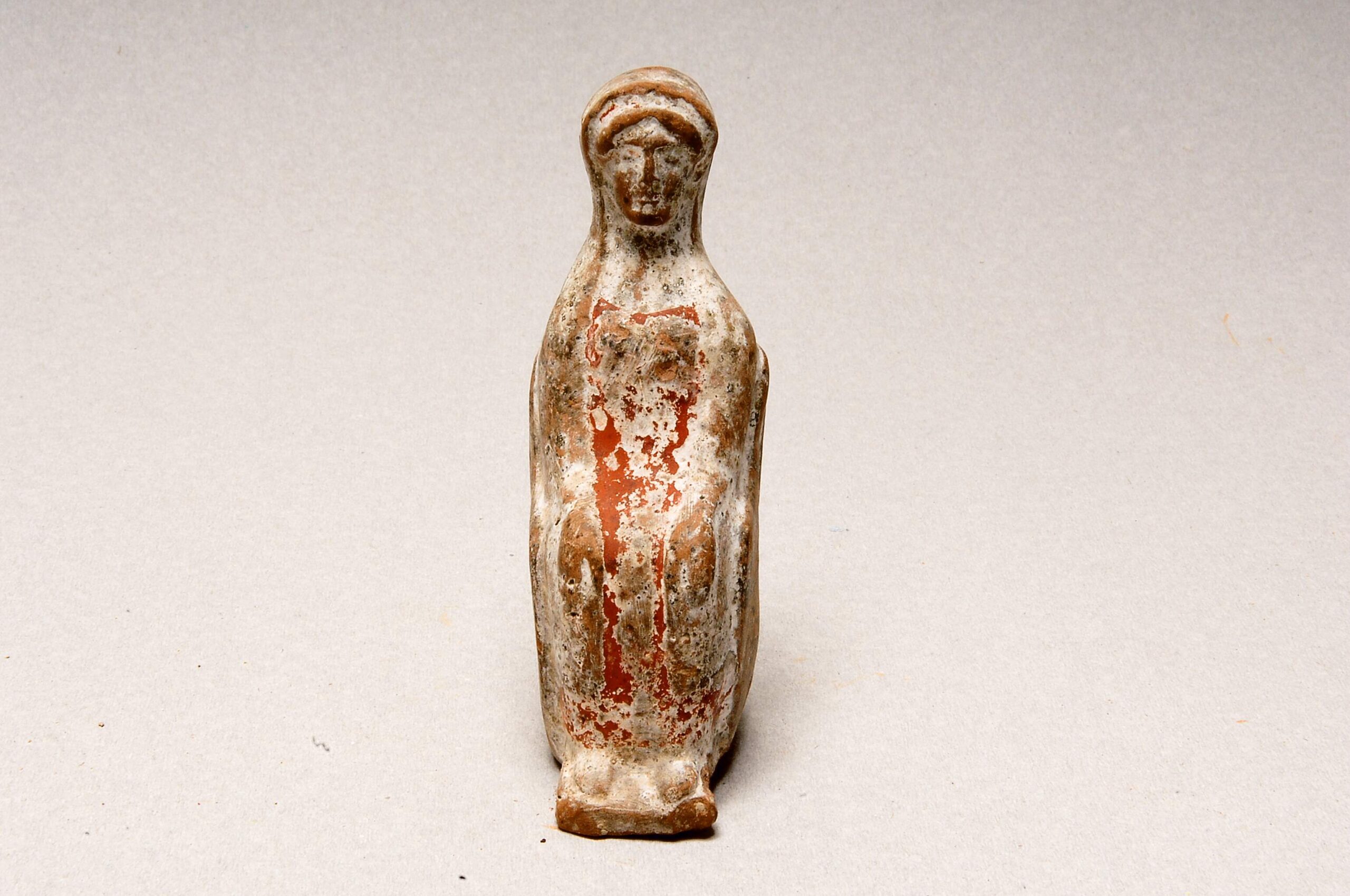
Clay figurine of a seated woman (Π02352). From the Temple of Artemis at Koumouthekra. Mid-5th century BC.
13 / 19
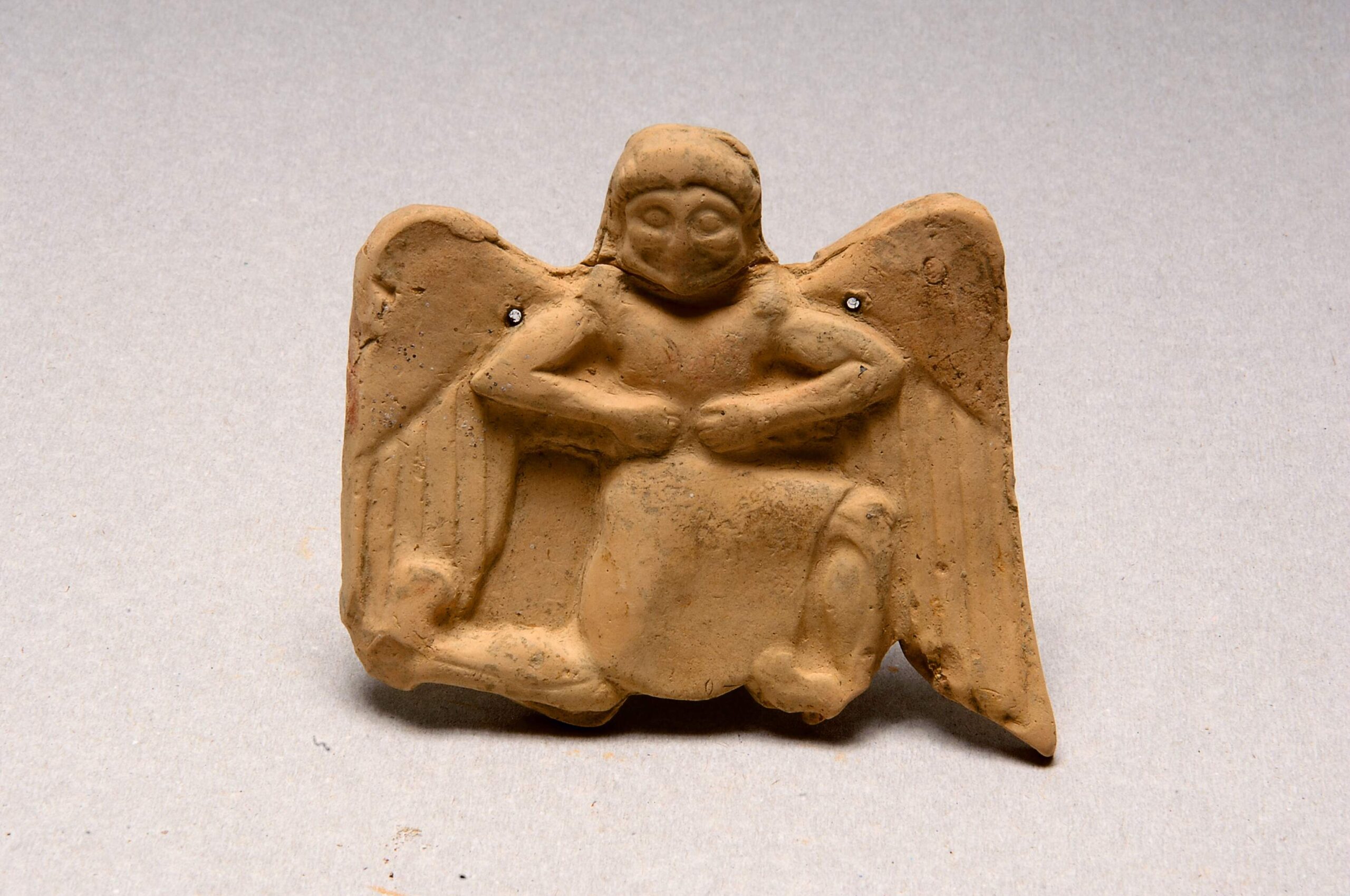
Clay plaque depicting a Gorgon (Π09349Α), complete. The figure adopts the conventional kneeling-running pose: the head and torso face forwards, while the legs appear in profile with bent knees in a vigorous stride. Two symmetrical holes near the roots of the wings allowed suspension. From the Early Classical Temple of Athena at Prasidaki, Zacharo.

14 / 19
Clay plaque depicting a cockerel (Π09478Α), complete and rejoined from four fragments. From the Early Classical Temple of Athena at Prasidaki, Zacharo.
15 / 19
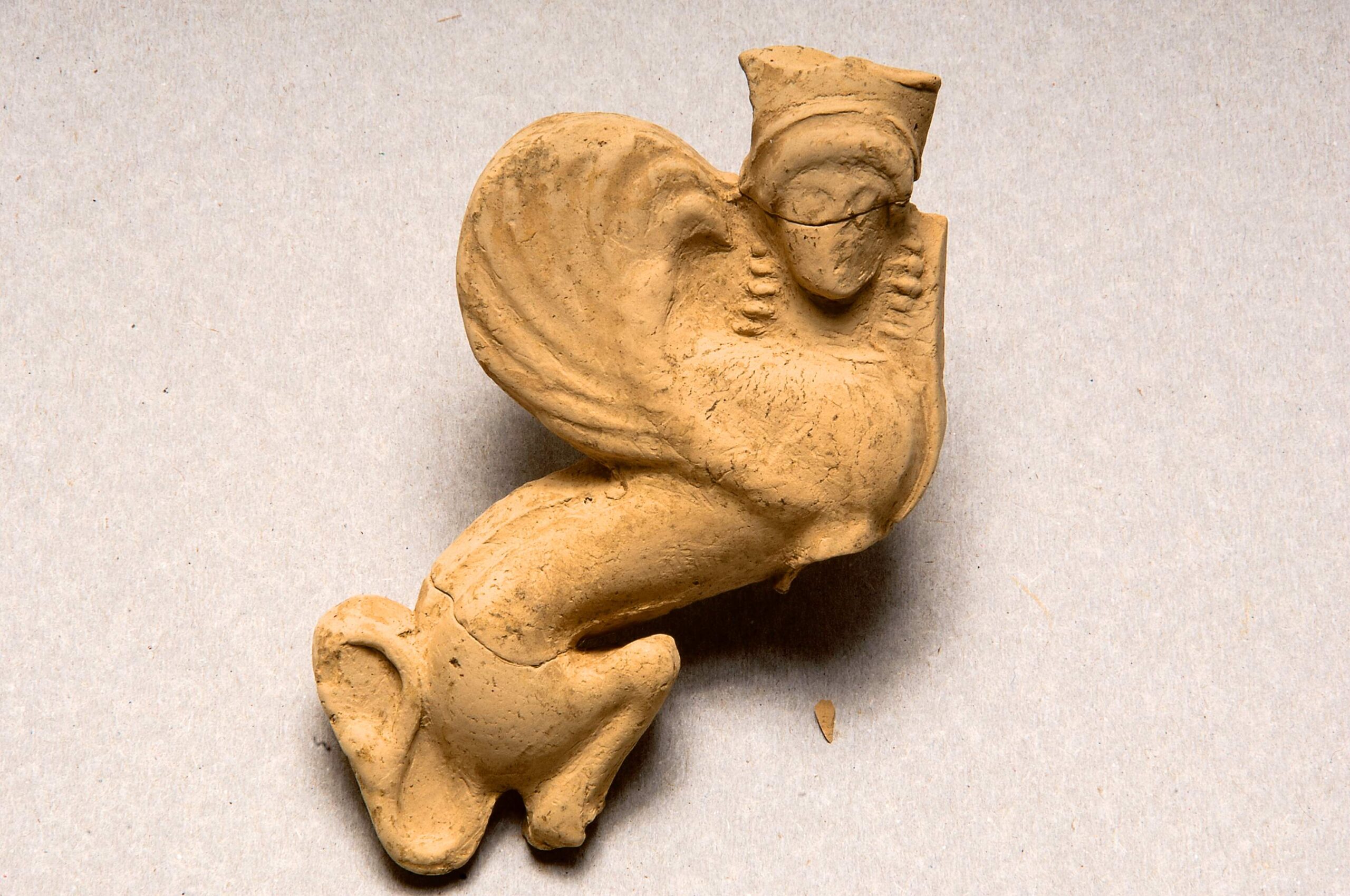
Clay plaque depicting a sphinx (Π09412Α), rejoined from three fragments; the forelegs are missing. From the Early Classical Temple of Athena at Prasidaki, Zacharo.
16 / 19
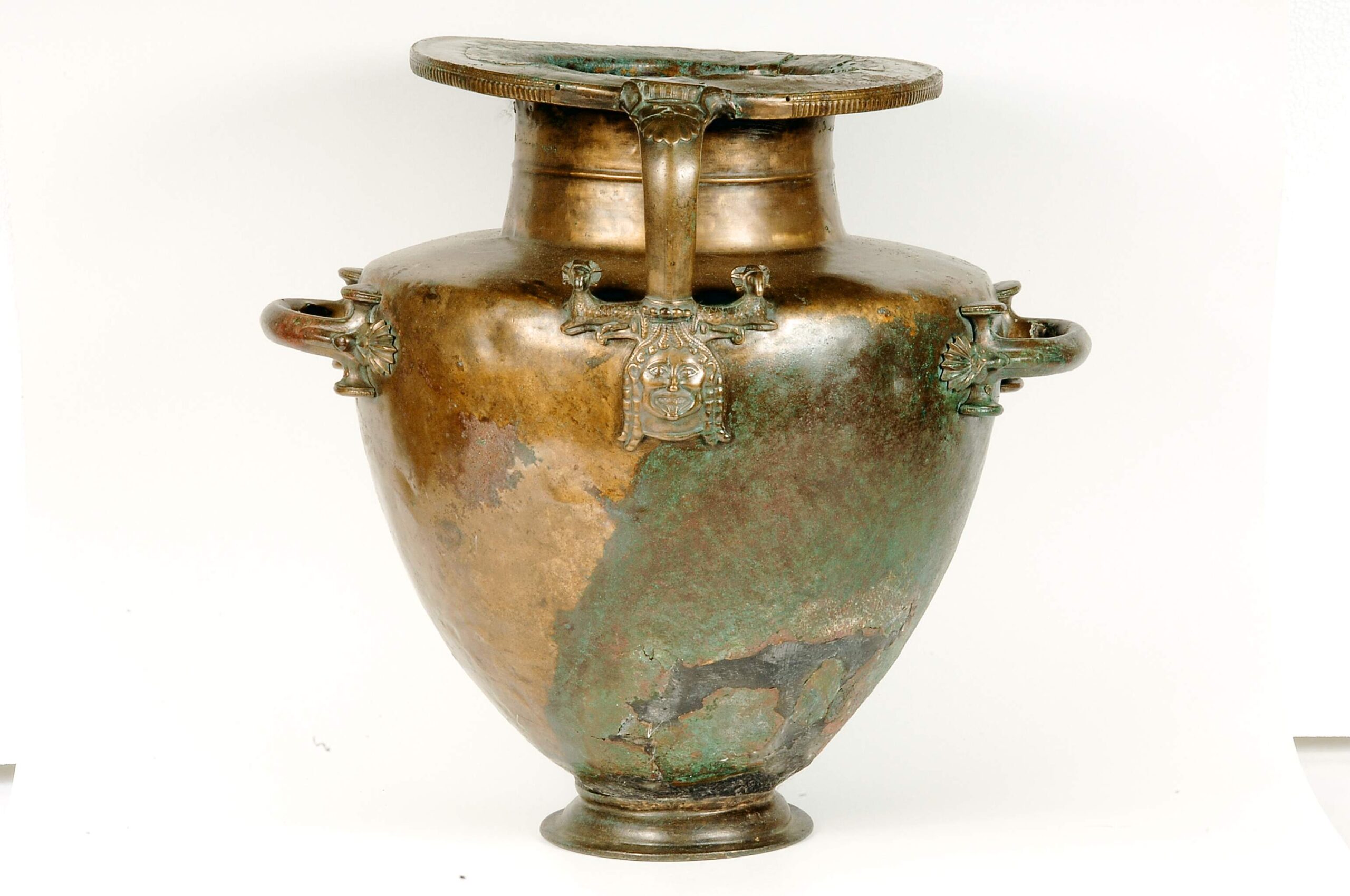
Bronze hydria (Μ01900).

17 / 19
Glass amphoriskos used as a perfume container (Δ00139). Its manufacture points to the eastern Mediterranean. From the Temple of Artemis at Koumouthekra. Late 6th–5th century BC.
18 / 19
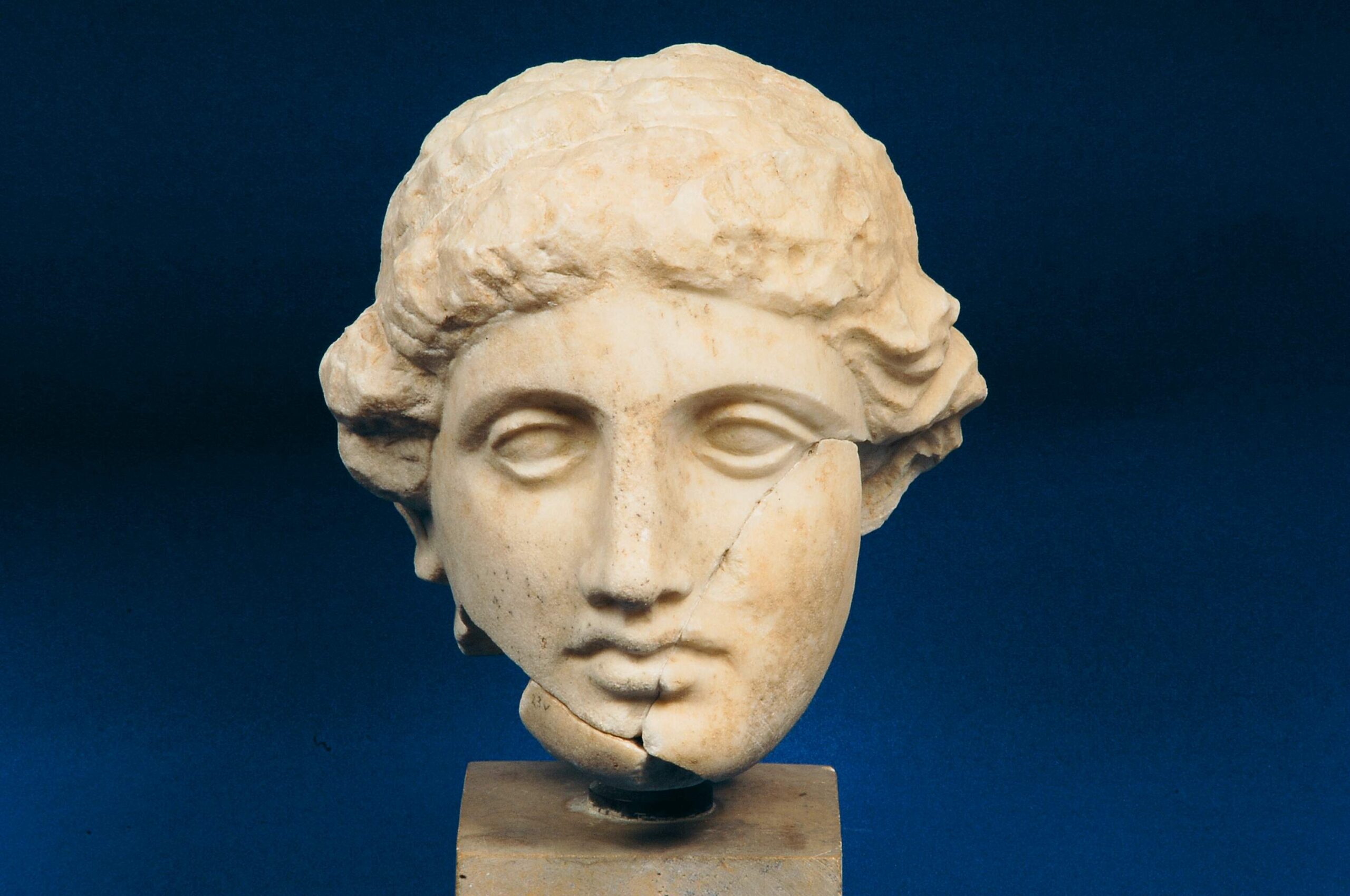
Marble female head (Λ02087), rejoined from three pieces. The area of the ear behind the left cheek is broken. The face is oval, with almond-shaped eyes, sharply ridged eyelids and a slightly open mouth. Centre-parted hair falls in loose waves around the face and covers the upper part of the right ear. A broken surface beside the parting indicates a detached element. From a statue in the Gigantomachy composition of the east pediment of the Temple of Athena Makistos at Mazi, Skillountia. First half of the 4th century BC.
19 / 19
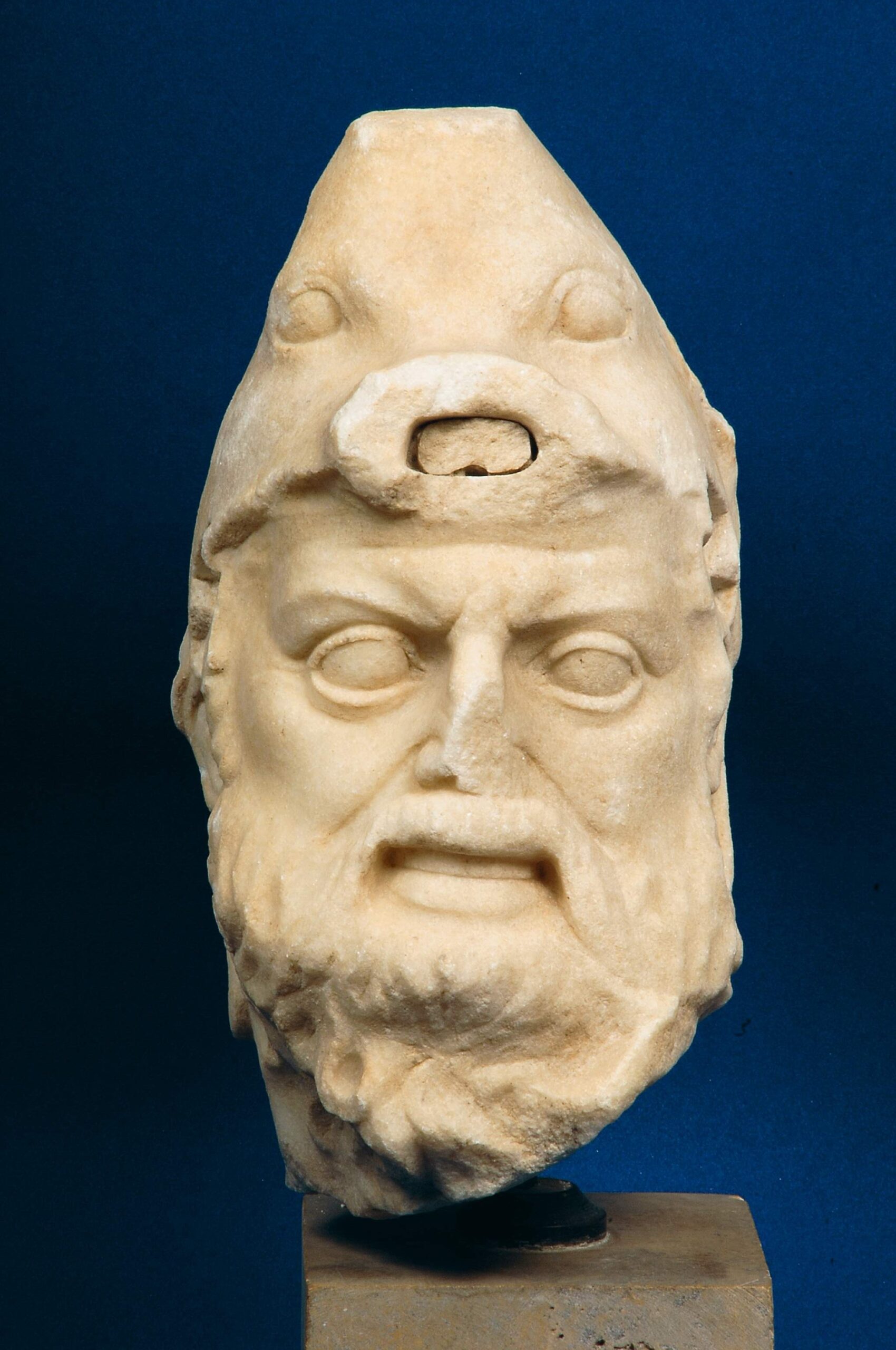
Nearly complete marble head of a bearded man wearing a helmet (Λ02089). The upper part of the helmet takes the form of an animal’s head; its separately attached crest, muzzle and ears are damaged. The cheek pieces were also separately attached. The man has a frowning expression, wrinkles across the forehead and at the corners of the eyes, an aquiline nose, a half-open mouth and a beard rendered in short wavy curls. From a statue in the Gigantomachy composition of the east pediment of the Temple of Athena Makistos at Mazi, Skillountia. First half of the 4th century BC.
