Visit-olympia : Οργανώστε ένα μοναδικό ταξίδι στα μνημεία και αξιοθέατα της Ηλείας και δημιουργήστε τη δική σας επική εμπειρία. Kάντε κλικ εδώ
Visit-olympia : Οργανώστε ένα μοναδικό ταξίδι στα μνημεία και αξιοθέατα της Ηλείας και δημιουργήστε τη δική σας επική εμπειρία. Kάντε κλικ εδώ

Pyrgos Archaeological Museum · Learn & explore
Discover the objects, techniques and practices of archaeology through definitions and examples from the museum collections.
Select a term in the alphabetical index to reach its card. Open or close a definition using + / −. Select an image to view it in a new tab.
A characteristic Mycenaean vessel for transporting and storing wine, olive oil and perfumed oils. Its vertical neck is closed, and liquid is poured through a separate spout beside it. Stirrup jars also served as grave offerings: their contents were evidently considered useful in the afterlife.
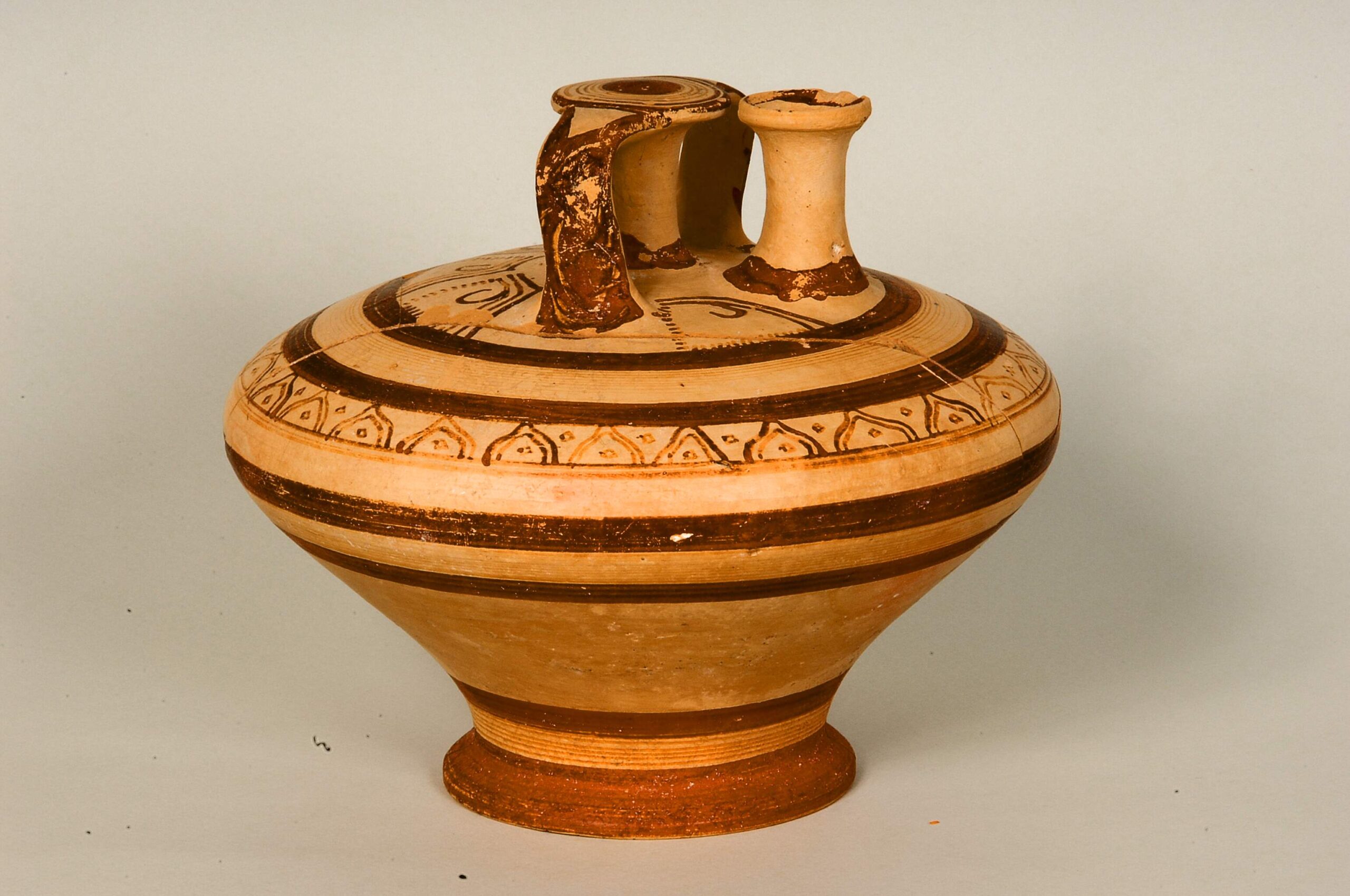
Stirrup jar (Π09159)
A bronze folding mirror with a disc-shaped body and an omega-shaped handle. It consists of two hinged circular sections, with the reflecting surface inside. Handles were used to open and close it. Many examples have engraved or relief decoration on the cover.
Mirrors were everyday grooming accessories, as they are today. Closely associated with women, they accompanied them throughout life and were also placed in graves as offerings. Mirrors found in sanctuaries of female deities served as votive offerings.

Bronze folding mirror (Μ02441)
The application of a glass-like coating to the surface of a vessel. Glazing makes pottery waterproof, gives it a lustrous appearance and enhances its painted or incised decoration.

Glazed pottery (ΗΠ1863)
A coffin of marble, stone or clay, sometimes decorated with sculpture or painting, used to hold the dead in various periods.
A pseudo-sarcophagus consists only of a relief slab forming the front of a tomb, set within an arcosolium (an arched burial recess). It was particularly widespread in the Middle Byzantine period.
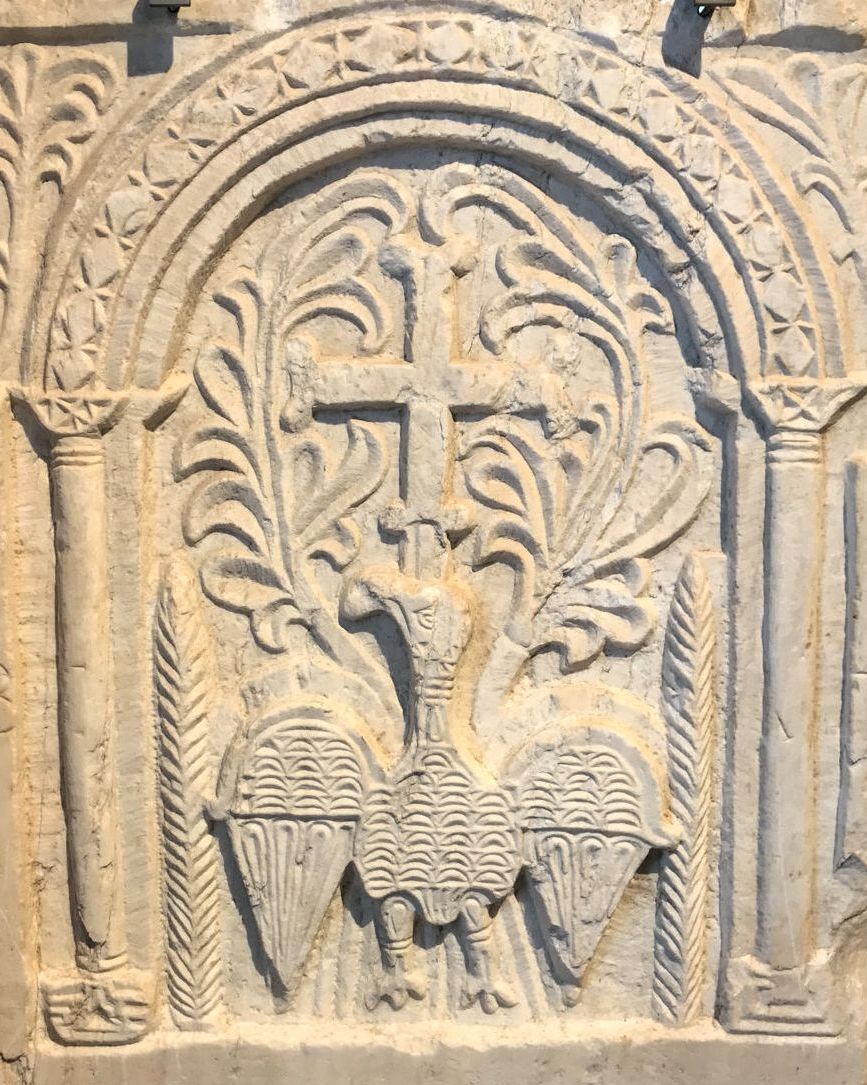
Sarcophagus slab
The bowl that held tobacco in a long-stemmed pipe (çubuk). Usually made of fine clay, these bowls often had elaborate decoration. Tobacco spread rapidly from the West among the peoples of the Ottoman Empire. Beyond personal enjoyment, pipe smoking became a social custom and a ritualised practice among Greeks and Turks. From the mid-19th century, the spread of hand-rolled cigarettes gradually displaced the traditional long-stemmed pipe.

Tobacco-pipe bowl (ΗΔ494), made of fine clay or meerschaum, with elaborate floral decoration.
A votive offering is an object dedicated to a deity or sacred place as an expression of devotion, gratitude or supplication. This practice occurs in many ancient religions, notably those of Greece and Rome.
Continuing as a religious practice to the present day, the votive offering gives material expression to faith and forms a link between people and the divine.
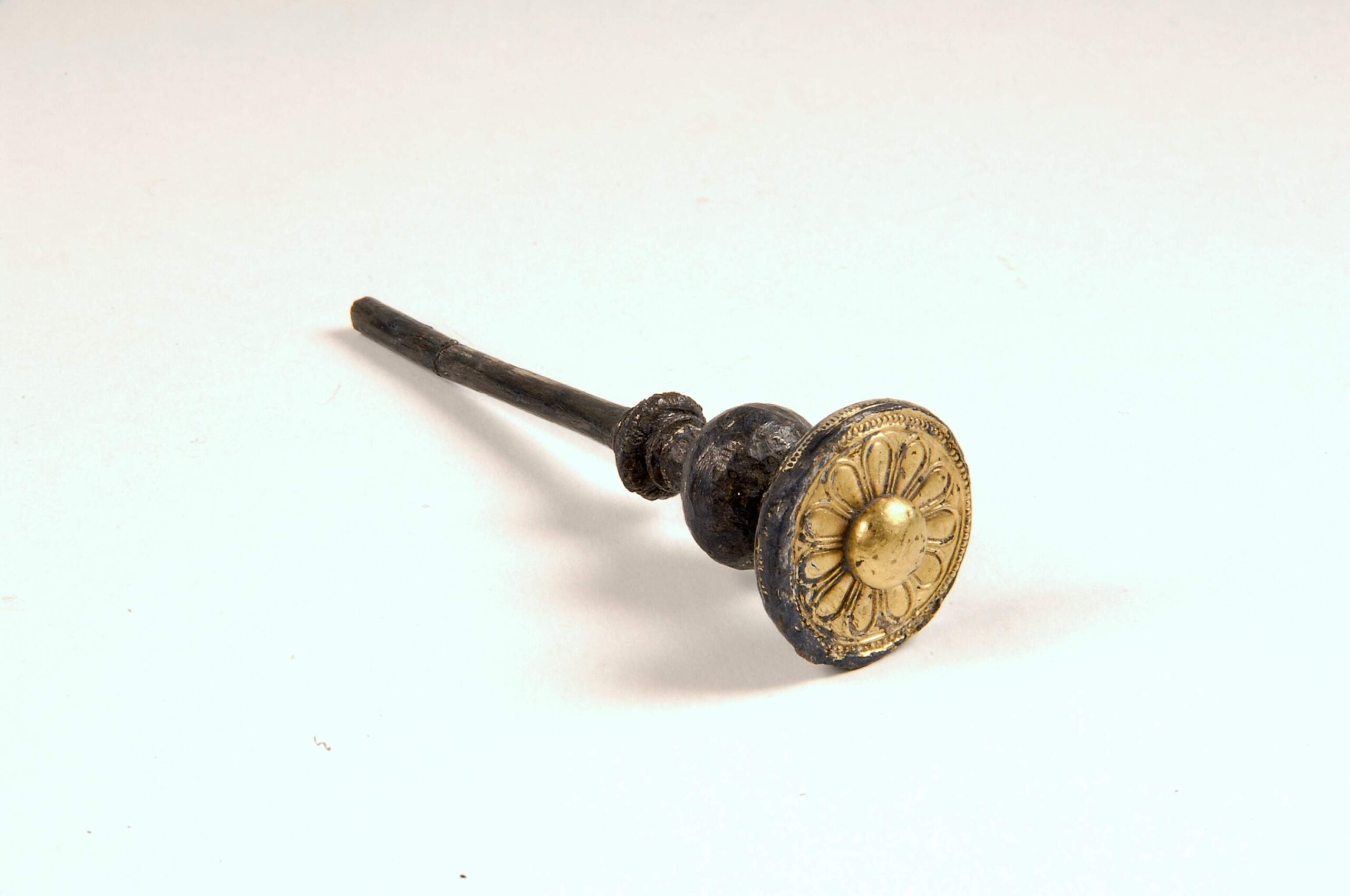
Silver and gold pin (Μ02605) from the Temple of Athena at Prasidaki. Jewellery was a common type of votive offering.
In architecture and sculpture, an astragal is a relief ornament comprising bead-like elements alternating with small discs. It may accompany Ionic or Lesbian mouldings on architraves and columns of Ionic or Corinthian buildings.
Astragaloi, the ankle bones of cloven-hoofed animals, were also used as knucklebones in a popular game played from antiquity into the last century.
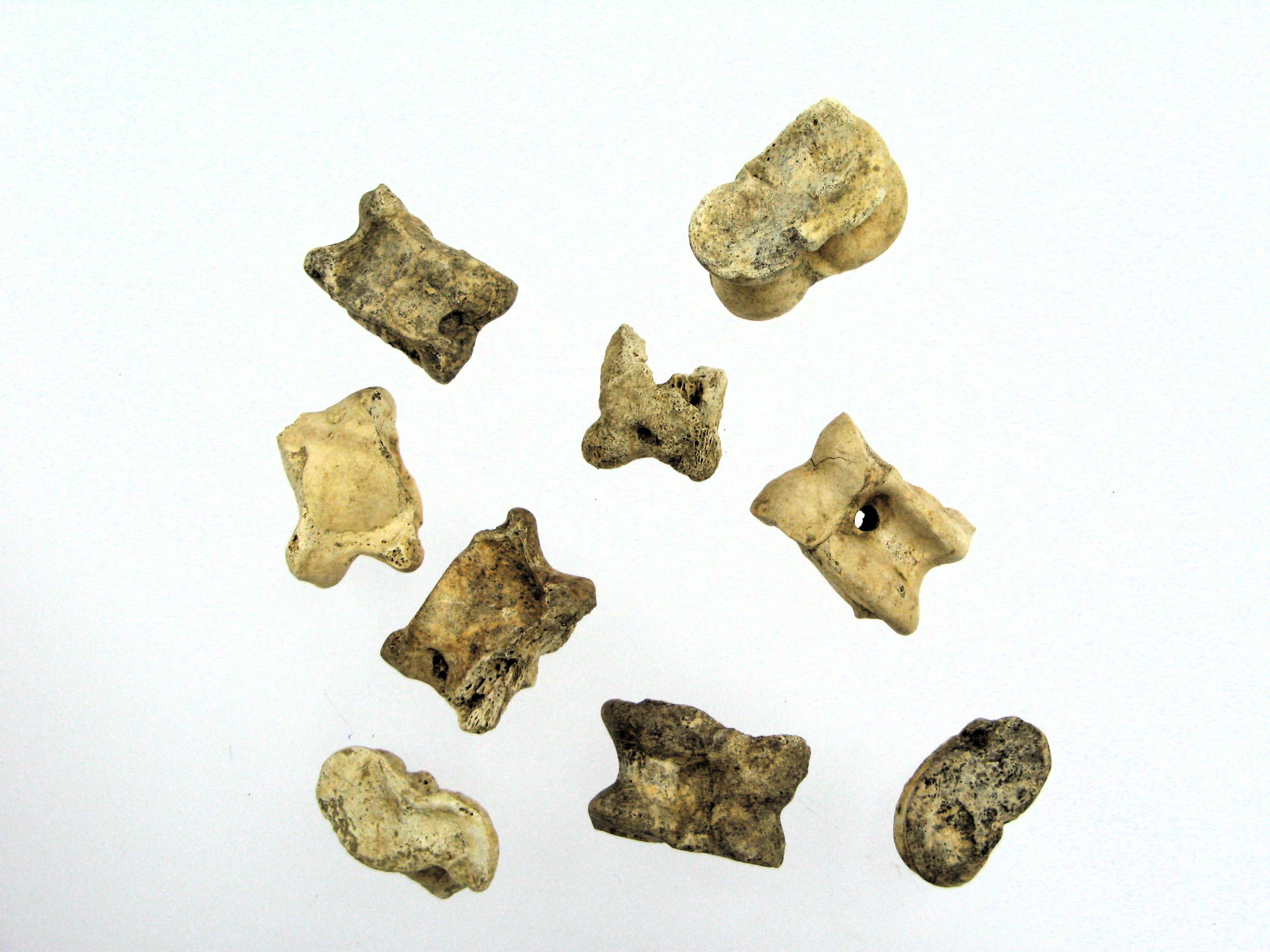
Bone knucklebones (Δ1116α-θ), used as children’s toys and dedicated during rites of passage.
A vessel used at the symposium for mixing wine with water, from Mycenaean times through Classical antiquity. Its importance in the Mycenaean world is reflected in the notable examples of figurative vase painting on kraters of the 13th and 12th centuries BC.

Complete krater with painted figurative decoration (Π13850), used as a grave marker. Each side depicts two chariots with their drivers. The scene recalls the funeral games held for Patroclus, the friend of Achilles, in Homer’s account. The imagery is associated with Mycenaean chariot racing and the burial and commemoration of warriors. This outstanding example of Mycenaean vase painting was made in an Elean workshop. From the Mycenaean cemetery at Mageiras, at Kioupia near Ancient Olympia. 12th–11th centuries BC.
An object placed in a grave with the deceased. It might be valuable, used in daily life or especially cherished during the person’s lifetime.
Examples include artefacts, weapons, vessels, tools and jewellery.
Grave offerings provide important evidence concerning the identity and social status of the deceased, as well as beliefs about the afterlife. Their origins can also reveal commercial or cultural exchange.
Their materials and manufacturing techniques help us understand technological development and artistic trends in different periods.
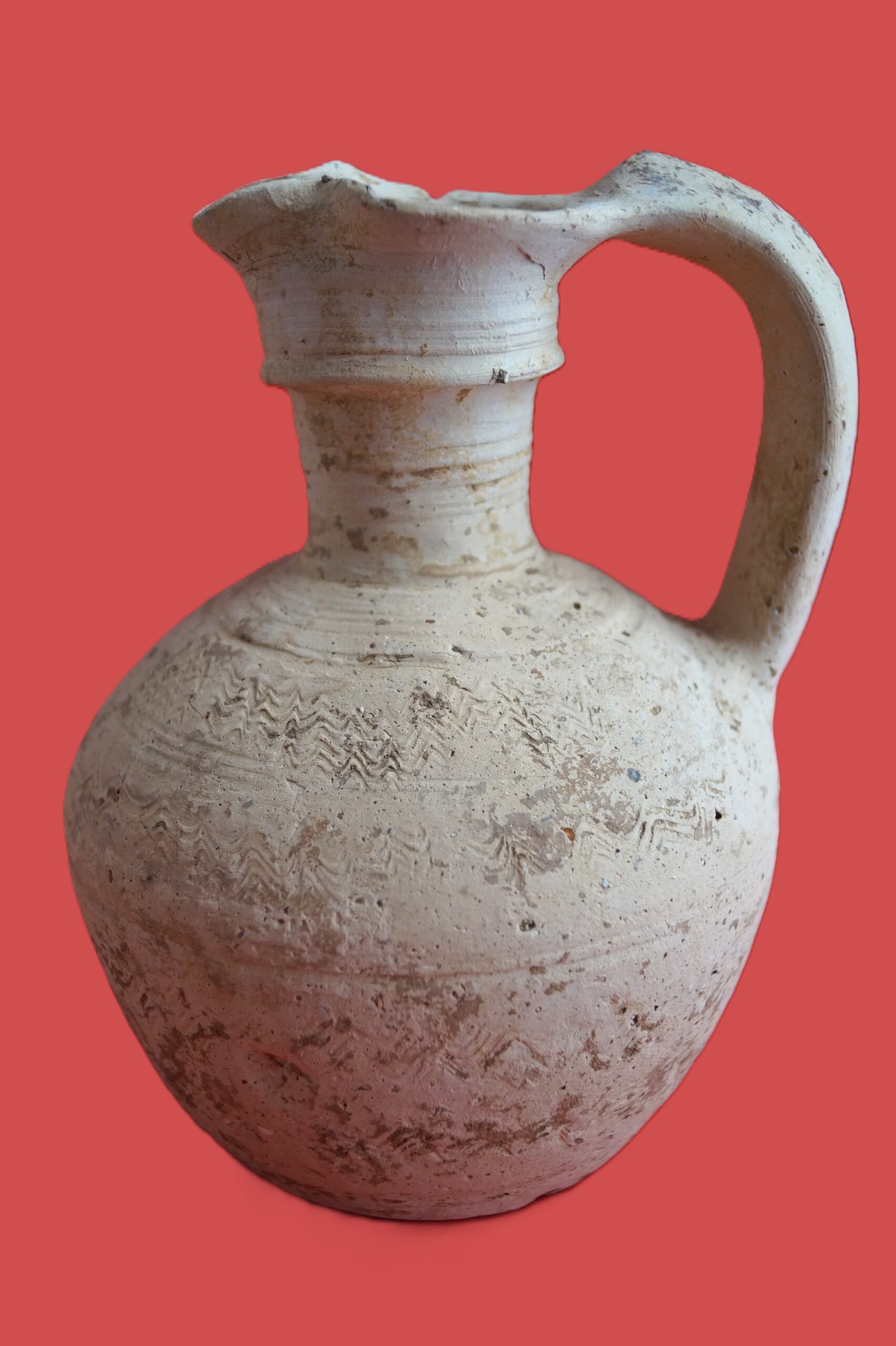
Clay oinochoe (ΗΠ2371), with a flat base, spherical body, ribbed strap handle, trefoil spout and narrow cylindrical neck. Incised zigzags encircle the body. A Byzantine grave offering from Velmacheika, Miraka, near Olympia.
The word rhyton derives from the Greek verb meaning “to flow”. Rhyta were important ritual vessels in the ancient Near East, the Aegean, Minoan Crete and mainland Greece during the Mycenaean and later periods.
Rhyta were used for libations: offerings of liquids such as wine, honey or oil to deities or the dead. Held with the mouth upwards, they released liquid through an outlet hole.
They could also serve as pouring vessels to control the flow of liquid, or for filtering certain liquids.
Rhyta occur in many forms, including conical, ovoid, pear-shaped, cup-shaped, animal-shaped and human-shaped examples.
Their presence and decoration illuminate worship and ritual practices, as well as commercial and cultural interaction.

Large clay rhyton (Π00070), rejoined and restored. Its pointed conical body has a wide mouth, a slightly concave neck and a raised strap handle. Parallel painted bands cover its full height. A ritual vessel deposited as a grave offering. From the burial mound at Kleidi, Kato Samiko. Mycenaean period, Late Helladic IIIA2 (second half of the 14th century BC).
A usually cylindrical container with a separate lid, made in pottery or carved wood. Pyxides commonly held cosmetics and grooming accessories and are often found in graves.

