Visit-olympia : Οργανώστε ένα μοναδικό ταξίδι στα μνημεία και αξιοθέατα της Ηλείας και δημιουργήστε τη δική σας επική εμπειρία. Kάντε κλικ εδώ
Visit-olympia : Οργανώστε ένα μοναδικό ταξίδι στα μνημεία και αξιοθέατα της Ηλείας και δημιουργήστε τη δική σας επική εμπειρία. Kάντε κλικ εδώ

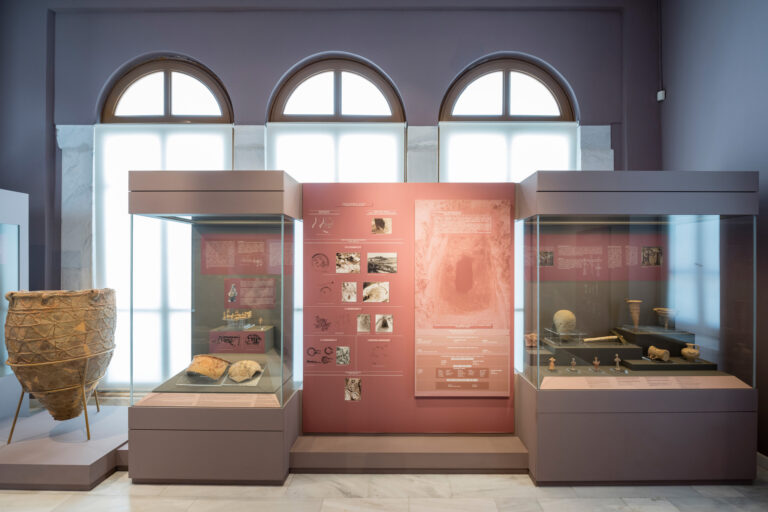
Pyrgos Archaeological Museum
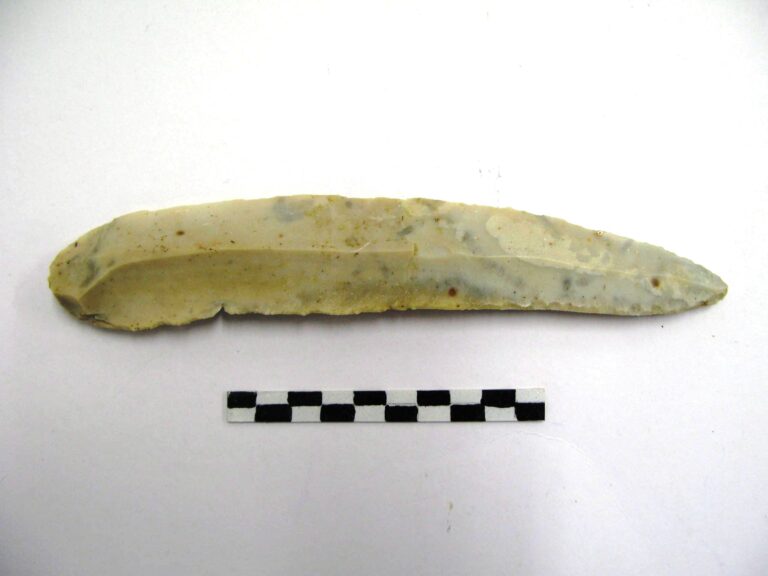
Reconstructing a complete picture of prehistoric settlements in Ilia remains difficult because the surviving settlement remains are limited. Nevertheless, numerous stone tools dating to the Middle Palaeolithic (120,000–35,000 BC) attest to human activity in the region, favoured by its mild climate and fertile land.
The earliest peoples to settle in the region were the Caucones, Leleges and Minyans. The Achaeans arrived later and were succeeded by the Dorians.
The remains of organised settlements at Olympia, Lepreo, Kafkania, Strefi, Samiko, Diasella and Kakovatos provide valuable information about social organisation and public life. Other prehistoric sites are known only through burial remains scattered throughout Ilia, including the exceptionally important cemeteries of Agia Triada and Kladeos, whose excavation has offered valuable insights into people’s private lives.
A large number of artefacts clearly attest to settlements, permanent or otherwise, and habitation complexes during prehistory: the Palaeolithic, Neolithic, Early Helladic I–II and Late Helladic periods. These include vessels for eating and drinking (kylikes and bowls), storing liquids (amphorae) and perfumed oils (stirrup jars and alabastra), as well as stone grinding tools, mainly for crushing wheat grains, and equipment associated with the beginnings of productive activity.
The striking Mycenaean finds from various sites in Ilia point to communities with a clear social hierarchy and specialised occupations, including perfumers, scribes, craftspeople, hunters and warriors. Weapons often indicate social status.
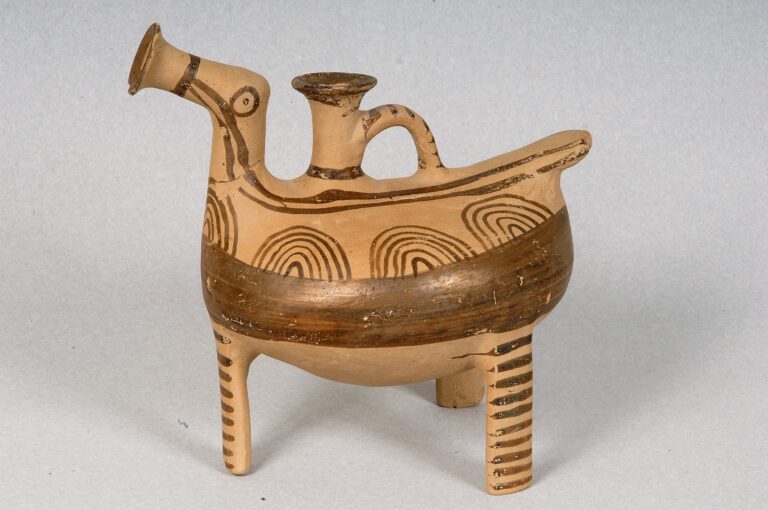
The study of the extensive production of characteristic Mycenaean vessels, such as two-handled and four-handled amphorae and stirrup jars, provides evidence for local pottery production as early as the Mycenaean period.
These objects, with their distinctive local styles and forms, shed light on the cultural life and everyday activities of the wider population.
Finds from Mycenaean tombs also reveal a society based on agriculture, livestock farming and hunting, alongside the development of other specialised crafts. Together, they suggest a considerable standard of living and material comfort for the inhabitants of Ilia.
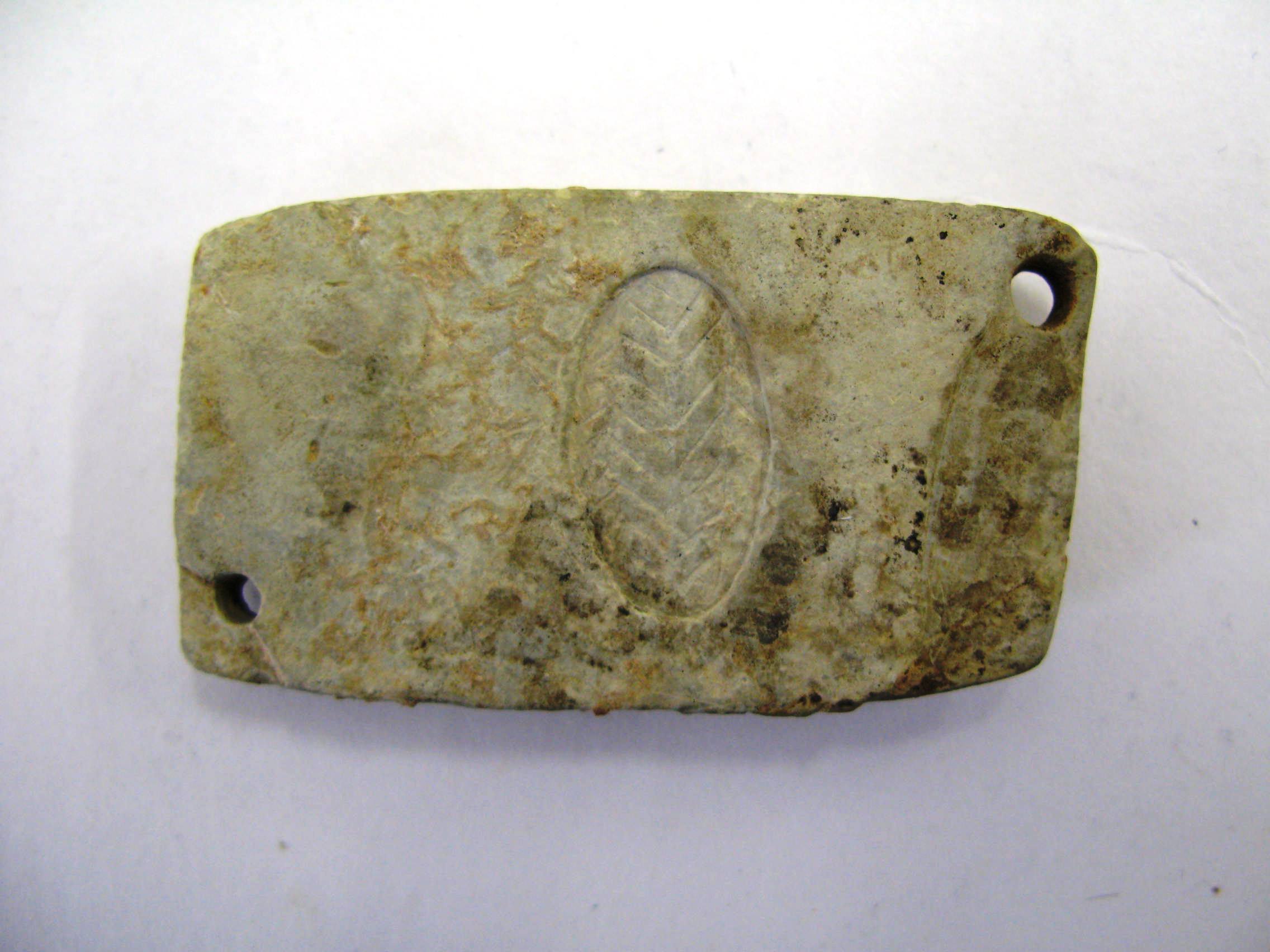
Stone mould for jewellery (Δ767), complete and slightly eroded, roughly rectangular. A shallow oval recess at the centre of the front face is decorated with zigzag lines. Two small holes are set diagonally opposite each other at the corners. Used to make a ring bezel. A grave offering indicating the occupation of a goldsmith.
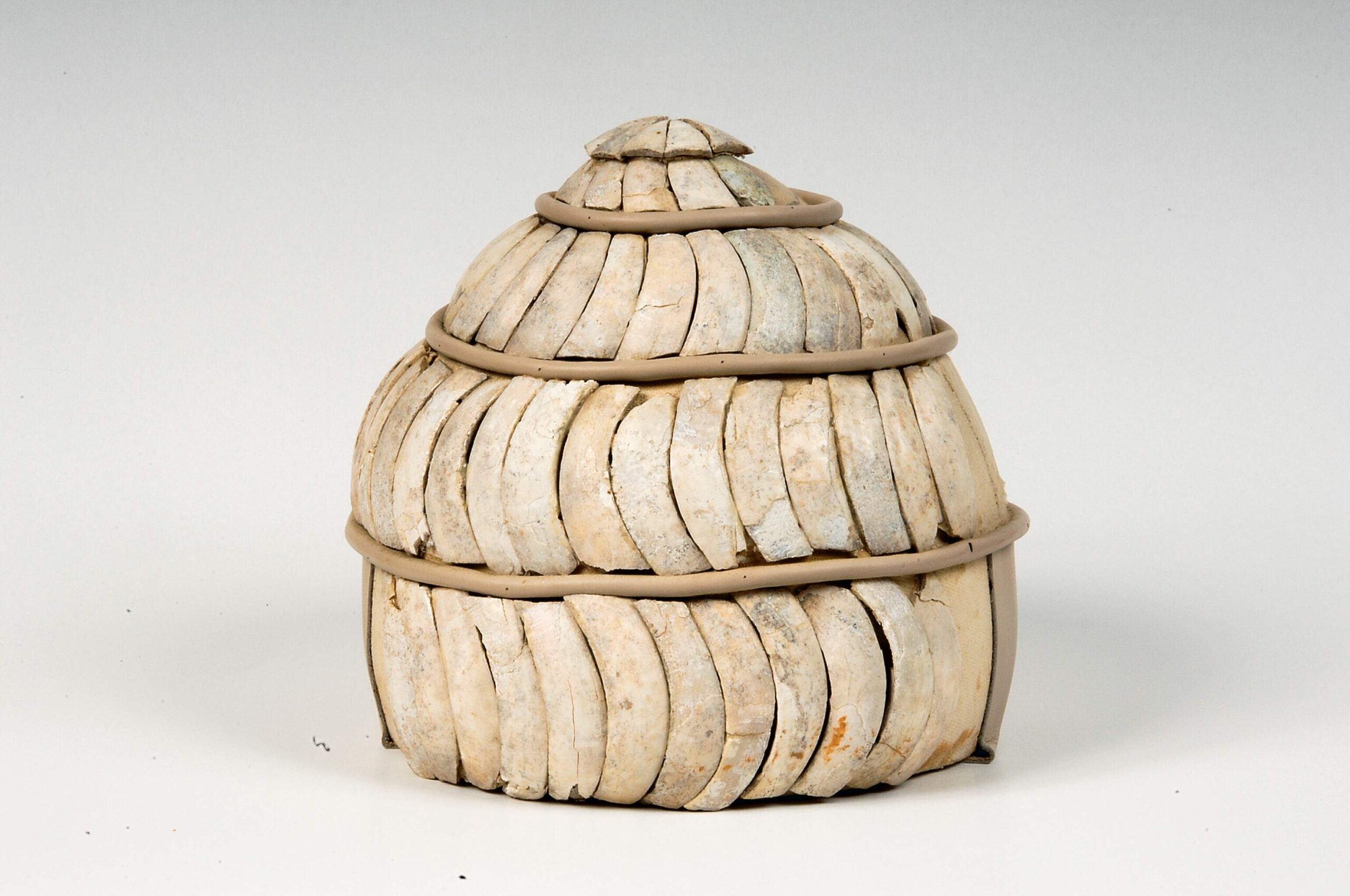
Boar’s-tusk helmet (Δ126), a grave offering from the Mycenaean cemetery at Trypes, Kladeos. Reconstructed from 74 tusks, most complete, arranged in alternating rows. Each tusk has a horizontal perforation. Such helmets were worn by elite warriors. The reconstruction follows depictions on Mycenaean ivory plaques and pottery. Mycenaean period, Late Helladic III (14th–12th century BC).
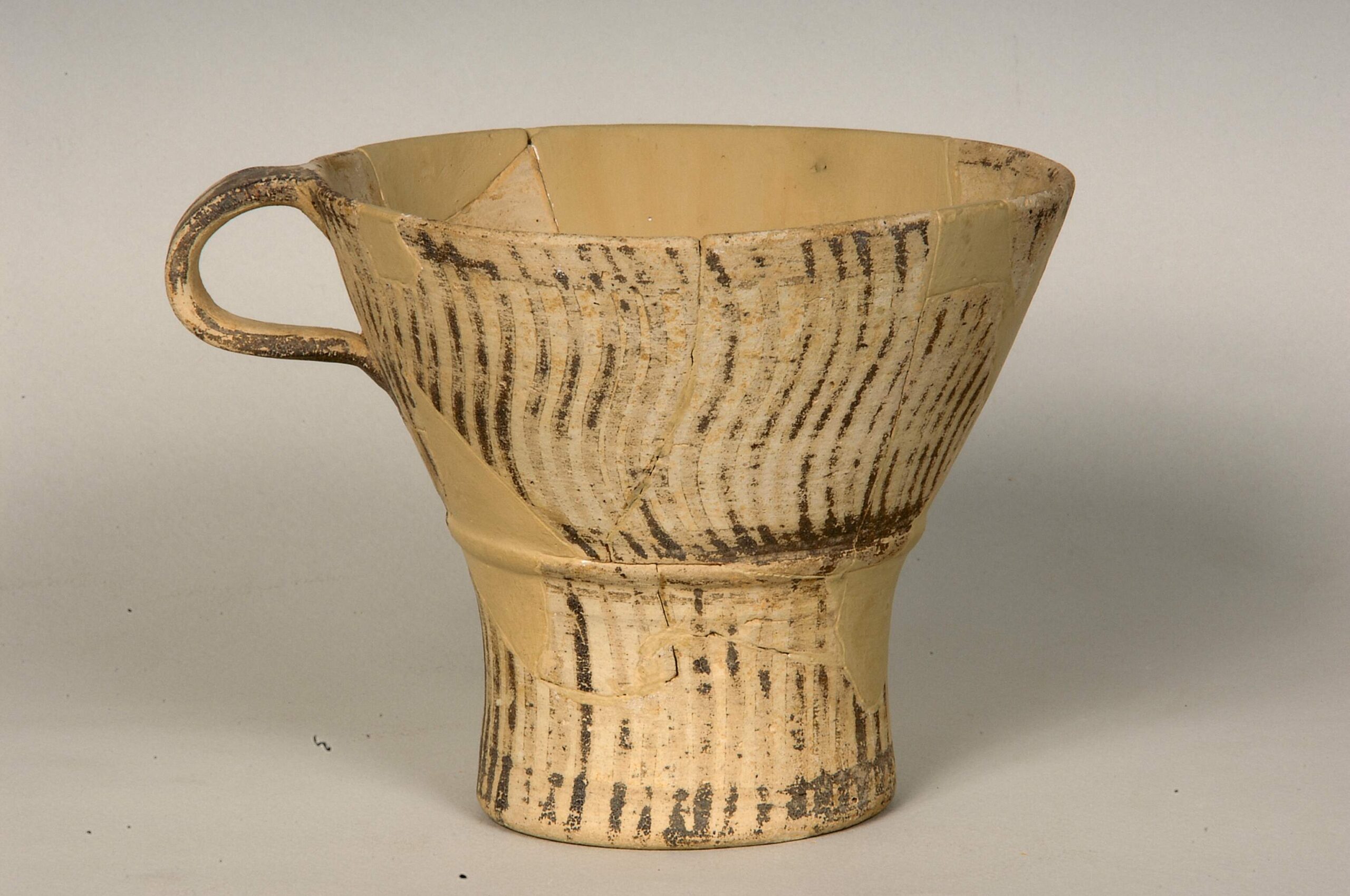
Terracotta Kefti-type (Vapheio) cup (Π00075), reassembled from many fragments and restored. A raised ring divides the body into two parts: a cylindrical lower section and an upper section widening towards the rim. It has a vertical strap handle and dense parallel vertical wavy lines. A characteristic drinking vessel of early Mycenaean pottery. From Kleidi, Kato Samiko. Late Helladic I (second half of the 16th century BC).
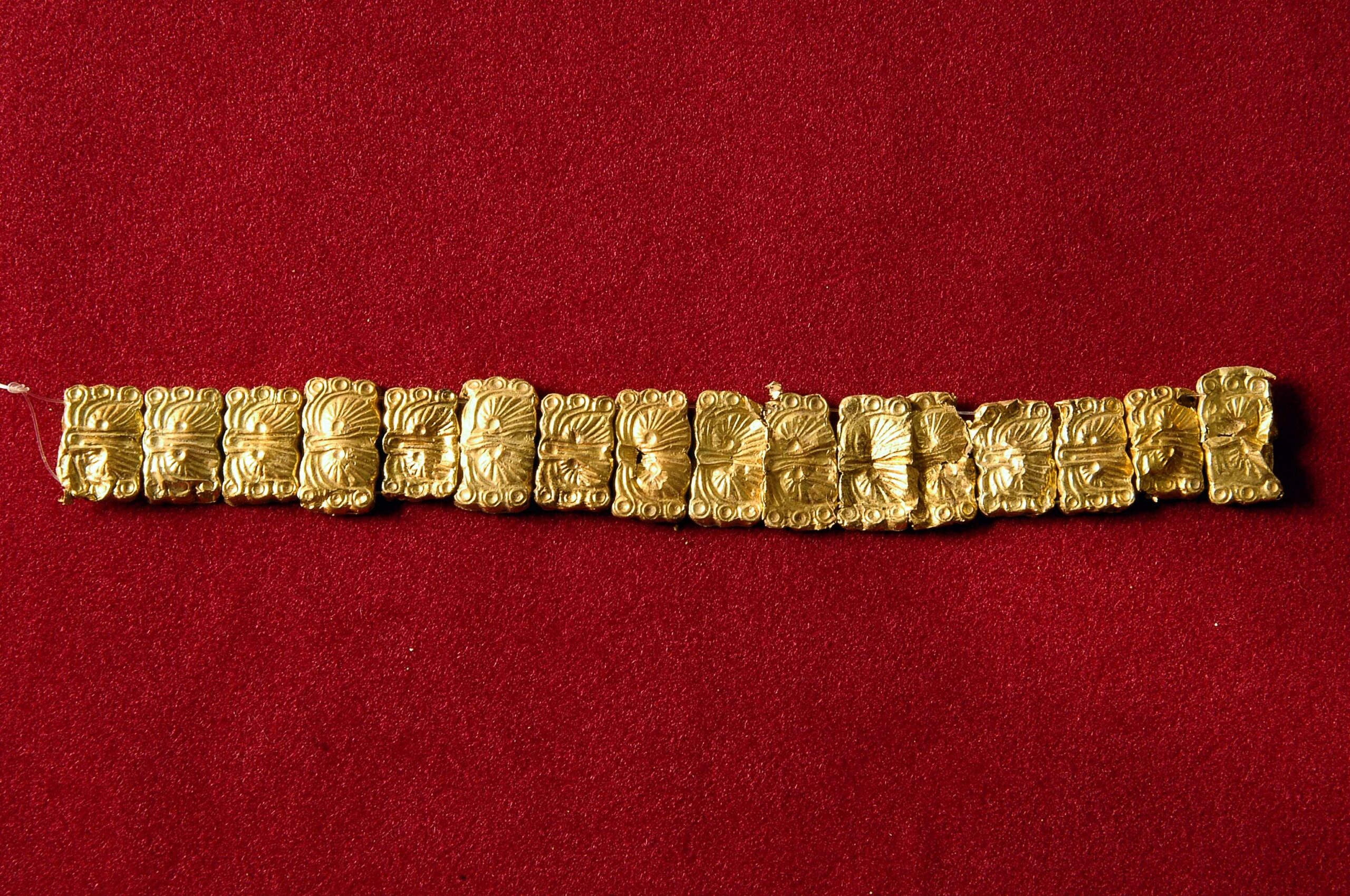
Gold necklace (Δ964), with sixteen beads, each decorated with a heart-shaped double-nautilus motif. Grave offering from Palioboukouvina, Agia Triada. Mycenaean period, Late Helladic III (14th–12th century BC).