Visit-olympia : Οργανώστε ένα μοναδικό ταξίδι στα μνημεία και αξιοθέατα της Ηλείας και δημιουργήστε τη δική σας επική εμπειρία. Kάντε κλικ εδώ
Visit-olympia : Οργανώστε ένα μοναδικό ταξίδι στα μνημεία και αξιοθέατα της Ηλείας και δημιουργήστε τη δική σας επική εμπειρία. Kάντε κλικ εδώ

Pyrgos Archaeological Museum · Collections
Explore everyday life, religious communities and trade in Elis during the Ottoman and Venetian periods.
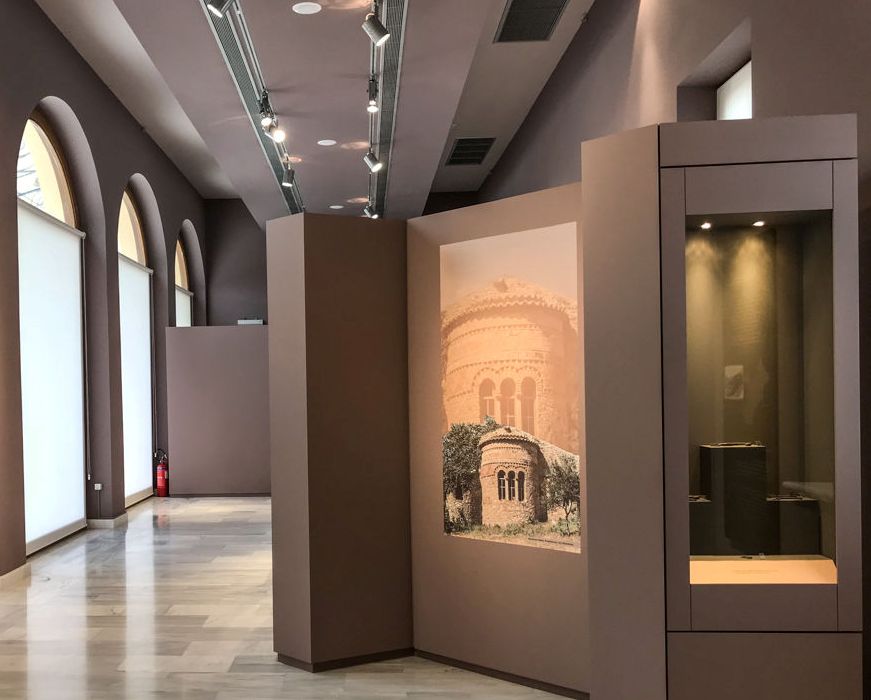
The Ottoman campaigns of 1458–1460 brought most of the Peloponnese, including Elis, under Mehmed II and into the Ottoman administration of the Morea. For much of the following four centuries, the region experienced Ottoman administrative, economic and social structures. Ottoman rule was interrupted by periods of Venetian control and conflict. The Ottoman–Venetian war of 1463–1479 and the later Venetian conquest of the Morea, beginning in 1685 and ending with its Ottoman reconquest in 1715, brought changes to local administration and relations with the wider European world.
The Ottoman authorities recognised the economic importance of Elis and its rich agricultural resources. The district of Gastouni became a major administrative and agricultural centre in the Morea. Under the timar system, revenues from land were assigned to officials and soldiers in return for service. Muslim and non-Muslim subjects held unequal legal and fiscal positions, while the tax-paying population, known as the reaya, supported the system.
This section explores the predominantly rural settlements of the region under Ottoman rule and aspects of everyday life during both Ottoman and Venetian periods. The exhibits preserve traces of the religious communities that lived alongside one another in Elis. Objects and traded goods reveal a culturally diverse society connected commercially and culturally with other Ottoman centres and with the West.

Brass cartridge box. Fighters carried their bullets in such boxes, worn on the selachi or weapon belt alongside their firearms, knives and swords. Donated from the area of Kourouta.


A scene of everyday life in Ottoman Elis: smoking a long-stemmed pipe. Post-Byzantine period.

The house of Sisinis, a notable of Gastouni and a leading figure in the Greek Revolution of 1821 in the Peloponnese.


Fragments of a bronze chain with a cross and a coin. Post-Byzantine period.

The house of Sisinis, a notable of Gastouni and a leading figure in the Greek Revolution of 1821 in the Peloponnese.
Photograph accompanying the exhibition section
During the Post-Byzantine period, older settlements continued to develop while new communities appeared in Elis under both Venetian and Ottoman rule.
Objects associated with these settlements, and with later modern Greek communities, illustrate warfare and unrest alongside domestic life, recreation, personal adornment and clothing.
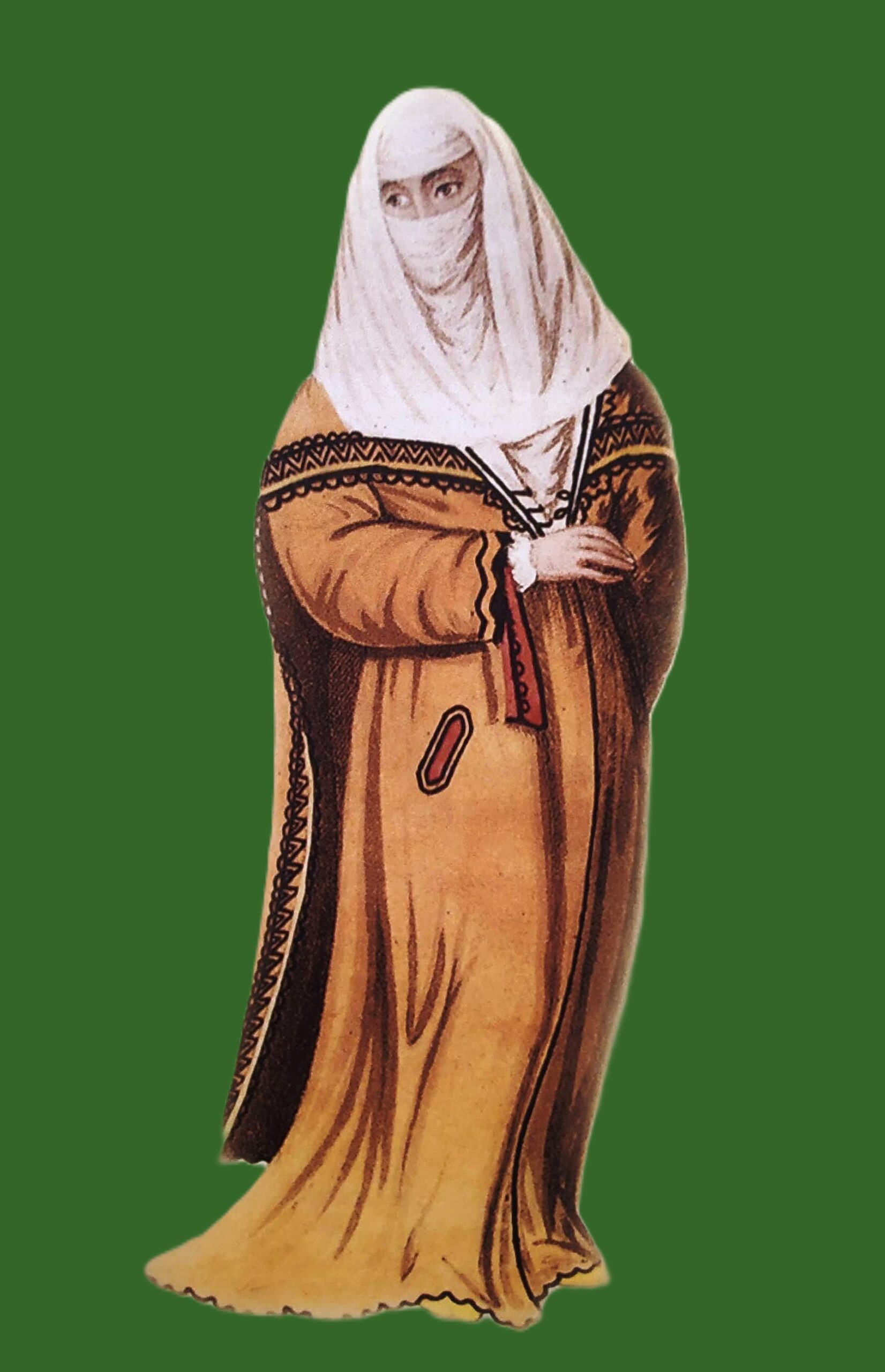
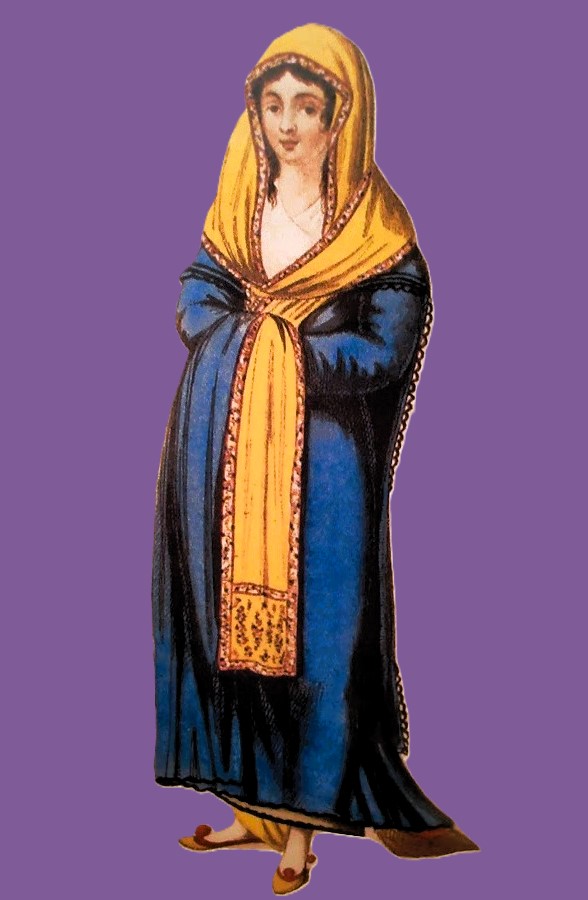
“A celebrated district, with a judicial rank of three hundred akçes, it is a revenue estate of the Pasha of the Morea and is administered by a voivode… It is divided into four neighbourhoods, with four places of worship and two hundred comfortable tile-roofed houses surrounded by vineyards and gardens.In the marketplace stand the Old Mosque and the New Mosque. A madrasa, two schools, a hundred shops, a bathhouse, an inn and four dervish lodges make up its buildings…Throughout the province of the Morea, the most productive places are Gastouni and the valleys of Argos, Alos and Lakos. Gastouni surpasses them all. Nowhere in the world can one find such honey, oil, fruit, cherries and pomegranates.All the inhabitants speak Greek. The local Muslims are poor but hospitable. The Christian reaya wear a tartuti on their heads, resembling a white cap, while their women wrap their heads in a white cloth like a turban. They are always smiling and cover their hair so that it cannot be seen.”Account of the Ottoman traveller Evliya Çelebi, 17th century. English rendering of the Greek excerpt; historical terminology reflects the traveller’s perspective.

The Church of Saint Blaise stands at Dafni, in the municipality of Ilida, near Amaliada. It was the church of a small Post-Byzantine monastery dependent on Docheiariou Monastery on Mount Athos. Dating to the 17th century, it is a compact cross-shaped building with a polygonal dome and distinctive architectural decoration. Part of its wall paintings survives. It now serves as a rural chapel, with its annual feast on 11 February.

Church of Saint Blaise at Dafni, municipality of Ilida.

The Monastery of Panagia Eleousa stands in a deep green ravine near Lygia, close to Vartholomio. Its foundation is traditionally placed in the 9th century. According to local tradition, its name derives from an icon of the Virgin found in a nearby cave and invoked as Eleousa, the Merciful, for the protection of local people. A restored tower survives within the monastery enclosure alongside the church.

Under Ottoman rule, religion played an important role in the organisation of subject communities. Orthodox Christians, identified as Rum, belonged to an ecclesiastical framework centred on the Ecumenical Patriarch of Constantinople. The Patriarch combined spiritual leadership with a role in representing Orthodox communities before the Ottoman authorities.
The Orthodox Church exercised considerable social and political influence, helping sustain the cohesion and identity of Christian communities. It supported Greek language, education and elements of Byzantine cultural tradition through changing and often difficult conditions.
This relationship had more than one aspect. The Church helped communities preserve their religious and cultural identities, while its involvement in Ottoman administration also shaped the scope for political action. These institutions and traditions contributed to the cultural developments associated with the emergence of modern Greek national consciousness in the 18th and 19th centuries.
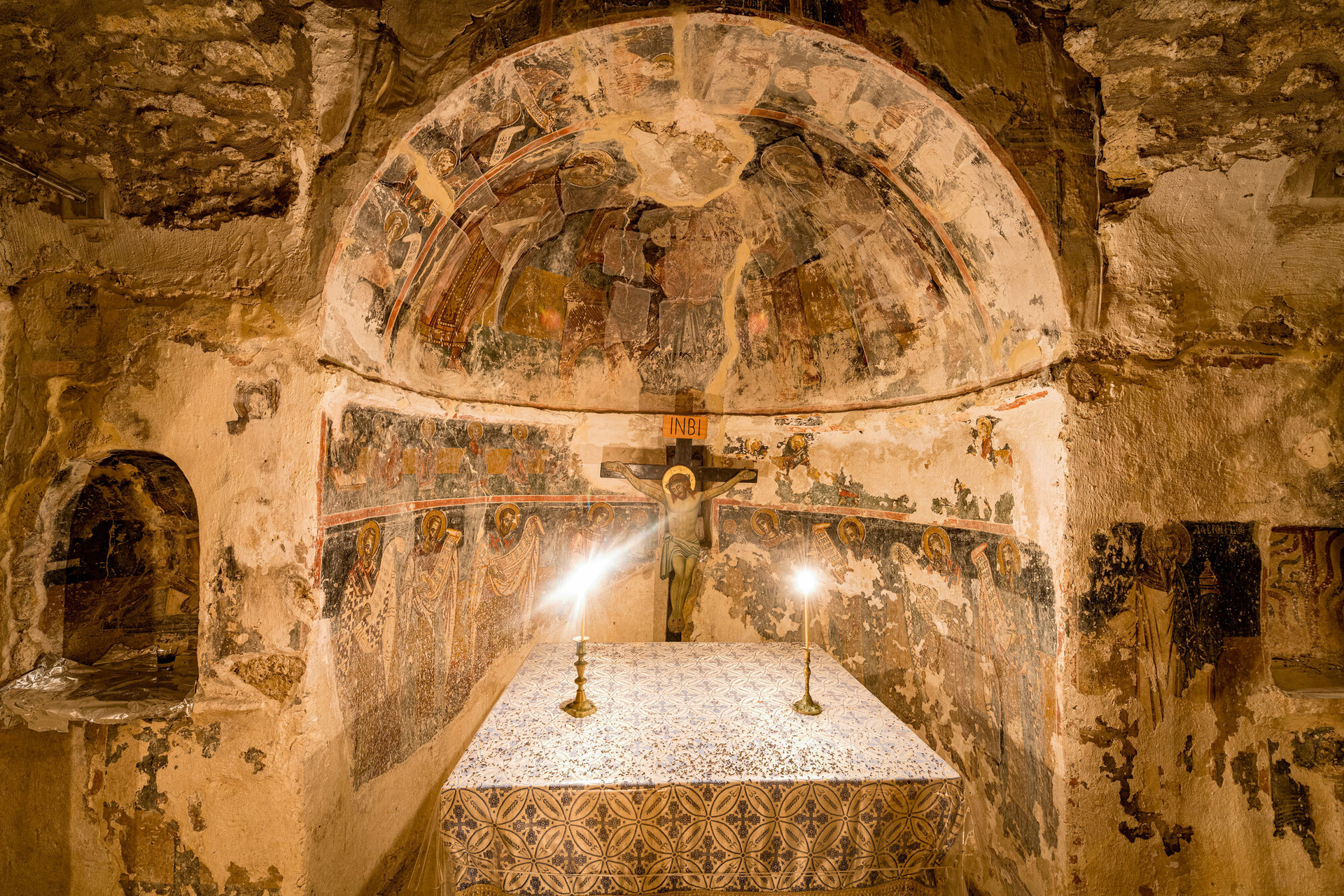
Photograph accompanying the exhibition section
The Peloponnese’s geographical position and harbours supported trade during Ottoman rule. Commercial relations with Italy, especially Venice and its possessions in the Greek world, played an important part in this activity.
Coins and imported goods show that the inhabitants of Elis traded within the empire and with the West. The movement of products also brought encounters with different traditions and practices. The coastal outlets serving Gastouni, for example, connected the region with Venice and the Venetian-held Ionian Islands.
In the Post-Byzantine period, Elis was a meeting place for communities with different origins and religious affiliations. The exhibits document their presence and the commercial links that connected the region with the Mediterranean.


Bronze devotional pendant with the Virgin and Child and Latin inscriptions (HM729), 16th–17th century. From a grave in the Church of Saint Francis at Glarentza. Its western origin suggests a connection with the Latin community, possibly a Venetian man or woman who lived and died in Elis. The find indicates continued use of the church grounds for burial after Glarentza’s decline in the 15th century.

Gold Venetian ducat struck during the rule of Doge Alvise I Mocenigo (1570–1577). Venice was a major Mediterranean trading power from the 12th to the 18th century, and its coins circulated widely. The obverse shows the doge kneeling before Saint Mark, patron of Venice; the reverse depicts Christ within a mandorla.
Photograph accompanying the exhibition section
Christians and Muslims, Greeks, Ottomans, Jews and Albanians lived in Elis. Historical accounts sometimes describe these communities using the language of religious hierarchy and prejudice. Such terms reflect the attitudes of their period rather than neutral descriptions of the people concerned.
Venetian influence also remained significant. Alongside the encounters between resident communities, cultural influences reached Elis through trade with Italy, the Venetian Ionian Islands and other regions of the Ottoman Empire.
The inscriptions, coins and ceramic vessels displayed here, made in eastern and western workshops, reveal the presence of different communities and the connections of Elis with the wider Mediterranean world.
Fragments of a bronze chain with a cross and a coin, from Bassae.
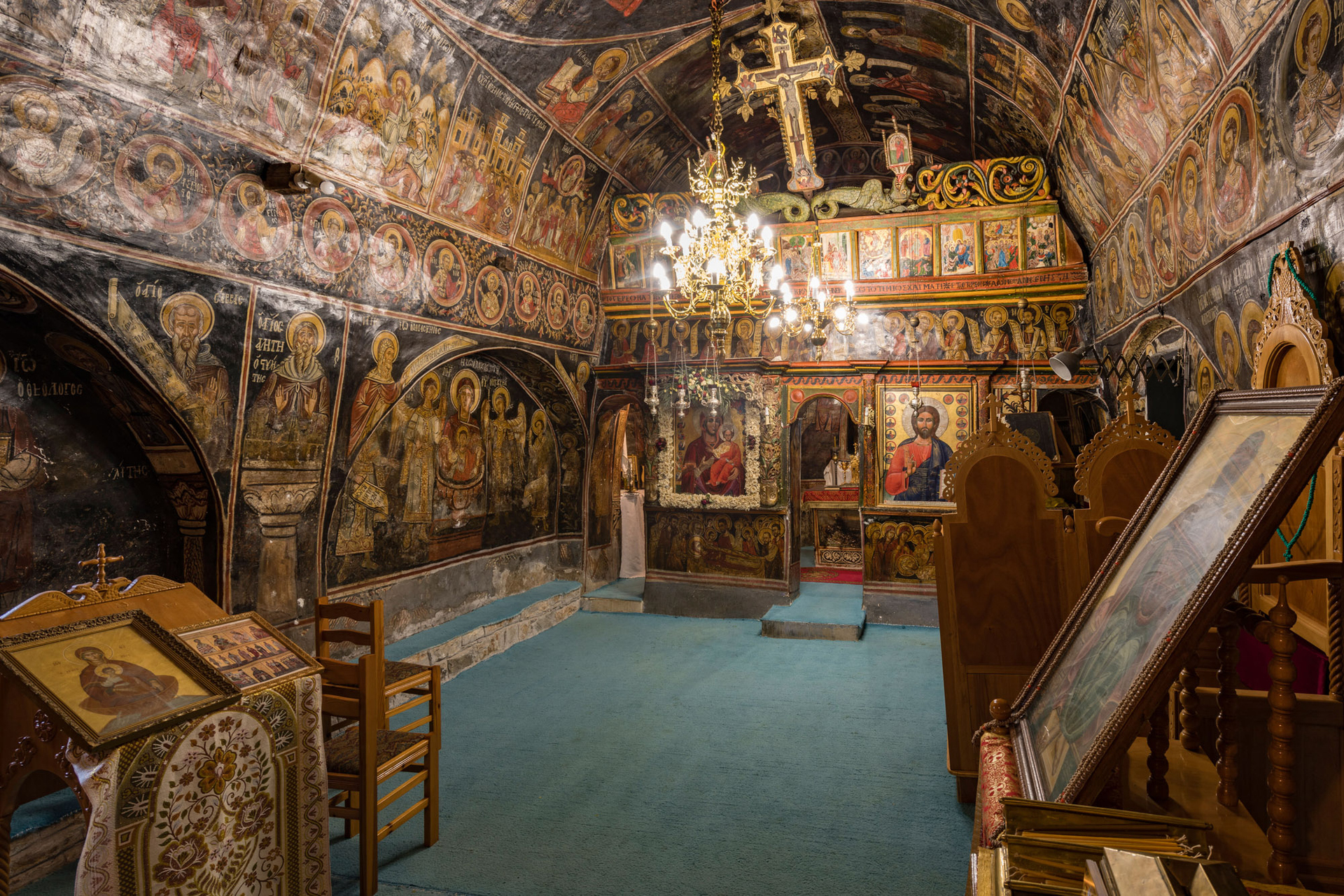
The Monastery of Panagia Chrysopigi, also known as Ano Moni or the Upper Monastery, stands northeast of Divri, modern Lampeia, in the municipality of Ancient Olympia. Its church preserves an almost complete cycle of wall paintings dated 1667; the church itself may also have been built that year.
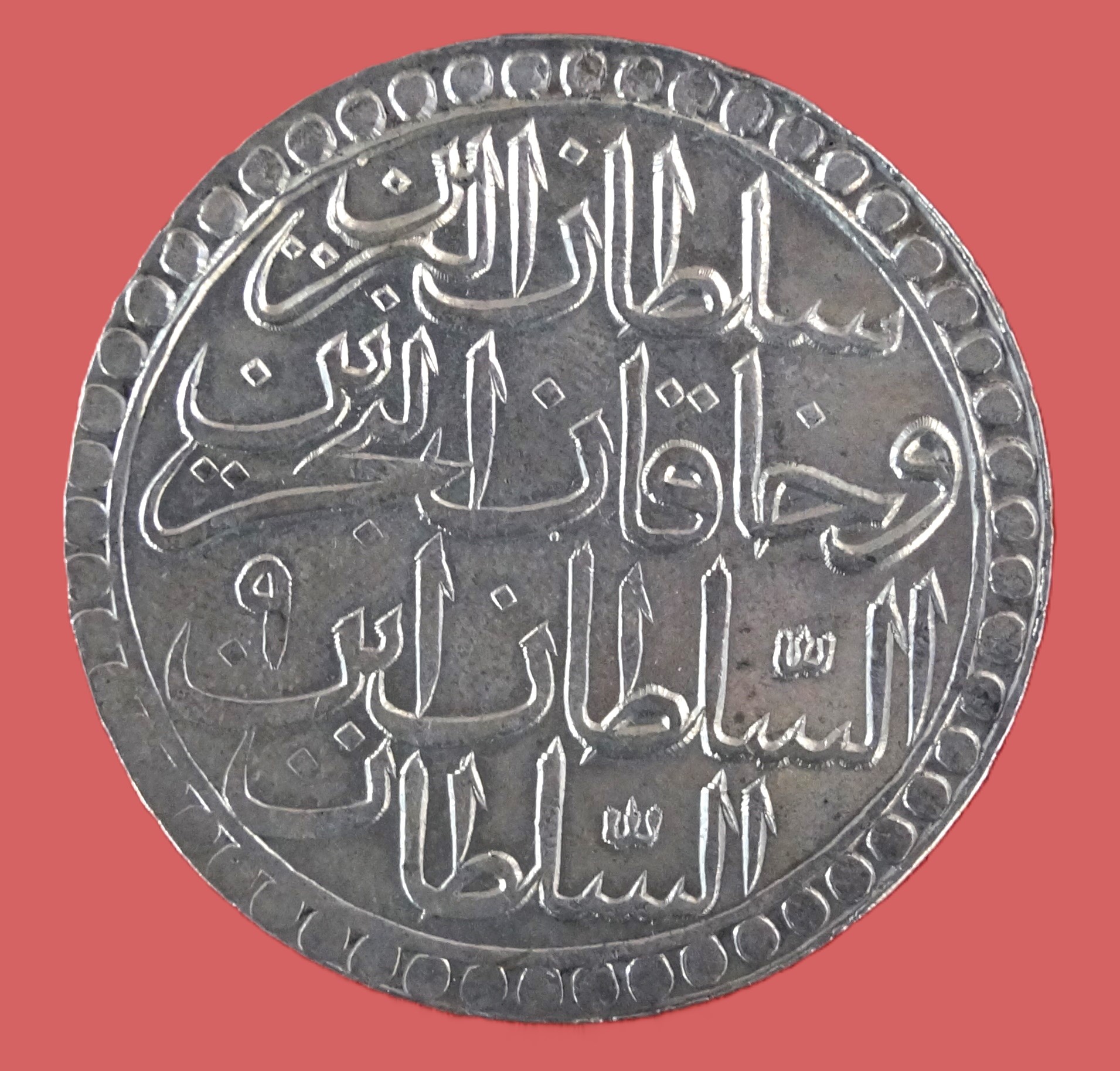
Ottoman coin (M3888), complete, made of silver or a metal alloy. Both faces bear inscriptions in four lines within dotted borders; a horizontal line separates the third and fourth lines on the reverse. From ancient Elis. It belongs to a hoard of three Ottoman coins found in the south stoa of the ancient agora together with a hoard of Austrian coins. 18th century.
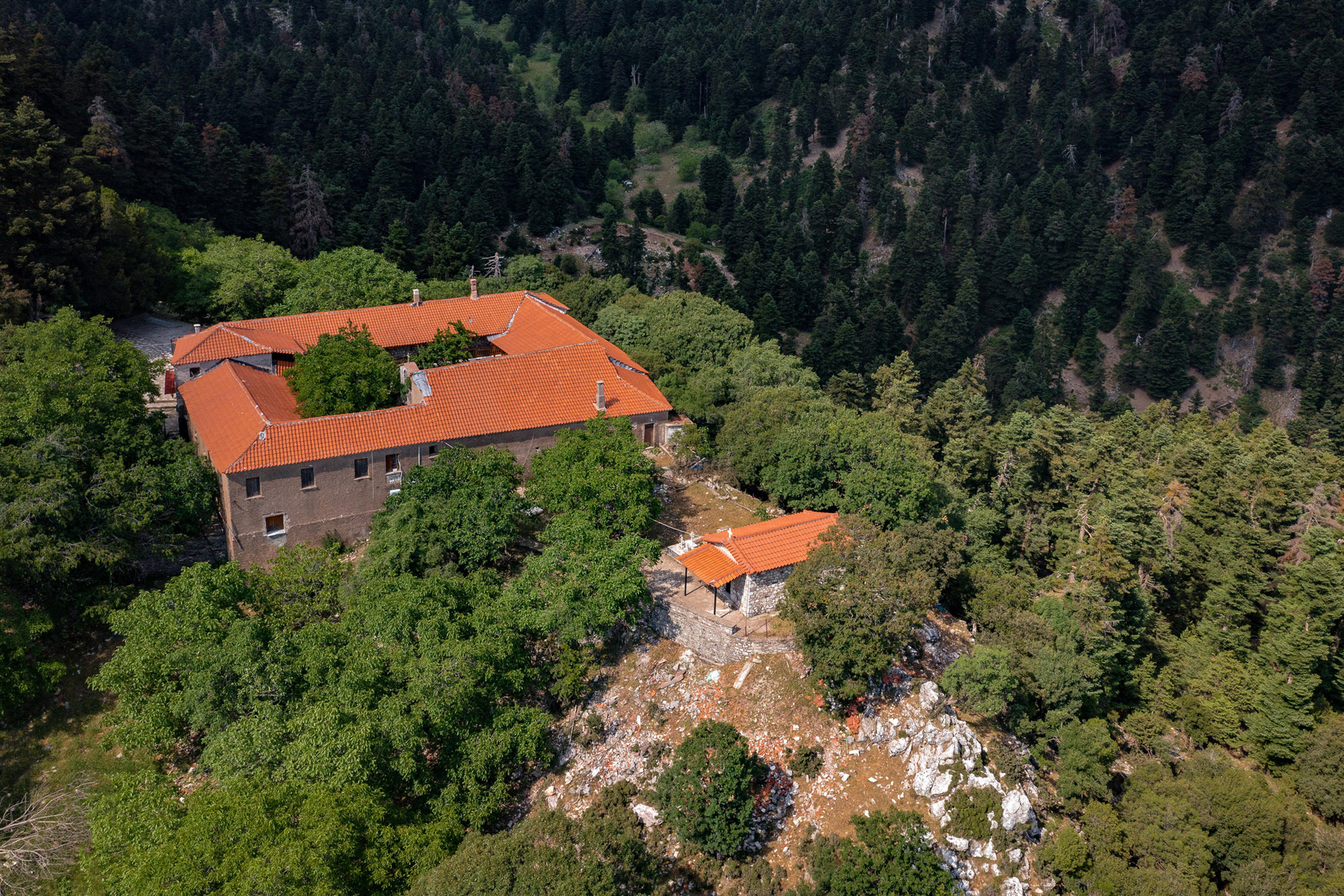
The Monastery of Panagia Chrysopigi, also known as Ano Moni, stands northeast of Divri, modern Lampeia, in the municipality of Ancient Olympia. Its church occupies the south side of the courtyard. It is a single-aisled barrel-vaulted building with a three-sided apse to the east and a narthex to the west. Four chapels surround the church; the chapel of Saints Kyrikos and Ioulitta is entered from the narthex. The almost complete wall-painting cycle dates to 1667, possibly also the year of the church’s construction.
Marble grave slab with a Hebrew inscription (ΗΛ63), dated 1648, commemorating a couple united by enduring vows. Jewish communities had existed in Greece since antiquity; Sephardic refugees arrived after their expulsion from Spain in 1492. The slab is a rare surviving witness to the Jewish community of Elis and to the history of Peloponnesian Jewish communities, many of which were destroyed during the violence of the Greek War of Independence in 1821.
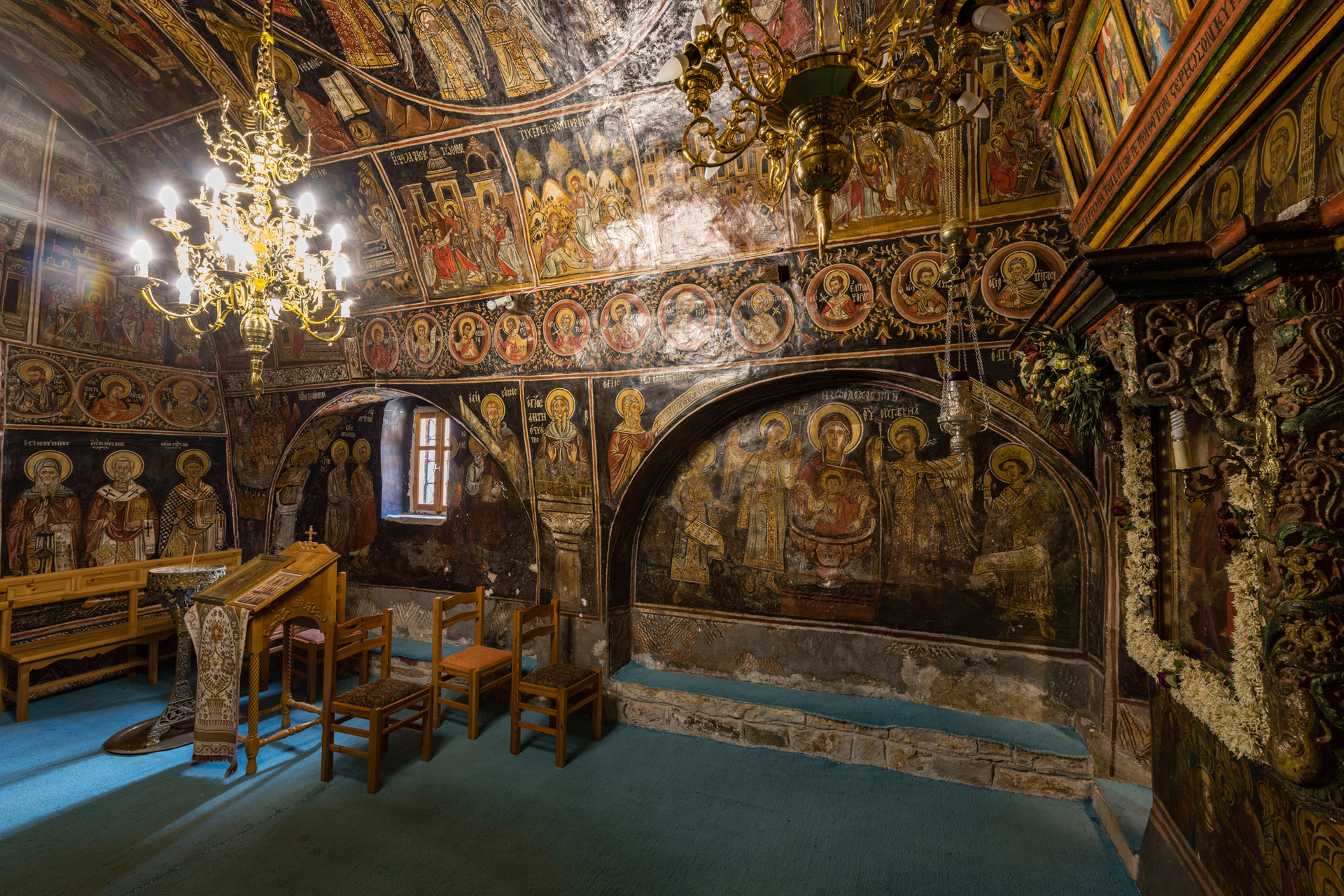
The Monastery of Panagia Chrysopigi, also known as Ano Moni or the Upper Monastery, stands northeast of Divri, modern Lampeia, in the municipality of Ancient Olympia. Its church preserves an almost complete cycle of wall paintings dated 1667; the church itself may also have been built that year.

The Church of the Holy Trinity stands in the cemetery of Divri, in the Groustades or Apano Machalas neighbourhood. It is the oldest surviving monument of the village and the wider mountainous area of eastern Ilia. Its history extends from the 14th-century Palaiologan period to Ottoman times. The surviving wall paintings have two layers: the original Late Byzantine decoration of the 14th century and a later Post-Byzantine layer.
Bronze devotional pendant with the Virgin and Child and Latin inscriptions (HM729), 16th–17th century. From a grave in the Church of Saint Francis at Glarentza. Its western origin suggests a connection with the Latin community, possibly a Venetian man or woman who lived and died in Elis. The find indicates continued use of the church grounds for burial after Glarentza’s decline in the 15th century.
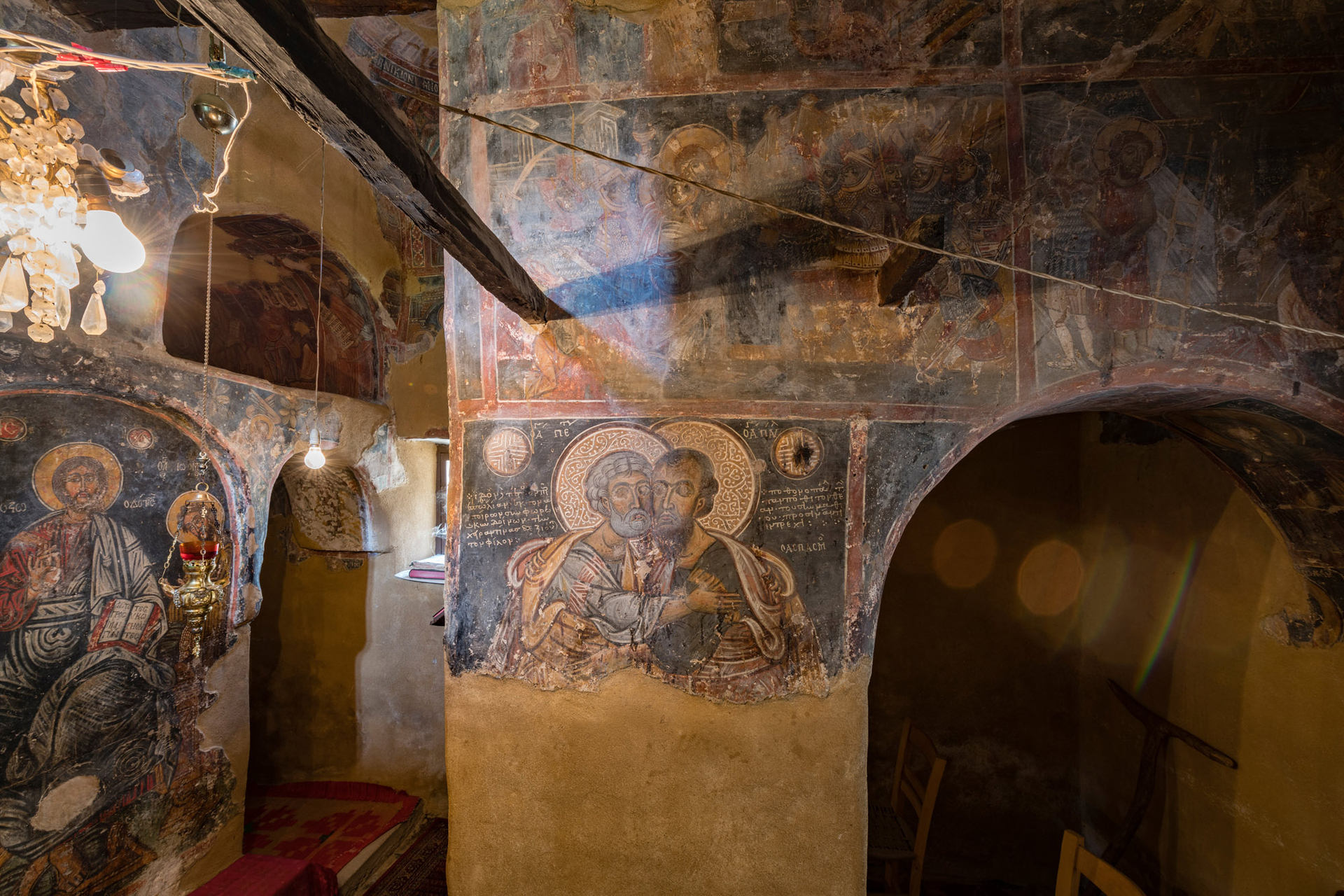
The Church of the Holy Trinity stands in the cemetery of Divri, in the Groustades or Apano Machalas neighbourhood. It is the oldest surviving monument of the village and the wider mountainous area of eastern Ilia. Its history extends from the 14th-century Palaiologan period to Ottoman times. The surviving wall paintings have two layers: the original Late Byzantine decoration of the 14th century and a later Post-Byzantine layer.
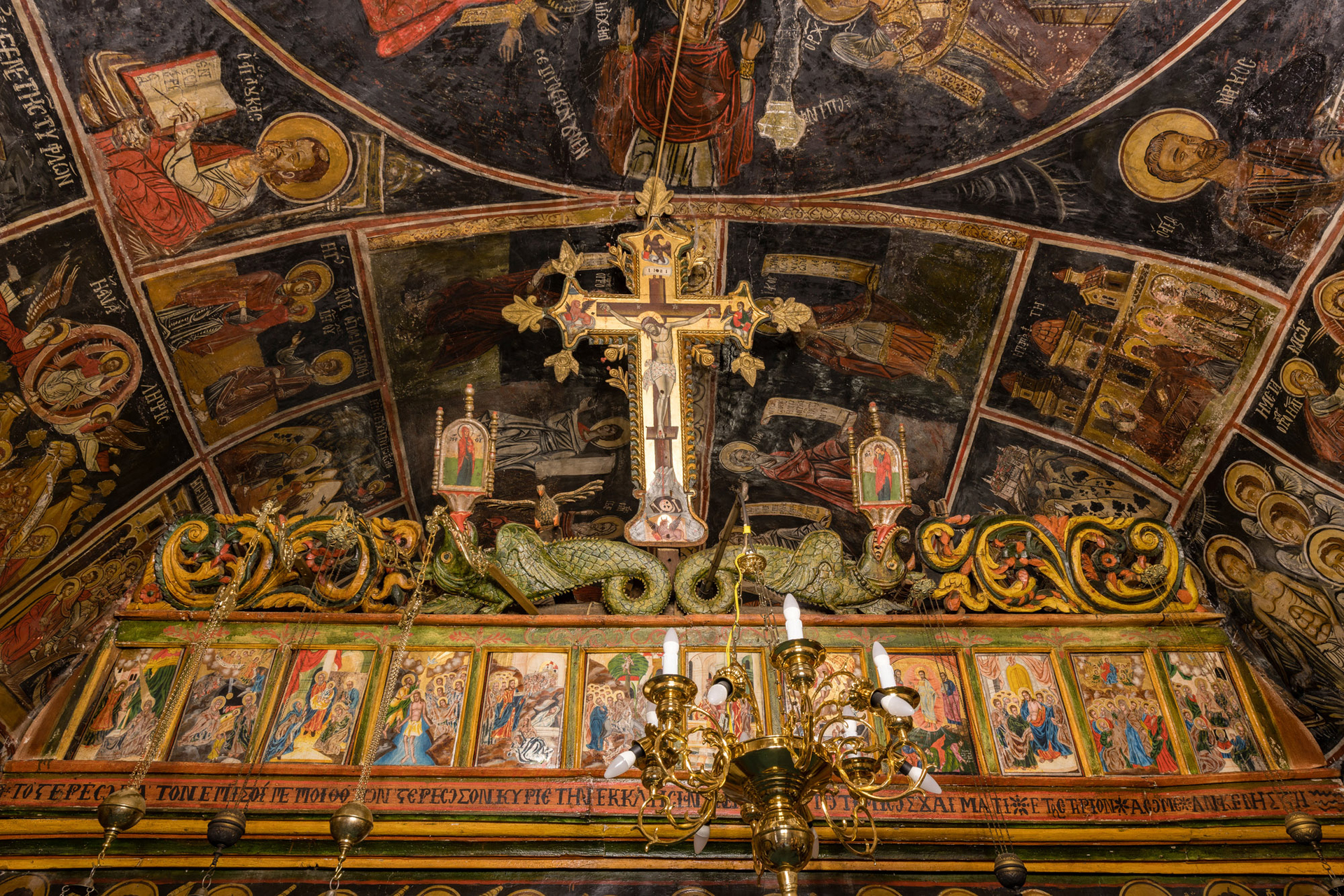
The Monastery of Panagia Chrysopigi, also known as Ano Moni or the Upper Monastery, stands northeast of Divri, modern Lampeia, in the municipality of Ancient Olympia. Its church preserves an almost complete cycle of wall paintings dated 1667; the church itself may also have been built that year.
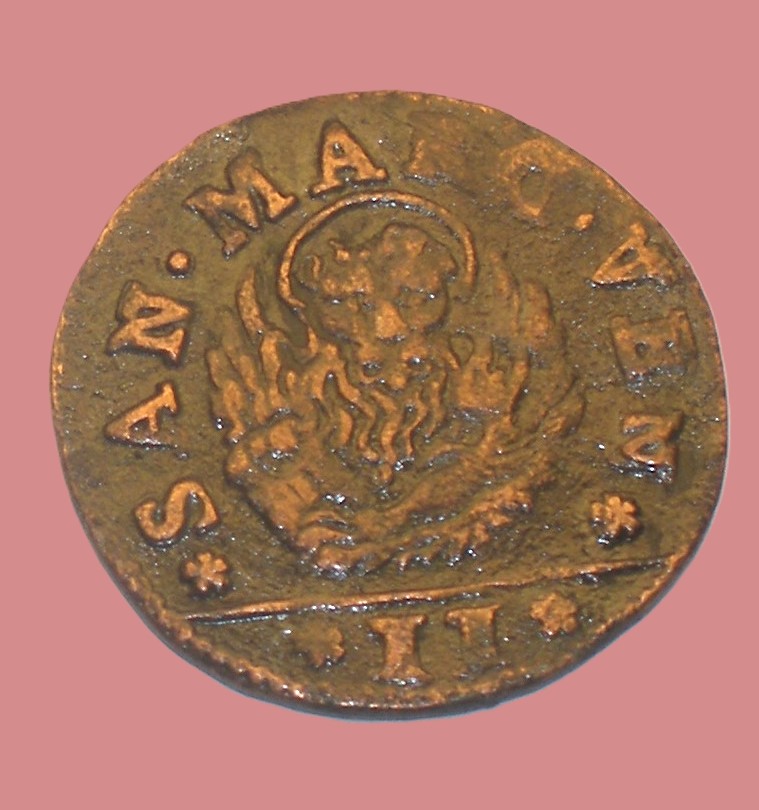
Venetian copper coin (ΒΕ1466α). Obverse: the Lion of Saint Mark. Reverse: the clearly legible inscription ARMATA ET MOREA. From the area of Agrapidochori. Post-Byzantine period.
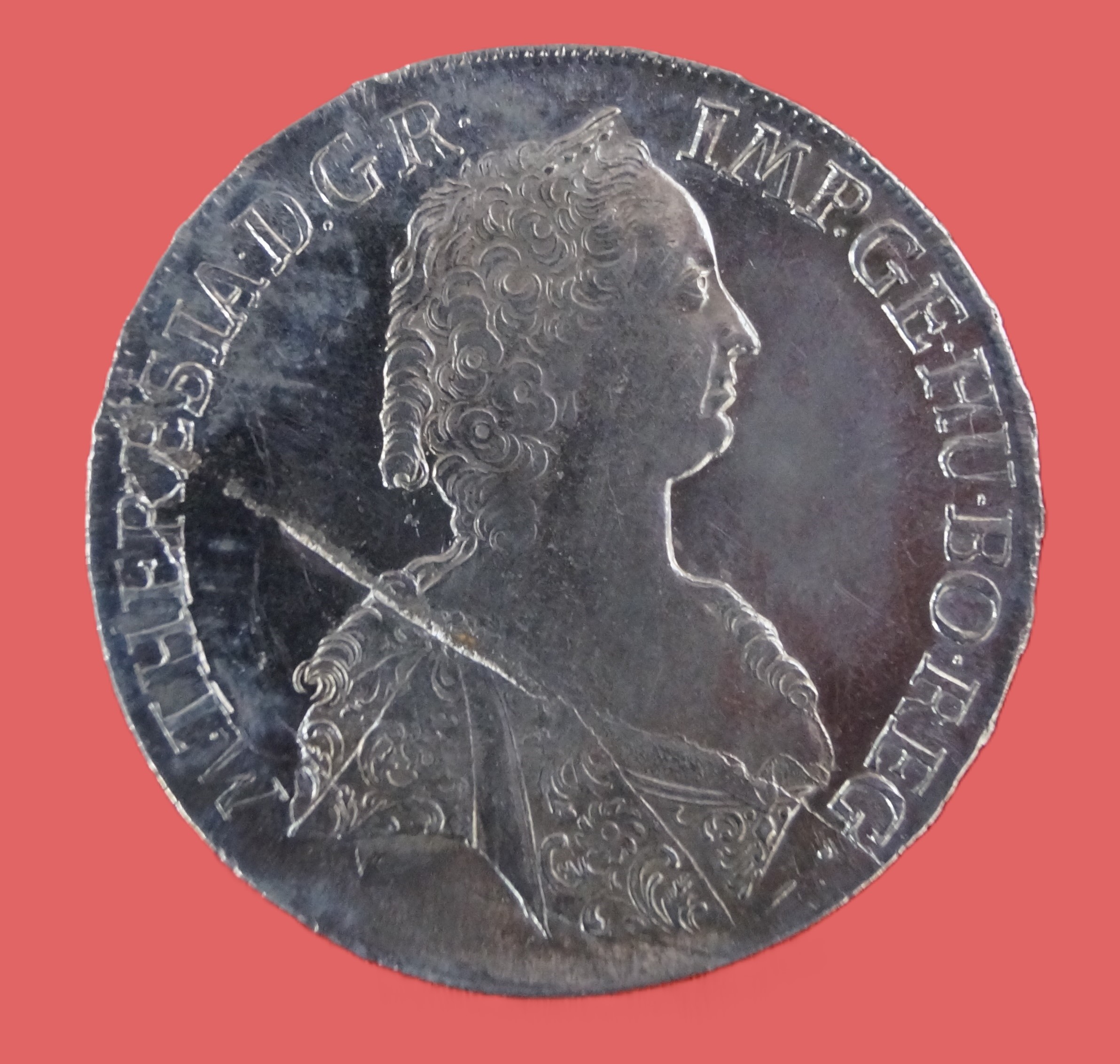
Austrian silver thaler of Maria Theresa (M3887), dated 1763. The obverse bears her bust facing right and an imperial titulature around the edge, with S. C. beneath the bust. The reverse shows the Habsburg double-headed eagle with a shield and a G within a medallion below. From ancient Elis. It belongs to a hoard of nineteen Austrian coins found in the south stoa of the ancient agora together with an Ottoman coin hoard.
Bowl of an Ottoman tobacco pipe (ΗΔ494). The bowl held the tobacco at the end of a çubuk, a long-stemmed pipe. Such bowls were made from fine clay or lightweight sepiolite. Their plant decoration became increasingly elaborate during the 18th century.
