Visit-olympia : Οργανώστε ένα μοναδικό ταξίδι στα μνημεία και αξιοθέατα της Ηλείας και δημιουργήστε τη δική σας επική εμπειρία. Kάντε κλικ εδώ
Visit-olympia : Οργανώστε ένα μοναδικό ταξίδι στα μνημεία και αξιοθέατα της Ηλείας και δημιουργήστε τη δική σας επική εμπειρία. Kάντε κλικ εδώ

Pyrgos Archaeological Museum
In prehistoric societies, religion was a powerful bond and a source of shared identity. Common sacred symbols and ritual objects suggest influences and close connections with Minoan Crete.
Information about the religious practices and beliefs of prehistoric Elis comes from literary accounts of ancient myths originally transmitted through oral tradition. No sacred buildings from this period have been identified, suggesting that ceremonies took place in open-air sanctuaries, on hilltops, in caves and elsewhere.
Deities such as Kronos, Rhea, the Idaean Herakles, Sosipolis and Gaia were worshipped at Olympia before, and after, the predominance of Olympian Zeus.
Worship was simple, as indicated by libation rhyta and anthropomorphic figurines.
Evidence for prehistoric burial practices is particularly clear in the Early Helladic, Middle Helladic and Mycenaean cemeteries. During the Early and Middle Helladic periods, the dead were buried in pithoi, chamber tombs, cist graves and pit graves, often in a contracted position, with few personal possessions.
In Mycenaean times, the number and wealth of tombs and grave offerings increased markedly. The Mycenaean cemeteries of Elis, especially in the north, include pit, chamber and tholos tombs; chamber tombs predominate in organised cemeteries.
The variety of tomb forms and rich grave offerings reflects the complex social hierarchy of Mycenaean communities and reveals their attitudes towards death.
A particularly moving find is the skull of a Mycenaean woman from a chamber tomb at Kafkania, retaining the blue glass-paste diadem placed on her for burial.

Composite clay vessel with drops of glass paste (Π4572), an important Mycenaean grave offering. Blue glass paste survives on its three-part handle and on the discs articulating the vessel. It bears painted decoration, but its precise function remains uncertain. From Palioboukouvina, Agia Triada. Late Helladic, second half of the 16th–12th century BC.

Large clay rhyton (Π00070), reassembled and restored. Its pointed conical body has a broad mouth, a slightly concave neck and a raised strap handle. Parallel bands cover its height. A ritual vessel used as a grave offering, from the tumulus at Kleidi, Kato Samiko. Late Helladic IIIA2, second half of the 14th century BC.
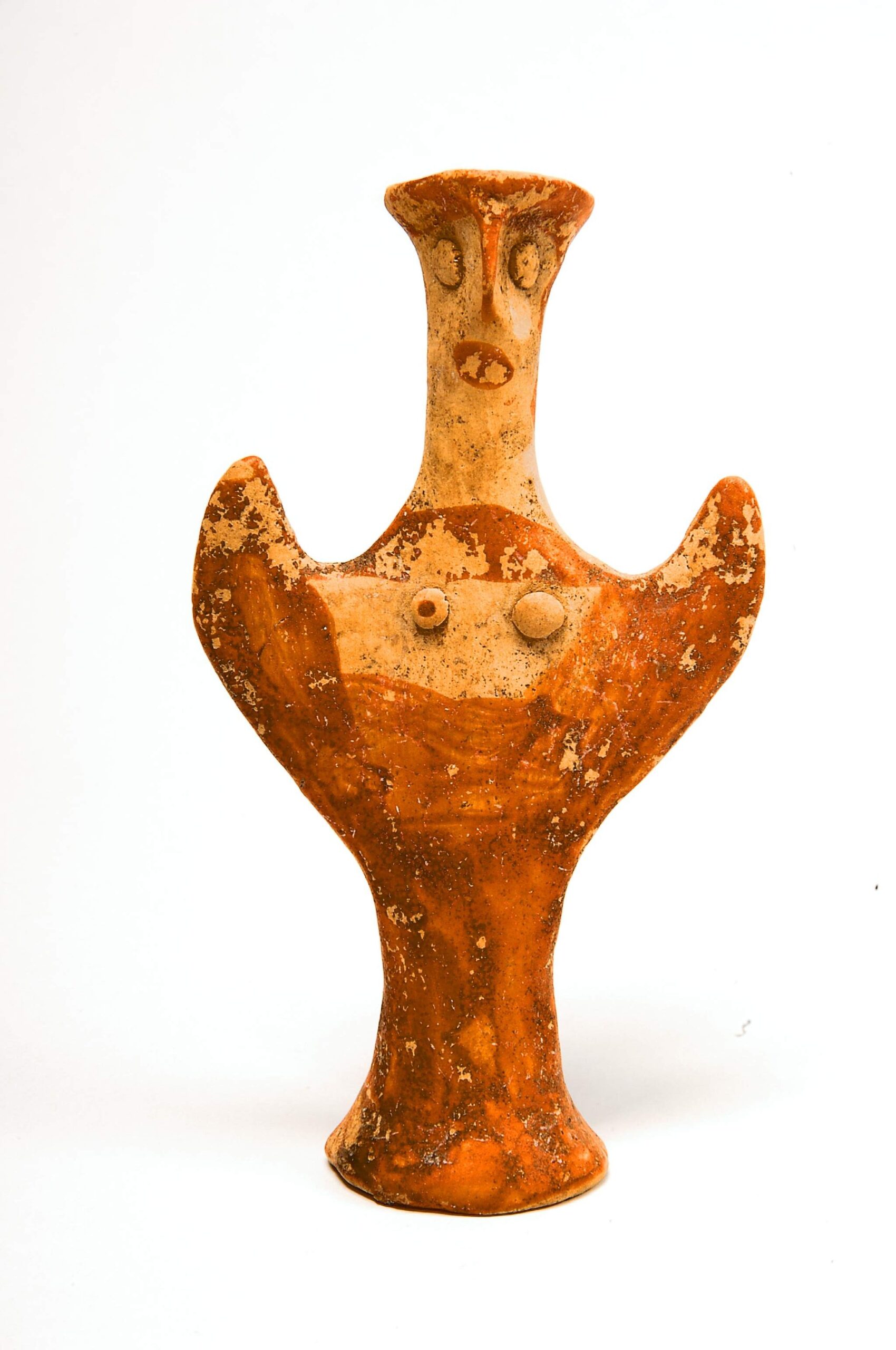
Complete Psi-type clay figurine (Π08231), with a rounded or oval upper body supported on a cylindrical stem and a tall polos headdress. It bears painted and relief decoration. Such figurines have been interpreted as deities, divine nurses because they often occur in children’s graves, sanctuary offerings or toys. A grave offering from the cemetery of Kladeos. Late Helladic III, 14th–12th century BC.
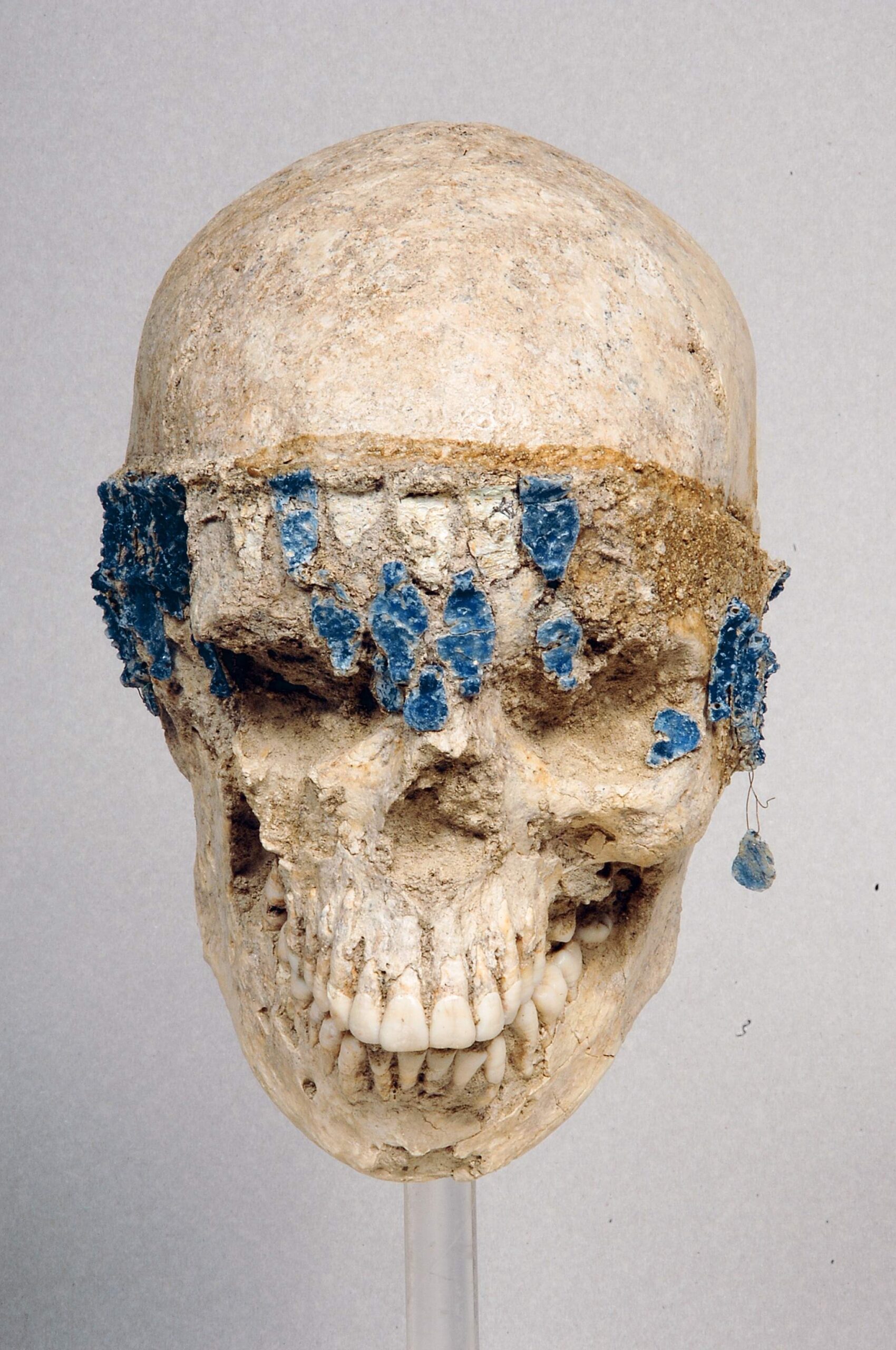
Skull with a glass-paste diadem (Δ1425), from a chamber tomb at Karavas, Kafkania, near Ancient Olympia. It belonged to a young woman aged about 21. Three rows of relief glass plaques retain their striking blue colour. Another similar skull with a diadem is known from the cemetery of Stravokefalo–Kladeos. These finds offer anthropological and social information about sex, age, social status and potentially disease and causes of death. Late Helladic III, 14th–12th century BC.
The rich grave offerings of the cemeteries of Elis provide extensive information about Mycenaean burial customs. Outstanding works include the unique representations of prothesis (the laying out of the dead) and ekphora (the funeral procession), preserved on a krater fragment from Agia Triada and an amphora fragment from Kladeos respectively. They illuminate the stages of funerary ritual: mourning, procession, burial, the funerary meal, animal sacrifice and subsequent libations and offerings. The vessels, made in the same workshop and perhaps by the same artist, served as grave markers. Other ritual vessels, including krater stands and a base with figurine offerings, provide evidence for offerings to the dead.
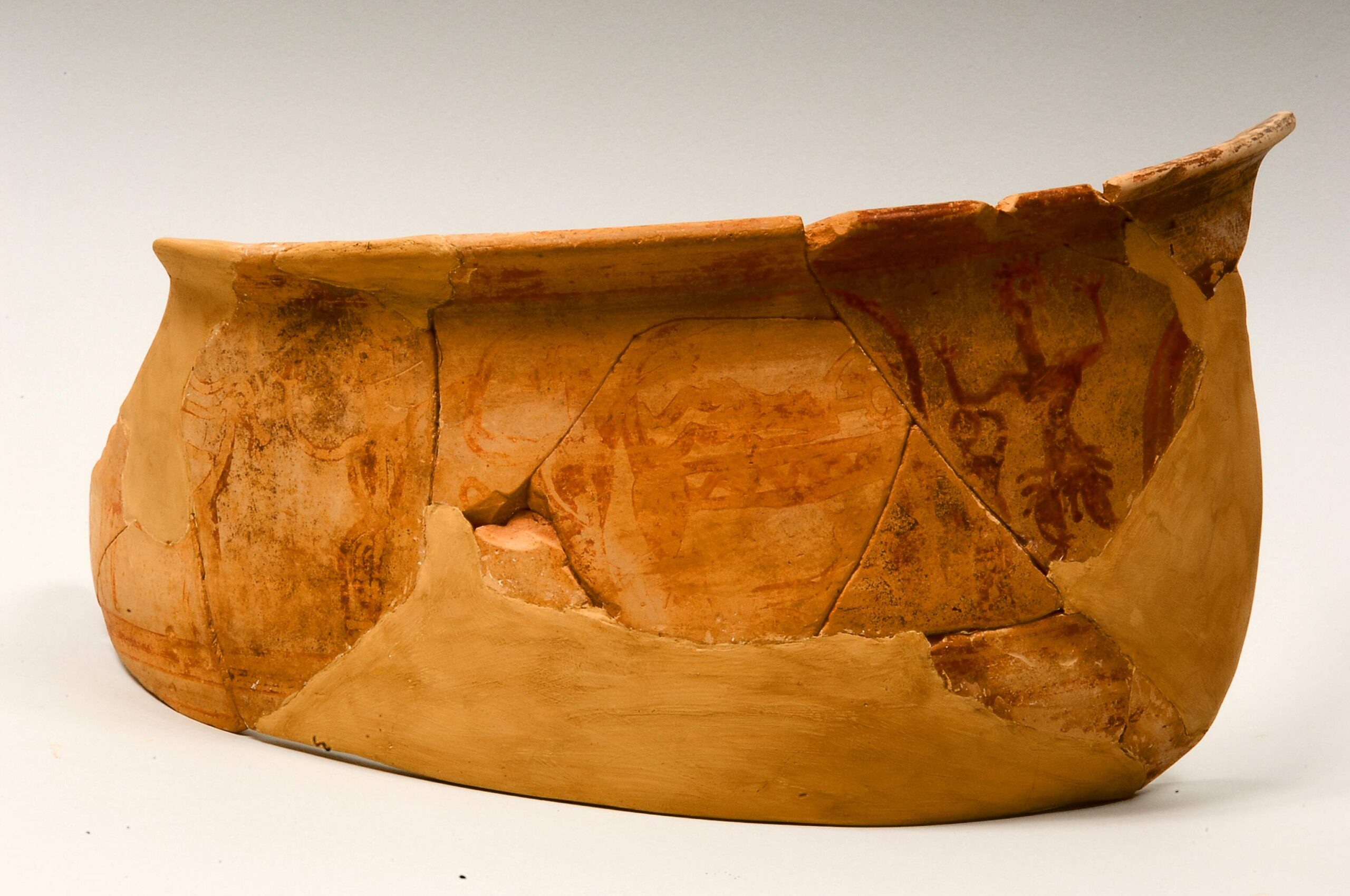
Late Helladic IIIC, 12th century BC.
Fragmentary sherds, partly restored, from a hemispherical vessel with an everted rim. The scene depicts the laying out of the dead. Together with the representation of the funeral procession, this exceptional image forms a central element in the presentation of funerary customs and ritual.
Agia Triada, Palioboukouvina.
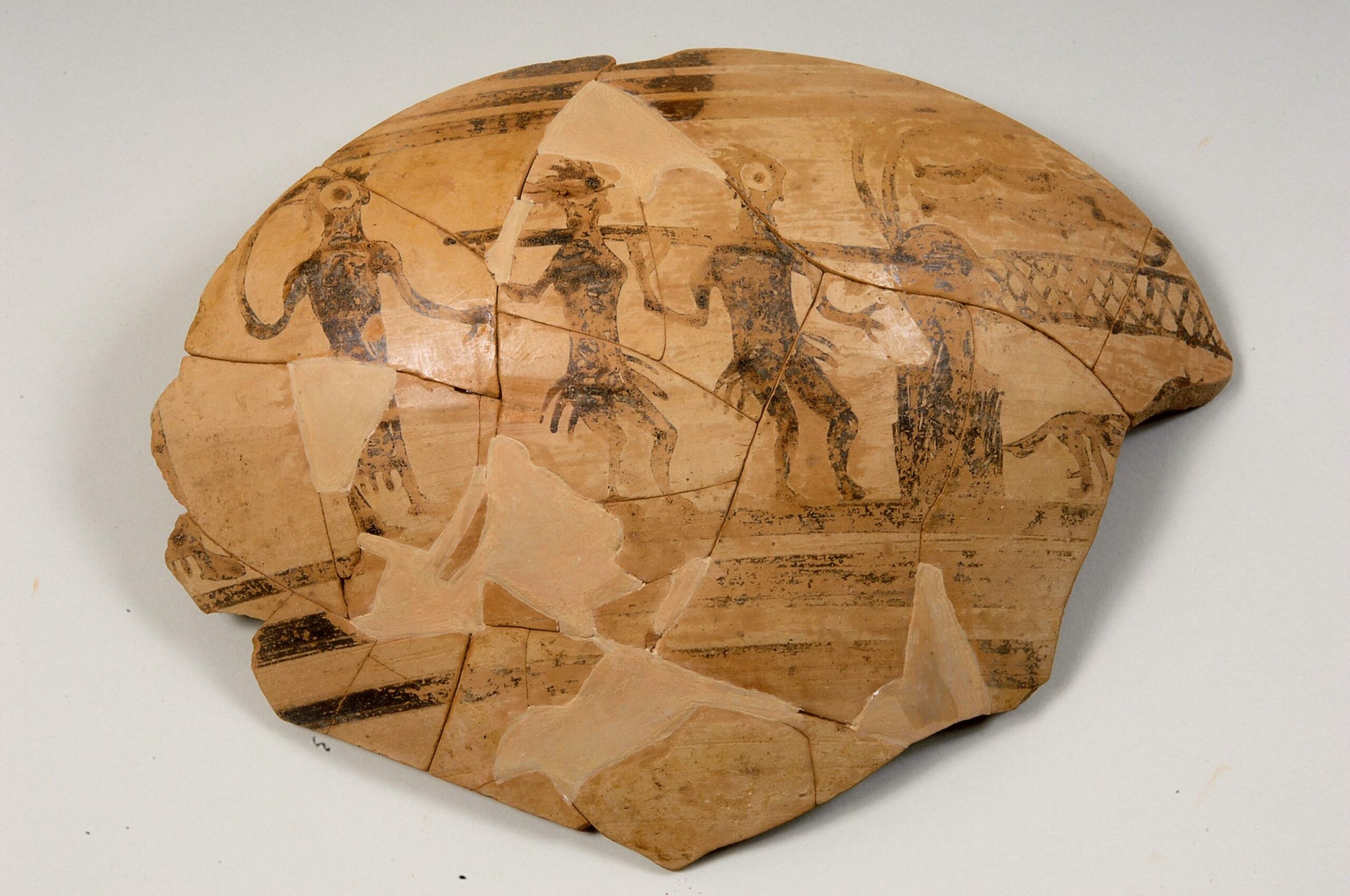
Late Helladic IIIC, late phase, end of the 12th century BC.
An exceptionally important find for Mycenaean iconography: the depiction of a funeral procession on foot has no parallels. It follows the laying-out scene on the Agia Triada krater; both vessels served as grave markers. Late Helladic IIIC, late phase, end of the 12th century BC.
Kladeos, Trypes. Chamber tomb 8, entrance passage.